Multilingualism, the Cantons, the Swiss Constitution and the Confoederatio Helvetica

As part of the 7th ‘Multilingualism Day’ (Tag der Mehrsprachigkeit/Journée du plurilinguisme) in the Federal Parliament, National Councillor Martin Candinas (chairman of the parliamentary groups ‘Plurilinguism CH’ and ‘Lingua e cultura rumantscha’), National Council members Anna Giacometti and Greta Gysin (co-chairs of the parliamentary group ‘ITALIANITÀ’), as well as National Council member Laurent Wehrli (chair of Helvetia Latina) looked back on the editions since 2019 during the press conference on 24 September. They outlined the current challenges and opportunities for Swiss multilingualism.

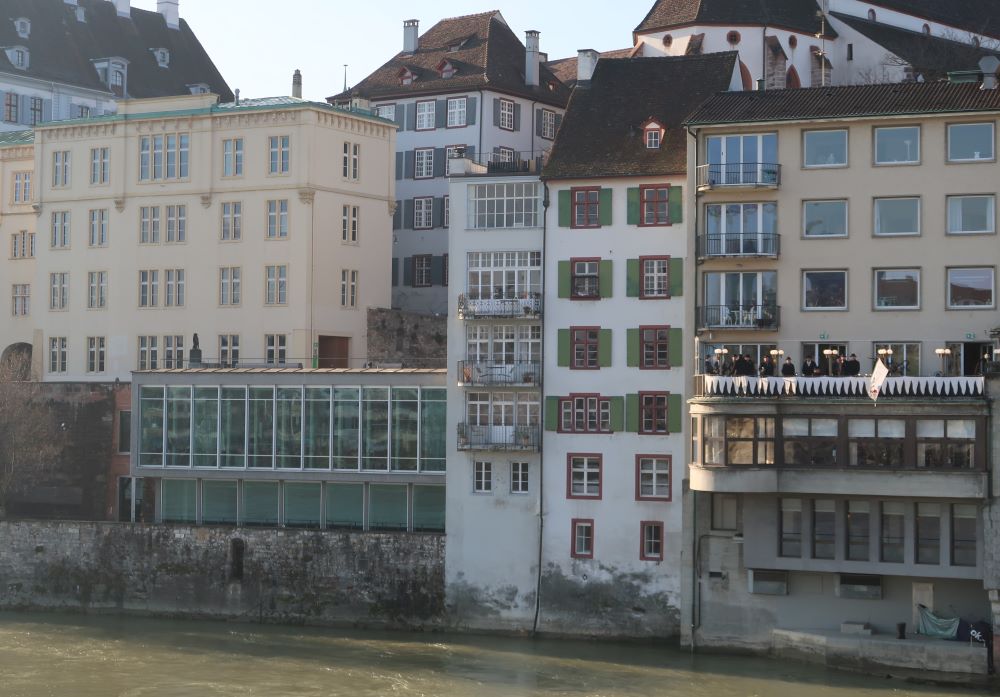
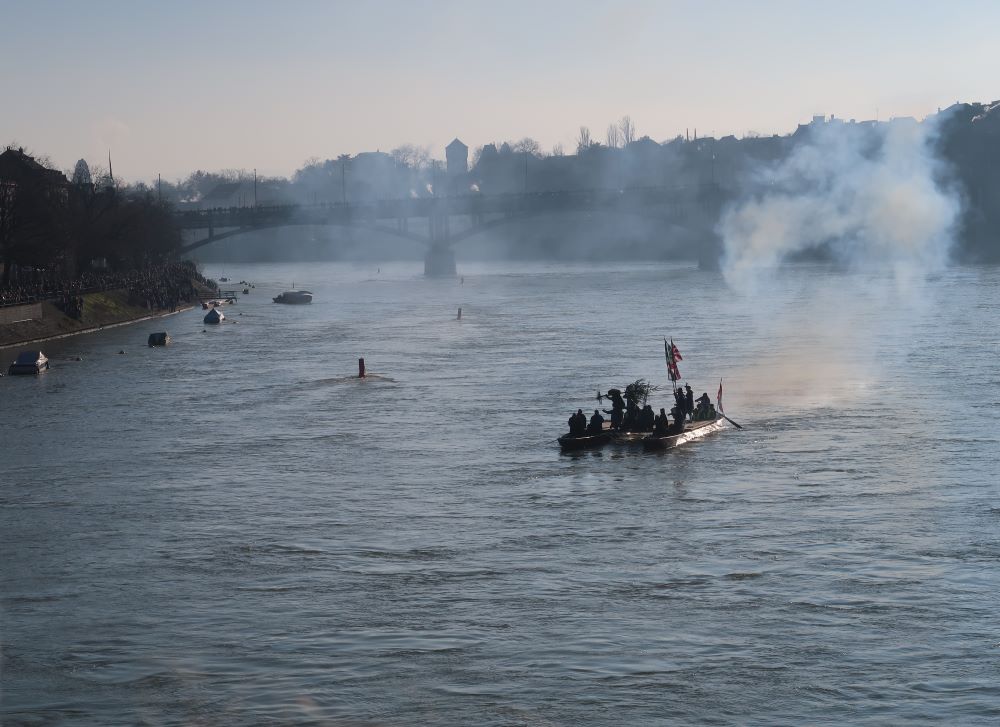
The German-speaking canton of Basel-Stadt and the French-speaking canton of Jura on 27 July 2019, Fête des Vignerons, in Vevey.

The edition in the Federal Parliament took place on Thursday, 25 September. Members of Parliament spoke in a language other than their own, with a special focus on the minority languages Italian and Romansh.

During the press conference, those present discussed language education and other key issues, including the popular initiative “200 francs is enough! (SRG initiative in connection with the annual compulsory listening and viewing licence fee for the  Schweizerische Radio- und Fernsehgesellschaft SRG)”, the federal government’s language promotion policy and the opportunities and risks of new technologies and artificial intelligence.

From left to right: Greta Gysin, Anna Giacometti, Laurent Wehrli, and Martin Candinas. Foto: Forum Helveticum 

However, the presentations focused on language teaching in primary and secondary schools. Various cantonal initiatives aim to postpone teaching in one of the national languages or reduce the number of teaching hours and introduce more hours for English.

Although this falls under cantonal autonomy, in the long term, it threatens the cohesion, federal principle, multicultural society, and identity of multilingual Switzerland. The cantons also bear responsibility in this regard, as reflected in various passages of the federal constitution.

Bern, Bundeshaus, the 26 cantons

The primary aim here is not to educate children to be polyglots in four languages (German, French, Italian and Romansh), but to inspire an understanding and awareness of other languages in the country. And “what is learned young is done old”.

Unfortunately, it has also become clear that members of parliament do not always set the right example. In any case, a member of the National Council noted that translations may soon be needed in the Council of States (which has so far been without simultaneous translation).

Of course, it is neither realistic nor possible to elevate Italian or even the small minority language Romansh to the status of a common language in German- and French-speaking Switzerland. However, understanding and awareness of these languages are essential for mutual communication and cohesion, both in parliament, in administration and government, and in everyday life.

Brigels/Breil

After all, languages are more than just a means of communication; they are also an integral part of the Swiss constitution, federation, culture and identity, and a treasure, even a unique heritage, in the case of Romansh.

In addition, the country has a large number of Italian immigrants, and Romansh also facilitates the integration of Portuguese immigrants in Graubünden, for example. They learn Romansh without any problems (regardless of the dialect).

In his book ‘La Suisse plurilingue se délingue’ (Neuchâtel, 2010), José Ribeaud already referred to Switzerland’s unique quadrilingualism. He also emphasised the fundamental importance of education, exchange and the media.

Quadrilingual Switzerland, or the country’s fifth language

A member of the National Council summed it up (ironically) succinctly at the press conference: ‘Ländersprachen First’. In short, it is not only the federal government that faces financial and organisational challenges, but also the cantons and municipalities, education, the media and, last but not least, private initiatives, citizens and civil society.

After a plea for sufficient financial resources for the SRG and private and public media, digital media, artificial intelligence and their opportunities were also discussed, including in relation to translations and accessibility.

Conclusion

These two days were entirely devoted to one of Switzerland’s unique characteristics and will continue in 2026 with various activities and events.

In fact, the country’s multilingualism is under pressure. In the trilingual canton of Graubünden, or in bilingual cantons, the development may not be as concerning as in Italian-, German-, or French-speaking cantons. But this is also an issue in these language areas, for example, the French language in Graubünden.

However, the teaching and use of Italian and/or French in German-speaking cantons and, conversely, German in Italian- and French-speaking cantons are cause for concern and attention.

Latin has also united the country in the Confoederatio Helvetica, rather than Svizra, Svizzera, die Schweiz, and la Suisse.

Perhaps Romansh (Rumantsch grischun), as an organically developed version of Esperanto, would be an idea for the country? It is also a beautiful and not too complicated language with many German, French and Italian words.

Finally, an addition that was not part of the contributions, discussions and conversations of these days, but solely reflects the opinion of the Swiss Spectator, which nevertheless fits into the constitutional context.

Bern, Bundeshaus

Not only do the cantons have a responsibility towards the federation, but the federation also has a responsibility towards the cantons, namely, about the (new) institutional agreement with the European Union.

This agreement not only affects the federal and subsidiarity-oriented principle of the (successful) Swiss model, but also the legislative, executive and judicial powers and even direct democracy and sovereignty!

Suppose the federal government wants to safeguard the plurilingual character through new constitutional laws for good reasons. In that case, it must also apply the existing constitution. It may not exclude the cantons based on political opportunism, dogmatic explanations, and interpretations without taking into account the purpose of a centuries-old legal text (in particular, Art. 140 a and b).

(Source and further information: Forum Helveticum; Lia Rumantscha)

The two Burgundian kingdoms, Sapaudia and Switzerland

The history of the Burgundians is intertwined with that of Switzerland, allowing us to reconstruct an important episode. Between 443 and 1032, the two Burgundian kingdoms were among the most distinctive of the barbarian kingdoms that emerged in the early Middle Ages following the fall of the Roman Empire.

The Burgundians

Who were the Burgundians? The Roman encyclopaedist Pliny the Elder first named this Germanic people. He places them on the river Oder in present-day Poland. They likely came from the island of Bornholm (now Danish territory) in the Baltic Sea.

In the 2nd century, they were located between the Oder and the Vistula. Over the next century, they moved south-westwards. At the end of the third century, the Burgundians settled on the Main, a tributary of the Rhine. In 359, they allied themselves with the Romans against the Alemanni.

Julius Schnorr von Carolsfeld (1794-1872), Nibelungen, 1847, the death of  Siegfried. Image: Wikipedia/Nibelungen-Forum

Around 409, the Burgundians entered the Roman Empire in the region of Worms (Germany), where they enjoyed the status of federates (foederatus). The tribe founded its first kingdom at Worms (413-436) but was defeated by the Huns in 436. This battle was the origin of the Nibelungen saga. The Burgundians then moved further south, settling on the southern shores of Lake Geneva, in the Rhône valley and the Saône region.

The first Burgundian kingdom

The Burgundians founded a new kingdom that encompassed the regions of Besançon, Geneva, Lake Constance (Bodensee), and Saint-Maurice, extending as far south as Avignon.

Unlike other Germanic tribes, the Burgundians adopted the local language and culture, Gallo-Roman. It is remarkable because, although these newcomers were the new rulers, the Gallo-Roman population was much larger. It was at this time that the French-speaking Switzerland came to the fore. Gallo-Romanic became Franco-Provençal, the basis of the French spoken in French-speaking Switzerland.

The Alemanni, another German-speaking tribe, settled in other parts of Switzerland and introduced the Germanic language and culture, which replaced the Gallo-Roman language and culture within a few generations. 

The first Burgundian kingdom (443-534). Image: Wikiwand.com

It was during the 500s that Burgundian distinctiveness was forged. The inhabitants began to feel that they were subjects of the same king, living in the same entity and sharing a common destiny, in a complex historical period due to the religious situation (paganism, Arianism, the Church) and the ethnic, political and cultural situation (the bishops, the Franks, the Alamanni, the Ostrogoths, the Visigoths and other peoples and kingdoms).

This situation gave rise to Burgundian particularism and an identity that persisted even after the political entity’s breakup when the Frankish kings annexed the kingdom in 534.

Despite the fall of the Burgundian kingdom in 534, the Frankish conquerors (Merovingians and later the Carolingians) also called themselves kings of Burgundy (regnum Burgundiae), such was its prestige.

Burgundy was an accepted concept as a political entity, which was applied in various areas and to other political entities in later centuries.

Sapaudia around 475. Image: Marco Zanoli/Wikipedia

Sapaudia (Savoye)

Sapaudia consisted of the territory of Geneva (Genava).  Sapaudia means ‘pays des sapins’ (‘land of fir trees) in Celtic. Sapaudia formed the city and diocese of Geneva, adding the territories of Nyon and Avenches (a large part of today’s French-speaking Switzerland), as far as the Rhine and Lake Constance (Bodensee).

Treaty of Verdun

After the Frankish Empire (534-888) of the Merovingians and Carolingians, the division of the political legacy of Charlemagne’s Empire (748-814) in 843 (Treaty of Verdun) led to a period of unrest.

The three sons of Louis the Pious (778-840), Charlemagne’s son, divided the empire. The territory of the old Burgundian kingdom (443-543) was given to Lothair (795-855). This Middle Kingdom included the Low Countries, Alsace, Lorraine, Luxembourg, Switzerland and Italy.

The eastern part, ruled by Louis the German (804-876), became, roughly, present-day Germany and the core of the Holy Roman Empire (962-1806), while the western part, ruled by Charles the Bold (823-877), became, more or less, present-day France and the Kingdom of France (987-1789).

In the years 843, 879 and 887, there were four political entities named Burgundy, essentially areas of the old Kingdom of Burgundy (443-534):

  • the Duchy of Burgundy in the north-west, roughly the area of present-day French Burgundy and the later administrative centre of the illustrious Dukes of Burgundy of the 14th and 15th centuries;
  • the County of Burgundy, present-day Franche-Comté, with Besançon as its capital;
  • the kingdom of Lower Burgundy in the south, which stretched from Geneva to the Rhône delta;
  • the kingdom of Upper Burgundy stretched across the present-day cantons of Geneva, Vaud, Jura and the two Basel cantons (Basel-Stadt and Basel-Landschaft).
  • Payerne

The second kingdom and Burgundian distinctiveness

The Burgundian kingdom fell in 534, but the territory retained its identity until the Treaty of Verdun (843). The Burgundians’ first expansion determined the future and shape of the second kingdom (888-1032), an intermediate domain between Gaul and Italy. The Burgundians also took over the Rhône and Saône river basins.

The second Burgundian kingdom (in green). Image: Marco Zanoli/Wikipedia

The second kingdom of Burgundy extended from Basel to the Mediterranean in 1032, when it was incorporated into the Holy Roman Empire. The territory even gave rise to several entities known as Burgundy: the Duchy of Burgundy, the County of Burgundy, and the Duchy of Transjurane Burgundy, also referred to as Upper Burgundy.

Karl Giradet (1813-1871),  1857. The battle of Murten (1476). Collection: Museum Murten

The third Burgundian kingdom that never came

Burgundy has always remained a prestigious concept. Ironically, the Swiss Confederation prevented the creation of the third kingdom of Burgundy between 1474 and 1477. Establishing a third Burgundian kingdom was the ambition of the (last) Duke Charles the Bold (1433-1477).

He almost achieved his goal, and the powerless kingdom of France could have been consigned to history. In three battles (Grandson, Murten and Nancy), the Confederation defeated the Burgundian army and ended the last duke’s life and ambitions.

Conclusion

The Duchy and Kingdoms of Burgundy have long since ceased to exist, having been absorbed into France, Germany and Switzerland.

However, during this period, the current French-speaking part of Switzerland strengthened its linguistic and cultural identity. The French-German language border in Switzerland did not shift significantly after 1033.

Fribourg/Freiburg, la Sarine/ die Saane

Only the Burgundian Wars between 1474 and 1477 and the occupation of French-speaking Vaud in 1536 by the partly French-speaking canton and Catholic city of Fribourg (Freiburg) and the German-speaking Protestant city of Bern led to bilingualism and the prevalence of Catholicism or Protestantism in some towns and areas.

But what culture, colour, and lustre did the two Burgundian kingdoms and the Duchy of Burgundy give to Europe and Switzerland! Payerne, Saint-Maurice, and Neuchâtel are just a few of their notable heritage sites.

(Bron: J. Favrod, Les Burgondes. Un royaume oublié au cœur de l’Europe, Lausanne 2011; F. Demotz, L’an 888. Le royaume de Bourgogne. Une puissance européenne au bord du Léman, Lausanne 2012; F. Walter, Une histoire de la Suisse, Neuchâtel, 2016)

European Day of Languages

At the Council of Europe, the European Day of Languages has been celebrated annually since 2001 on 26 September. Switzerland, one of the 46 member states of the Council of Europe, has been actively involved in this initiative from the beginning.

Throughout Europe, 700 million Europeans are encouraged to discover more languages at any age. This stems from the conviction that linguistic diversity is a tool for achieving greater intercultural understanding and a key element in the rich cultural heritage of the continent. The Council of Europe, therefore, promotes plurilingualism throughout Europe.

On the occasion of its 25th anniversary, ETS has adopted the motto: ‘Languages open hearts and minds!’

(Source and further information: European Day of Languges; Council of Europe)

Experience the Adventures of Greek Heroes in Basel with Athena

The origin of the name Basel, Basilia, likely comes from the Celtic tribe of the Rauraci, who inhabited the area at the time and had a small settlement near the Münster and the old gas factory.

However, this does not alter the fact that the Romans, along with the Greek goddess Athena (equivalent to Minerva for the Romans), were present at this location for centuries (ca. 13 BC – 410 AD).

After the departure of the Romans, Athena has not been seen in Basel until September 14, 2025, on the occasion of the ‘Hero Games’ exhibition at the Antikenmuseum Basel.

Head of Athena, marble, reduced-size Roman copy after a Greek bronze statue from around 430 BC. Inv. Lu 231

Moreover, it is not often that the goddess Athena addresses humans. Yet, her words can be heard again after a long absence in the Antikenmuseum. Her presence is also necessary, as visitors are about to experience the adventures of the mythical Greek heroes. Athena supports them with the words:

I, the invincible Athena, speak to you! I, who hold victory and glory in my divine hands. I am the goddess of wisdom and war, the daughter of Zeus. I welcome you to the Hero Games!

I have hastily descended from Olympus to assist you. Thousands of years ago, in the time of the great heroines and heroes, I was always present. I accompanied Heracles in the dark depths of Hades, guided the sword of Perseus to the throat of the demonic Medusa, and strengthened Theseus in the labyrinth of the Minotaur. People still know their names. Through their deeds, they have made themselves immortal.

But now your time has come. The era of your heroic deeds has begun. You follow in the footsteps of the ancient heroines and heroes and experience their legendary adventures. On your journey, you will encounter seven adventures. In each adventure, you must prove a different skill.

Your goal, the Oracle of Delphi and Apollo, awaits you at the end of the adventures. There, you will receive the assessment of your heroic deeds. And rest assured, I, Athena, will assist you in every mission and always tell you what to do.”

Athena indeed guides the visitors through the Hero Games via an audio guide in three languages (English, German, French).

Statue of Athena (known as Athena Giustiniani), marble, Roman copy after a Greek bronze work from around 380 BC, Rome, Vatican Museum (original), plaster cast, Inv. SH 947

A total of seven missions, in the form of both analogue and digital games, lead visitors in the footsteps of their ancient predecessors. They experience the same adventures, face the same monsters, and solve the same puzzles.

The boar killed by an arrow fired by a visitor

Arrowheads, bronze, various periods. Basel Museum of Antiquities, various inventory numbers

Medusa

Perseus beheads Medusa in the presence of Athena. Architectural decoration from the temple in Selinus, around 530 BC. Palermo, Regional Archaeological Museum (original), plaster cast. Inv. SH 440

On their way, they encounter the terrifying Medusa at the edge of the world, followed by the forest of Calydon and the gigantic boar, a malevolent monster.

They overcome the three-headed Cerberus in the underworld and face the man-eating Minotaur in its labyrinth on Crete.

The Minotauros in his Labyrinth

They find themselves in the Greek camp, which has been besieging Troy for ten years. The visitors try to build the famous Trojan horse. Once the horse is ready, the Trojans pull it into the city along with its secret cargo of Greek warriors, sealing the fate of Troy.

Ready to battle. Athena stands by warriors. Wine mixing vessel (krater) from Corinth, circa 590 BC, Inv. BS 451

In the room of Medea, one of the most powerful sorceresses in the world, there is much to see: tins, glasses, flasks, and pots containing secret magical ingredients, as well as dried herbs.

Hecate was the goddess of magic. Cult statue of Hecate (known as a Hecateion), marble, circa 100 BC. Inv. Lu 246

Medea’s speciality was a rejuvenation spell. Wine mixing vessel (krater) from Athens, circa 440 BC, Inv. BS 1450

In a cauldron, a potion bubbles, with which Medea prepared her famous rejuvenation spell. The visitors add the most essential ingredients. They must strictly follow the recipe.

The final mission takes them to the mountains of Thebes. Here, the cruel Sphinx sits on a rock and poses a riddle to anyone who wants to pass. She punishes ignorance with death. She has already devoured countless people. Only Oedipus once had the mental strength to defeat the monster. Now the visitors stand before the riddle-setter and must prove their logic and intelligence.

Finally, the visitors have endured the adventures and reached the end of their journey in the sacred city of Delphi. Here, Apollo, the god of prophecy, presides over the most important oracle site in the ancient world. In his temple, he speaks through his prophetess, the Pythia. The Pythia proclaims her oracles while seated on a tripod cauldron.

Tripod cauldron, bronze, circa 750 BC, Inv. BS 554

The Pythia summarises in an oracle the special skills that visitors have discovered in themselves during their heroic journey. Finally, our visitors immortalise themselves on the Wall of Heroes.

Laurel wreath from Etruria, gold. 3rd century BC, Inv. Zü 485

“Athena Comes Home” is an apt summary of this exhibition. It offers an innovative game concept, immersive staging, interactive missions, and more than 2,500-year-old Greek and Roman original works depicting these adventures and heroes. Greek myths remain relevant today, as nothing human was considered alien to the gods, goddesses, heroes, and monsters.

(Source and further information: Antikenmuseum Basel und Sammlung Ludwig)

Hades sits in his palace and welcomes a deceased person to the underworld. Grave vase (krater), from Apulia, around 320 BC, Inv. BS 464

Cavaione and Switzerland’s last territorial expansion in 1863

150 years ago, the inhabitants of Cavaione received Swiss citizenship after being stateless for twelve years. The village, located on a very steep mountainside (perhaps the steepest settlement in Switzerland), is situated above Brusio in the Valposchiavo (canton of Graubünden) and not far from Tirano in the Valtellina (Italy).

For centuries, the village was part of the Habsburg territory; it then fell under the Kingdom of Sardinia, which became the Kingdom of Italy in 1861. In 1863, Switzerland and the new Kingdom of Italy agreed to draw a new border between the Valposchiavo and the Valtellina.

However, they did not (or did not want to) arrange what should happen to the 108 destitute inhabitants of the village of Cavaione. In any case, the isolated village was on Swiss territory since the border correction of 1863, but they did not receive Swiss citizenship or a Swiss passport.

In Brusio, no one was waiting for new citizens and families who would burden the budget and not pay taxes, and citizenship in Switzerland is granted through the municipality.

Only with a payment from the federal government and the canton of Graubünden did the municipality of Brusio accept the new citizens. The 108 inhabitants then received Swiss citizenship and a Swiss passport in 1875. Previously, residents could not emigrate or, for example, marry an Italian in Tirano because they lacked citizenship or a passport.

Today, only eight people permanently reside in the village, but 180 descendants and their friends are celebrating 150 years of Swiss citizenship this year, marking the last and largest territorial expansion of Switzerland since the Congress of Vienna in 1815.
And, an anecdote, a resident of Tirano regrets today that Tirano was not added to the Confederation in 1863. An exhibition in the village looks back on this history.

(Source and more information: Fondazione Cavaione; Il Grigione Italiano)

Bettingen, Riehen and Viticulture in Canton Basel-Stadt

The canton of Basel-Stadt consists of three municipalities: Basel, Riehen, and Bettingen. Riehen and Bettingen are located on the right bank of the Rhine, surrounded by Germany. Riehen was already inhabited before the Roman occupation by the Celts. The Alemanni settled in the region after the Romans’ departure in the 5th century.

Reconstruction of a Roman farmhouse on the highest point of the Maienbühl. Model: Gemeinde Riehen

The name Riehen first appears in a document in 1113. The bishop of Basel and St. Gall, as well as the monasteries of St. Blasien and Wettingen, owned estates in the area and the village.

St. Martin Church, 11th century

The city of Basel acquired these estates by purchase in 1522 and 1540. Riehen was governed by a bailiff (Landvogt) and was part of a so-called UntertanengebietRiehen became a Protestant municipality in 1528. More and more (wealthy) citizens of Basel bought estates.

The new and the old Wettsteinhaus and Museum

After the French revolutionary troops invaded the village in 1798, it was granted the same rights as those of Basel. The (French) Mediation Act of 1803 assigned Riehen to the district of Liestal. In 1833, Riehen was transferred to the canton of Basel-City (Basel-Stadt) and became a municipality.

Riehen was a border town for refugees in the Second World War. The Eiserne Hand was a stroke of fate that crossed Swiss territory, encompassing hope, life, disillusionment, and death. 

The Fondation Beyeler is one of the village’s main attractions. (See also the villa Wenkenhof.)

Bettingen shares, to some extent, the same history. The canton’s only mountain and its Chrischona complex are another story.

Fondation Beyeler in Riehen

Bettingen

St. Chrischona

Source and further information: Gemeinde Bettingen; Gemeinde Riehen

The Viticulture in the Canton of Basel-Stadt

Viticulture in the Canton of Basel-Stadt has a tradition of over 1200 years. The first reference to viticulture appeared in 751. Viticulture experienced its heyday in the two hundred years between the Thirty Years’ War (1618-1648) and the mid-19th century.

The vineyards were located around Riehen and Bettingen. The vineyard area, spanning approximately 70 hectares, produced half a million litres of wine in its heyday.  However, this period was followed by a critical phase,  which significantly reduced viticulture, and in Bettingen it disappeared completely. Today, viticulture remains a presence in Riehen. Two vineyards are located at ‘am Schlipf‘ on the Tüllinger Berg.

That is to say, on the territory of the canton. German vineyards stretch over kilometres.  The four kilometer long Weiler Weinweg, the Tüllinger Weinweg of the Riehener Weinweg show the way in and around canton Basel-Stadt.

Vineyards in the canton of Basel-Stadt.

Two wineries currently cultivate the vineyards at the foot of the Tüllinger Berg ‘am Schlipf‘ around Riehen: Weingut Riehen (around 3.4 hectares) and Wyguet Rinklin (around 3.5 hectares).

As early as the 19th century, Weingut Riehen was recognised for its significant contribution to the local economy and its quality of wines. During this time, some historical buildings were constructed on the vineyards, which have been preserved to this day, along with the quality of the wines. In addition to some typical varieties, Pinot Noir, Pinot Blanc, Sauvignon Blanc, and Chardonnay are produced here. The Weingut Riehen is located in the village of Riehen near the Sarasin Park.

The second private winery is the “Wyguet Rinklin”. Their range includes various white, rosé, and red wines, as well as sparkling wine and spirits.

One of the smallest cantons in the country was once a significant producer of wine. Although the quantity sharply declined, the quality remains unquestionable. Autumn is the perfect time to explore the wine region of Canton Basel-Stadt, and a visit to Riehen, one of the only three municipalities in the canton.

Impressions from Riehen

Sarasinpark

Der Spittelmatthof

Tondü Palace and the chimney sweeps of Tessin

Palazzo Tondü (Tondü Palace) is the history of a family of chimney sweeps from Tessin. The history of the many Zuckerbäcker from Graubünden and their worldwide fame is well known. However, most of these emigrants had a poor existence. Only a tiny minority became wealthy through their hotels, restaurants, cafes, patisseries or, e.g. breweries in (capital) cities of Europe, North America and South America. A few returned to their village of origin in Graubünden and built city palaces.

The same story applies to Swiss mercenaries (Söldner), mainly from the Innerschweiz, Bern, Freiburg, Zurich and Solothurn. Especially the organisers, some prominent families in villages or towns, amassed great wealth, fame, (military) prestige and sometimes military rank up to the highest papal, imperial, royal, princely and colonial circles of Europe.

This industry was tightly organised. Organisers made contracts with rulers in other European countries. Most mercenaries, mainly from peasant and poor families, did not see their ‘Heimat’ again or returned as poor as ever. The word homesick (Heimweh in German) originates in this mercenary army of about a million and a half men from 1500 until its legal prohibition in 1848.

Chimney sweeps

The history of the Zuckerbäcker and mercenaries is a well-known part of Swiss history. It differs from the history of the spazzacamini, plural of spazzacamino, or chimney sweeps (Kaminfeger) from Tessin.

The emigration of chimney sweeps from Lombardy and Piedmont (Italy) is well known. However, the fact that many Italian-speaking chimney sweeps came from Tessin has yet to be brought to attention.

In Switzerland, this history was practically unknown until recently. After 1945, this industry was over, but (grand) parents and their descendants were ashamed of ‘selling’ their (young) sons, and the subject was taboo for a long time.

It is thanks to some Swiss museums (including Museo di Val Verzasca in Sonogno and Museo Regionale Centrovalli-Pedemonte in Intragna) that this history has been documented from 2000 onwards.

Lisa Tetzner (1894-1963) published the novel Die schwarzen Brüder. Abenteuer eines Tessiner Bergbauernjungen (Aarau, 1940)

Elisabeth Wenger (1946) wrote the history book ‘Als Lebender Besen im Kamin. Einer vergessenen Vergangenheit auf der Spur (Books on Demand, BoD 2010). 

Large families, with sometimes ten or more children, could not feed themselves. Even the fathers often worked as chimney sweeps in winter and as agricultural or factory workers in summer. With the money earned, the family in the village could be fed again for a while.

Boys aged six to eight were small and could easily descend narrow chimneys to clean them. Parents often had no choice but to have their (very) young sons work for Padroni, who sent the children to Lombardy, Piedmont, the Netherlands, Austria, France, England or even America and Russia to sweep chimneys under their supervision. The beginnings of this industry date back to the 15th century.

Chimney sweep with his padrone around 1870. Photo: Museum Museo di Val Verzasca in Sonogno 

Most chimney sweeps came from the valleys of Centovalli, Verzasca, Vigezzo and Maggia near Locarno. In 1538, the well-known chronicler Aegidius Tschudi of Glarus speaks of the valley Vigezzo (partly Tessin, partly Lombardy): “im Tal Vejetz sind alle Kaminfeger, die nach Neapel, Sizilien, Frankreich und Tütschland reisen“( Aegidius Tschudi, Die uralt wahrhaftig Rhetia, Basel 1538).

Another chronicler reports: “…das Kaemifaegertal, das man nennet Vallis Vegetia. Daraus kommend gemeinlich alle Kaeminfaeger, die durchziehend aller lender des gantzen Europae…” (Johannes Stumpf, Gemeiner loblicher Eydgenossenschaft Stetten, Landen und Völckeren Chronik wirdiger thaaten beschreibung (Zurich 1548).

Johannes Stumpf, Gemeiner loblicher Eydgenossenschaft Stetten, Landen und Völckeren Chronik wirdiger thaaten beschreibung (Zürich 1548). Collection: Zentralbibliothek Zürich

On a mid-16th-century map, Centovalli is even referred to as Kämifegertal (Giulio Rossi-Eligio Pometta, Storia del Cantone Ticino (Locarno, 1980). Tessin was a subject territory (Untertanengebiet) of the Confederation (Eidgenossenschaft) from 1512 to 1798, governed by bailiffs from the cantons.

The padroni were the organisers in this industry, say employment agencies for chimney sweeps. Like the mercenary branch, the branch was owned by a few families in villages. Parents concluded seasonal contracts for their sons in Lombardy or Piedmont from November to April. For countries further away, these were five-year contracts. During the summer, they worked on farms, (textile) factories, households or other destinations.

The parents received money, half of which was paid in advance and the other half at the end of the contract. Moreover, there were fewer mouths to feed at home.

One writer said of his childhood poverty, “we ate chestnuts in the morning, chestnuts in the afternoon and chestnuts in the evening”. It was child labour and slavery with seven-day working weeks, unhealthy and dangerous work with often ruthless padroni and commissioners. Many (very) young children did not survive. Only a few were able to improve their standard of living, and even fewer became wealthy.

Lionza

Palazzo Tondü in Lionza

And yet, there are also stories of social ascent and wealth. An example is the palace in Lionza of the Tondutti family in the Centovalli. Father Giuseppe Tondutti and two sons, Andrea, aged 13, and Antonio, aged 7, travelled to Parma in October 1630 to sweep chimneys. Fate brought them to the villa of wealthy banker Marini. However, Giuseppe choked on the chimney because a servant had lit the kitchen oven, unaware that the chimney sweep was active.

The childless banker and his wife decided to adopt Andrea and Antonio. It was the beginning of a rapid career move to the highest noble circles, and already in 1650, the brothers had built their palace in Lionza. Their descendants did not live there permanently, and in 1784, knight Ferdinando Tondü donated the palace to the municipality of Lionza. In 1984, the foundation (Fondazione) Casa Tondü was established to renovate the complex.

The Tondutti were not the only ones. City palaces were also built in other villages. The origins of these spazzacamini can be recognised by the many chimneys on their buildings. They or their descendants had started as chimney sweeps and became padroni. However, this background remained less prestigious than the success of Zuckerbäcker or mercenaries in foreign military service.

(Source: Bron: Elisabeth Wenger, Als Lebender Besen im Kamin. Einer vergessenen Vergangenheit auf der Spur, Books on Demand, BoD 2010; Guido Fiscalini, I Tondù di Lionza (Museo Regionale Centrovalli-Pedemonte in Intragna, 1998).

Lionza, the chapel of the Tondü family

The St. Antonio da Padova Church, 17th century, probably financed by the Tondü family.

Basel, Unterer Heuberg, the chimney sweep

A Basel organ and charity concerts in Basel and Daugavpils

The organ removed during the renovation of Basel’s Stadtcasino is finding a new home in Martin Luther Church in the Latvian city of Daugavpils (Dünaburg). The Verein Basler Liedertafel 1852 is supporting this extraordinary project with a charity concert on 20 September at the Stadtcasino.

The impressive instrument was carefully dismantled and stored with the intention of possible future use. Donors from Basel and the Latvian cellist Gunta Abele developed a plan to donate the organ to the cathedral in this Latvian city. The organ has now arrived at its destination.

However, further efforts are still needed before it can be reassembled and made ready to play. The Basler Liedertafel and renowned musicians plan to contribute to the financing of this project with a benefit concert.

Under the concert title ‘Ode to Hans Huber’, it will perform on 20 September in the Hans Huber Hall of the Stadtcasino Basel, which has also been renovated and is dedicated to the Basel composer.

Huber (1852–1921) and his pupil Hermann Suter (1870–1926) were closely associated with the Basler Liedertafel, and both wrote compositions for the choir.

Incidentally, the Basler Liedertafel 1852 is not the only Basel choir committed to preserving the old Sacher organ: the Männerstimmen Basel will also be giving a benefit concert at the Martin Luther Cathedral in Dünaburg on 4 October as part of their European tour.

Flag of the Basler Liedertafel 1852, 1868. Historisches Museum Basel

The Verein Basler Liedertafel 1852

The Verein (Association) Basler Liedertafel 1852 is one of the oldest male choirs in Switzerland. The choir cultivates and promotes the song repertoire and choral music of various eras.

The association was founded in 1852. In 1898, the Reveille-Chor was established as a section of the association, followed by the Veteranen-Chor in 1927. In 2017, the Jung Tafelrunde and, in 2022, the women’s ensemble Singvoll were incorporated into the Basler Liedertafel as sections.

Finally, in 2023, the Basler Liedertafel association was restructured. The three male choir sections (Basler Liedertafel, Reveille-Chor and the Jung Tafelrunde) were divided into two choirs: the Jung Tafelrunde and the ‘neue’ Reveille-Chor, which also give performances with the other two choirs (Singvoll and Veteranen-Chor).

(Source and further information: Basler Liedertafel 1852)

The Wenkenhof and the English Park in Riehen

Wenkenhof first appears in the early Middle Ages, referring to an estate located on the hillside above the Wiesental. As early as 751, a document mentions the Wenken as the property of Ebo, a count of an Alemannic tribe.

The estate belonged successively to the abbey of St. Gallen (c. 800-ca. 1100) and the monastery of St. Blasien (c. 1100-early 17th century). Afterwards, there were several private owners.

In 1735, Johann Heinrich Zäslin of Basel (1697-1752) purchased the estate. He built a summer residence in the French style. After several successors, the complex was converted into a country house in 1860 and expanded with other buildings. The architect was Johann Jakob Stehlin (1826-1894), who designed many residential and public buildings in Basel. The large complex was named Alte Wenken and Neue Wenken.


In 1917, the industrialist Alexander Clavel-Respinger (1881-1973) bought the estate. He created the English Park and restored the French garden to its former glory.  The terrace with a view of Basel was completed in 1957.

His brother was René Clavel (1886-1969), founder of the Domus Romana and a mecenas of the Pro Augusta Raurica Foundation in Augst, as well as the Römer-Stiftung René Clavel and the manor of Castelen.

The owner donated the Alte Wenken to Basel in 1932. The park now belongs to the municipality of Riehen and is open to the public. The Alexander Clavel Foundation owns the Neue Wenken and its French garden, which is open to the public on Sundays.

(Source and further information: www.wenkenhof.ch)

Schiers, Habsburg, Zehngerichtebund, and the Salginatobel Bridge

Schiers (canton of Graubünden) is first mentioned in a document from 1122 under the name Assiere, a Germanized version of the Romansh name Aschera. Aschera is still the name for Schiers in the Romansh-speaking part of the canton (Aschera means Maple).

The Romansh language gradually disappeared, partly due to the immigration of German-speaking Walser, who also settled in the higher regions, and because German-speaking influence in Vorderprättigau also extended from the Rhine Valley.

Moreover, the feudal lords and the cathedral chapter of Chur used the German language almost exclusively in their documents and dealings with vassals. By the 16th century, the Romansh language had disappeared in Schiers.

The history of Schiers also coincides with that of the Zehngerichtebund (League of Ten Jurisdictions) and is characterised by conflicts with the House of Habsburg.

Together with the Oberer or Grauer Bund (Grey League) and the Gotteshausbund (League of the House of God), the Zehngerichtebund formed the Freistaat der Drei Bunde (Free State of the Three Leagues) in 1524 as a precursor to the canton of Graubünden in 1803.

Schiers had, for a time, alongside the high court, a chapter court to which the vassals of the richly endowed cathedral chapter of Chur in this area were subject.

The years-long wars with the Habsburgs ended after the courts bought their freedom from Austria in 1649.

Robert Maillart (1872–1940). His company also constructed buildings in Spain, Italy, France, Finland, Egypt and Russia.

The Salginatobel Bridge

The Salginatobel Bridge is a highlight in the history of bridge construction. Since its completion in 1930, the bridge has exerted a magical attraction on professionals and artists as an outstanding engineering achievement and a modern work of art.

In 1991, the American Society of Civil Engineers declared this exceptional bridge a “world monument”. In total, 50 structures today form the small circle of the most fantastic engineering creations, including well-known structures such as the Eiffel Tower in Paris, the Statue of Liberty in New York, the Inca city of Machu Picchu in Peru, the endless Ifugao rice terraces in the northern Philippines, the Hagia Sophia mosque in Istanbul, the Alaska Highway, and the Panama Canal.

In 1999, the renowned British trade magazine “Bridge – design & engineering” chose the Salginatobel Bridge as the most beautiful bridge of the 20th century.