
Fondation Beyeler Unites Art and Nature
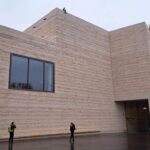
Art, architecture, and nature have belonged together at the Fondation Beyeler since its founding. Already in the Beyeler Museum, the architecture opens up to nature with large windows, offering views across the park and fields to the Tüllinger Hill. The artworks, buildings, gardens and nature form a shared whole, an ensemble. Art also extends beyond … Read more » “Fondation Beyeler Unites Art and Nature”


The founding of Canton of Basel-Landschaft in 1833 and SAC in 1863

Bad Bubendorf (Canton of Basel-Landschaft) is the place where, on 18 October 1830, the movement took shape that led to the secession of the Canton of Basel in 1833. In Bad Bubendorf, a hamlet and spa town near Bubendorf, the first meetings took place in 1830, leading to independence from Basel-Landschaft in 1833. However, the … Read more » “The founding of Canton of Basel-Landschaft in 1833 and SAC in 1863”

Switzerland learns Romansh

From 12 to 16 October 2026, 77 participants from across Switzerland will spend a week in Sta. Maria (Val Müstair, Canton of Graubünden) to learn Vallader in nine classes of varying levels. In addition to language lessons, this intensive course offers the opportunity to discover Romansh culture and enjoy the company of fellow participants during … Read more » “Switzerland learns Romansh”

Habsburgs’ Ancestral Lands in European Perspective

It recently happened to a resident of Habsburg (Canton of Aargau). When he tried to book a room at a hotel in Austria and listed his place of residence as ‘Habsburg’, he was met with disbelief. Habsburg in Switzerland? But Habsburg is an Austrian dynasty and an Austrian name! In other countries and even in … Read more » “Habsburgs’ Ancestral Lands in European Perspective”

500 years Literary Romansh texts

In 2027, the Romansh language will celebrate 500 years since the first literary Romansh text was written. The Zuoz lawyer, politician and diplomat Gian Travers (1483-1563) wrote the ‘Chianzun dalla guerra dagl Chiastè da Müs’ in 1527. Through his mediation, Philipp Gallicus preached in the Roman language at the Church of Santa Chatrigna (St Catherine) … Read more » “500 years Literary Romansh texts”

The Swiss Yodelling Festival Unites Nations and Continents.

It is not easy to describe a music festival in words, but words combined with illustrations can speak for themselves. This is particularly true of vocal (yodelling) and instrumental (Alphorn) music, which form part of Switzerland’s and UNESCO’s cultural heritage. Moreover, the Eidgenössische Jodlerfestival, recently held in Basel (26–28 June), also features a non-musical element: … Read more » “The Swiss Yodelling Festival Unites Nations and Continents.”

Art Basel and Lorin’s Promenade Through Art Basel 26

Art Basel (18 – 21 June) presents art from the 20th and 21st centuries and is the leading world fair for the international art market. More than 290 galleries and 4,000 artists from all over the globe make Basel a museum of modern and contemporary art. Art Basel has already taken place in Hong Kong … Read more » “Art Basel and Lorin’s Promenade Through Art Basel 26”

Yodelling Unites City, Countryside, and Switzerland 1924–2026

The current issue of NZZ-Geschichte (No. 62, February 2026) provides an in-depth look at the economic, social, and political development of farmers in Switzerland. In the 19th century, half of the population still worked in this sector, but they were not politically represented. Fasnacht 2026 In this context, the nearly forgotten (contrary to a similar … Read more » “Yodelling Unites City, Countryside, and Switzerland 1924–2026”

Silent Night, Holy Night, the Basler Liedertafel and the Münster

The eruption of the Tambora volcano in Indonesia in April 1815 caused a significant cooling of the Earth. It was the largest recorded eruption, killing 90,000 people and sending about 150 cubic kilometres of dust and ash thirty kilometres into the atmosphere. The force was equal to 170,000′ Hiroshima bombs’. The cooling was also felt … Read more » “Silent Night, Holy Night, the Basler Liedertafel and the Münster”

Belle and Isabelle again in Palais DuPeyrou in Neuchâtel

Belle van Zuylen (1740–1805) was once again the central figure in the Palais du Peyrou in Neuchâtel. The latest edition of the Nouvelle Revue neuchâteloise is entirely dedicated to Belle, who, after her marriage in 1771, lived in Colombier and called herself Isabelle de Charrière, the name of her husband Charles-Emmanuel de Charrière de Penthaz (1735–1808). … Read more » “Belle and Isabelle again in Palais DuPeyrou in Neuchâtel”