Constellations in Fondation Beyeler’s Expanded Complex
Eindruck aus der Ausstellung 'Constellations' der Fondation Beyeler.
(Deutsch) Eindruck aus der Ausstellung 'Constellations' der Fondation Beyeler. Foto: TES

«Constellations» is the inaugural exhibition of the Fondation Beyeler’s newly expanded ensemble: for the first time, an exhibition unfolds across the new museum building designed by Peter Zumthor (Wyss Museum) alongside the museum building by Renzo Piano (Beyeler Museum), as well as the expanded park and the repurposed historical buildings.

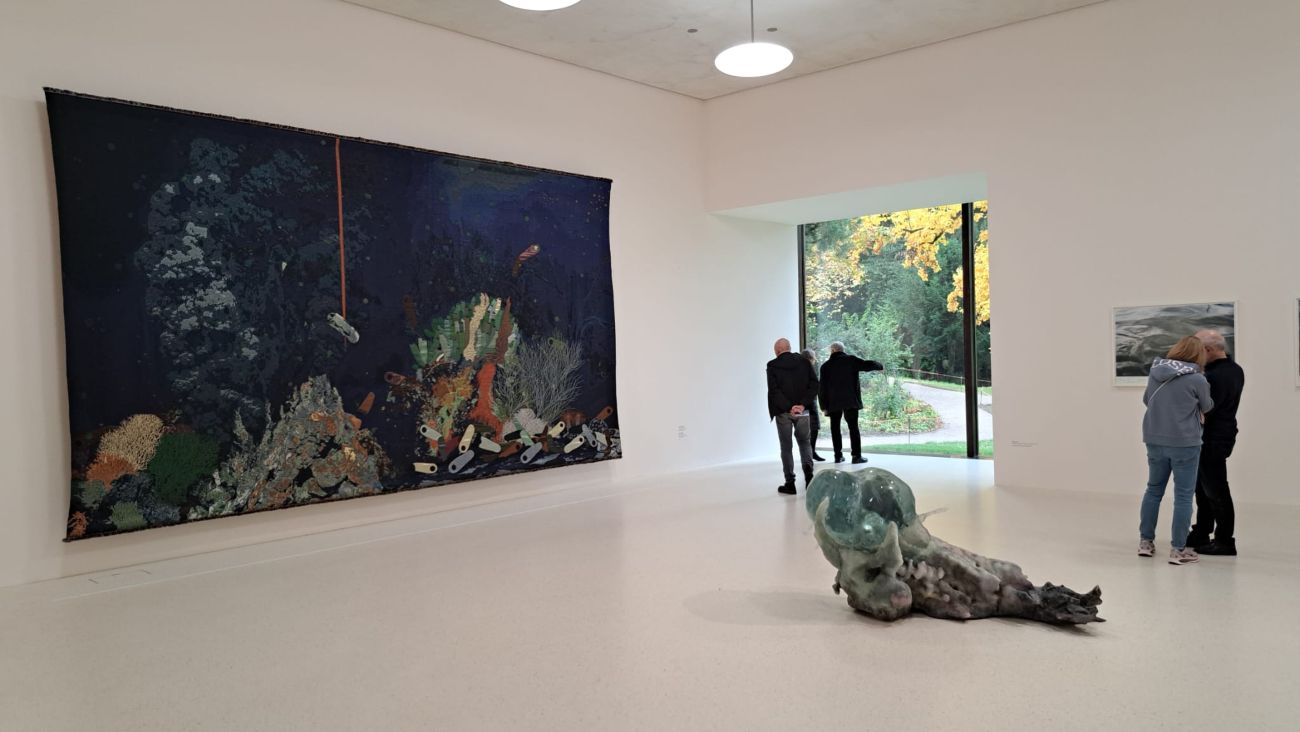
Bringing together around 230 works, the largest exhibition in the museum’s history will foreground the dialogue between art, architecture and nature. Varied spaces, atmospheres and viewpoints will allow visitors to experience encounters with the artworks and nature.
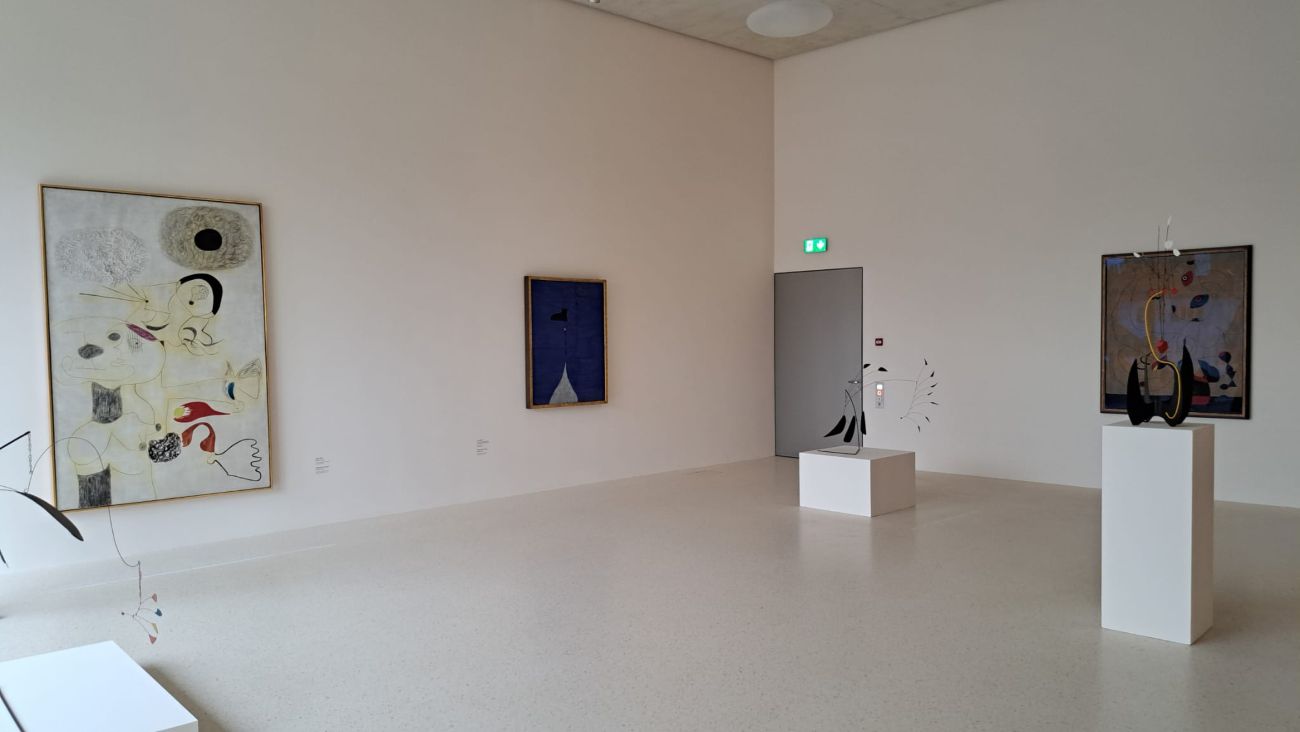
The title references Alexander Calder’s Constellations from 1943, several of which will be shown in the exhibition and will also serve as its leitmotif. «Constellations» is an evolving exhibition. The rooms and work groupings will change on a seasonal basis, giving rise to new constellations.

«Constellations» brings together masterpieces from the 19th, 20th, and 21st centuries held in the Fondation Beyeler collection, including recent acquisitions and gifts, as well as loans from Swiss and international private collections. The exhibition will feature works by Claude Monet, Pablo Picasso, Alexander Calder, Joan Miró, René Magritte, Alberto Giacometti, Mark Rothko, Willem de Kooning, Joan Mitchell, Cy Twombly, Louise Bourgeois, Fujiko Nakaya, Gerhard Richter, Vija Celmins, Marlene Dumas, Robert Gober, Thomas Schütte, Roni Horn, Fischli/Weiss, Elizabeth Peyton, Wolfgang Tillmans, Otobong Nkang and works by around 25 other artists.

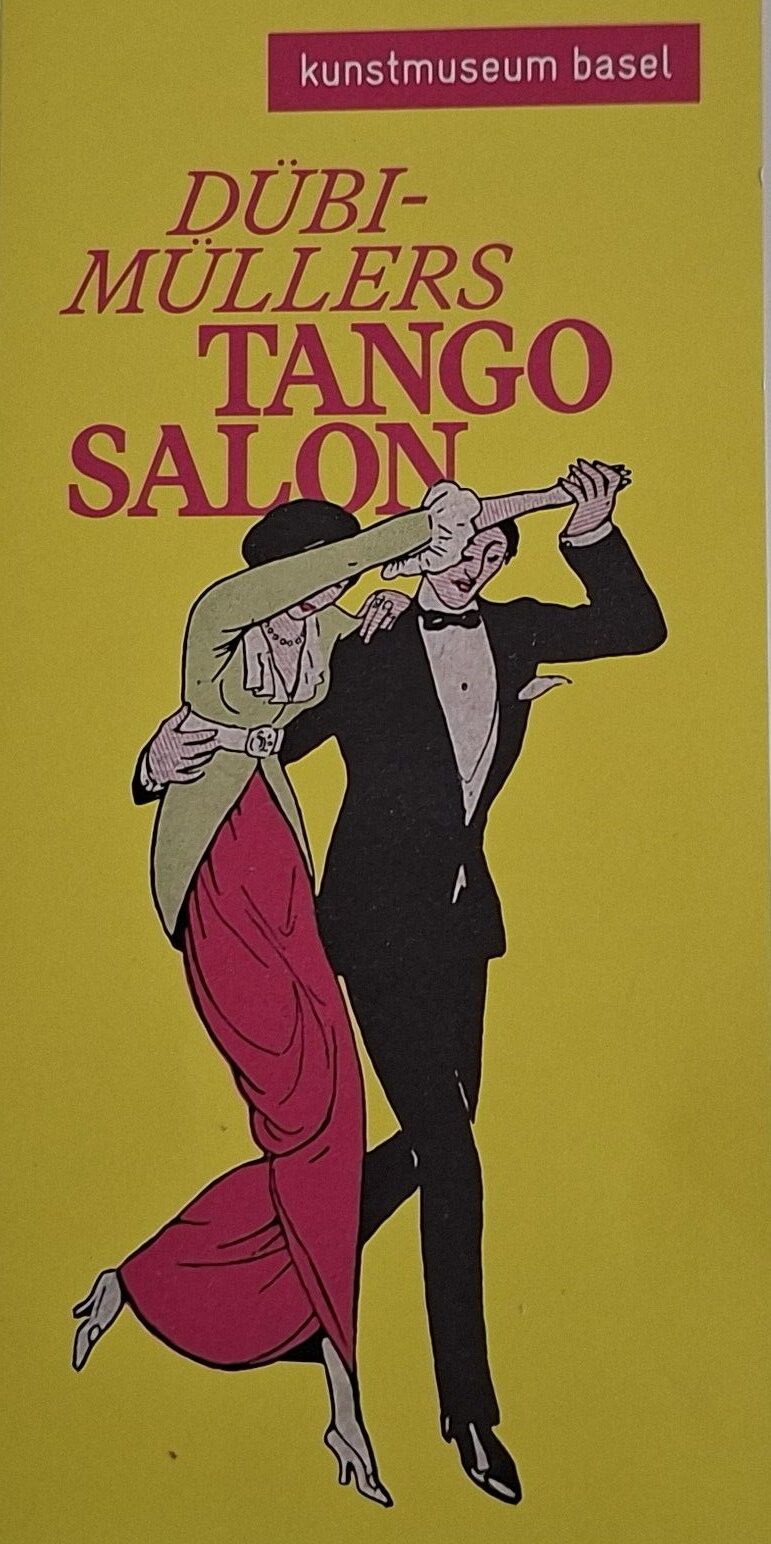
Gertrud Dübi-Müller and her Passions for Art and Life

Gertrud Dübi-Müller und ihre Leidenschaft für die Kunst und das Leben
(Français) Gertrud Dübi-Müller (Umkreis), Gertrud Müller in ihrem Automobil der Marke “Pic-Pic”, 1911. © Gertrud Dübi-Müller / Fotostiftung Schweiz

Gertrud Dübi-Müller (1888-1980)  was one of Switzerland’s foremost art collectors, a passionate photographer, driver of motorcars, and mountaineer, and she sat for Ferdinand Hodler and other artists. The Kunstmuseum Basel presents the first extensive exhibition dedicated to her.

Ferdinand Hodler (1853-1918), picture of Gertrud Müller, 1911. Kunstmuseum Solothurn – Dübi-Müller-Stiftung

Around eighty works by renowned artists from her international collection, arresting photographs, and previously unpublished documents shed light on Dübi-Müller’s life and illustrate her influential role in the history of art and culture in unprecedented breadth.

Cuno Amiet, Der violette Hut (Bildnis Gertrud Müller), 1907. Dübi-Müller-Stiftung

She struck up friendships with numerous artists including Ferdinand Hodler, who immortalized her in seventeen portraits. Her photo camera recorded not only the lives of her artist friends but also her own adventures.

Her accomplishments as a mountaineer, including an ascent of the Matterhorn, underscore her extraordinary determination and independence for a woman of her time and set her apart as a remarkable personality whose life and dedication to the arts remain an inspiration today.

Impression from the exhibition

The exhibition Van Gogh, Hodler and a Cabriolet. The Collector and Pioneer Gertrud Dübi-Müller gathers outstanding works by international artists including Paul Cezanne, Gustav Klimt, and Vincent van Gogh as well as eminent Swiss artists like Cuno Amiet, Alice Bailly, Giovanni Giacometti, and Ferdinand Hodler.

Gertrud Dübi-Müller (Umkreis), Gertrud Müller in her car “Pic-Pic”, 1911. © Gertrud Dübi-Müller / Fotostiftung Schweiz

In addition to the treasures now at the Kunstmuseum Solothurn, it features works from other Swiss museums and from private lenders that were formerly in Dübi-Müller’s collection. Photographs taken by the collector herself and others, previously unpublished letters, and hand-painted postcards that artists and creative professionals sent Dübi-Müller provide intimate insight into her network.

Impression from the exhibition

Gertrud Dübi-Müller ice-skating, Mürren, around 1931. Gertrud Dübi-Müller Archiv/Fotostiftung Schweiz

From the Stars to Atomes

L’exposition des étoiles aux atomes et l’émergence d’une culture de la précision à Neuchâtel

Through a programme spread over four sites and an associated programme, the project invites visitors to explore the various ways time has been observed, measured, preserved and shared — from astronomical practices to contemporary atomic technologies.

Following this chronological and conceptual thread, the exhibition Des étoiles aux atomes highlights the close links between the observation of the sky and of atoms, scientific instrumentation and the development of precision watchmaking, as well as the social and scientific uses of measured time.

The exhibition highlights the emergence of a culture of precision in the Neuchâtel Mountains, as well as the Observatory’s role in certifying watchmaking products and organising the chronometry competitions. These missions are placed within a broader history at the crossroads of navigation, astronomy and the watch industry.

The exhibition, organised by the Automates & Merveilles Association, offers a chronological and thematic journey through the history of precision watchmaking, showing how it was built at the intersection of scientific challenges, economic stakes and institutional choices.

It opens on the origins of this culture of precision, marked as early as the 18th century by the quest for longitude at sea. The demands of long-distance navigation stimulated the development of marine chronometry and encouraged watchmakers of the Jura Arc, and especially of the Montagnes neuchâteloises, to perfect their instruments.

Conceived as a coherent whole, the exhibition unfolds across four locations with self-contained chapters, each approaching timekeeping from its own angle. Visiting the four sites makes it possible to connect these approaches and understand how, over the centuries, time has been observed, measured and transmitted — from the sky to the most precise instruments.

The four locations are: Musée international d’horlogerie in La Chaux-de-Fonds, Musée d’horlogerie du Locle — Château des Monts, Musée d’art et d’histoire de Neuchâtel, and  l’Observatoire cantonal de Neuchâtel.

(Source and further information: l’Association Automates & Merveilles)

Pierre Jaquet-Droz’s journey to Spain (1758-1759)


On the advice and encouragement of George Keith (1686–1778), also known as Milord Maréchal, the governor of the Principality of Neuchâtel, Pierre Jaquet-Droz (1721–1790) – a watchmaker from La Chaux-de-Fonds, who had already built up a reputation in Switzerland and beyond – decided to travel to Madrid in 1758 to present some of his finest creations to King Ferdinand VI (1713–1759), a lover of clocks.

He took six exceptional pieces with him. Five were intended for the king, including the famous shepherd’s clock; the sixth was for Don Jacinto Jover, a Spanish nobleman, whom the governor had recommended.

Jaquet-Droz travelled with his father-in-law, Abram-Louis Sandoz (1712–1766), and one of his assistants, Jacques Gevril. They set off from La Chaux-de-Fonds on 4 April 1758 and reached Madrid on 22 May. Don Jover provided them with accommodation in Madrid.

However, Jaquet-Droz had to wait several months before the king received him, but on 4 September, the king saw the clocks. He was so impressed that he purchased them for a substantial sum, equivalent to the value of three large farms in Neuchâtel. After a lengthy stay in Spain, which included numerous visits, the party returned to La Chaux-de-Fonds on 20 March 1759.

This expedition is known thanks to an exceptional document: the travel diary of Abram-Louis Sandoz, which is kept in the library of La Chaux-de-Fonds.

(Source: Le voyage de Pierre Jaquet-Droz en Espagne (1758-1759), in the ‘Nouvelle Revue neuchâteloise‘, 169-170, 2026)

A Tribute to the Light of the South in Winterthur


Paul Cézanne, Plaine provençale, 1883–1885. Photo: Reto Pedrini, Zurich

The exhibition Tout est lumière at Villa Flora of the Kunst Museum Winterthur showcases French painting from the 19th and 20th centuries. The exhibition brings together paintings, watercolours and drawings by Paul Cezanne, Vincent van Gogh, Pierre Bonnard, Henri Matisse and other artists who, from the mid-19th century onwards, were drawn from the cities to the French Mediterranean coast.

On the Riviera, they discovered a largely unpainted maritime nature and developed new forms of expression, breaking away from old traditions and advancing the move towards modernism in the light of the South.  The younger generation of artists followed this principle, seeking to sharpen their senses and develop their art in the light of the south.

The collector couple Hedy and Arthur Hahnloser also found a second home in the mild climate. From 1923 onwards, they spent the winter months in Cannes, where they engaged in lively exchanges with their artist friends.

Tout est lumière is a tribute to the light of the South – to the artists who found their freedom in it, and to Hedy and Arthur Hahnloser, who carried the light of the South forward in their collection.

Stories and Myths at the Andreas Ernst Collection in Muttenz


Stories and myths have always been passed down from generation to generation, both orally and in writing. They help each generation to understand, structure and organise the habitat.

They speak of human emotions – of love and hope, but also of chaos and war. Every generation draws on them or even creates new ones. However, they spread not only through literature, but also through all manner of art forms and crafts.

The French bronze clocks in the current exhibition ‘Von Mythen und Geschichten’ also bear witness to this phenomenon. They were all made at the beginning of the 19th century and refer to Greek and Roman antiquity.

People of that time were well acquainted with the stories from the age of gods and heroes, and each group of motifs had its own meaning. Thus, the choice of the depicted myth already determined the function and atmosphere the clock was intended to evoke.

However, this effect can only be realised if the viewer can interpret the story. The exhibition aims to bring these stories back to life and thus give visitors access to the splendid clocks.

The Battle of Murten and four panoramas in Switzerland


Louis Braun, detail from his panorama „Die Schlacht bei Murten. Photo: TES

On 22 June 1476, the Swiss Confederates and their allies triumphed over the troops of the Burgundian Duke Charles the Bold (1433–1477) at Murten. Over four centuries later, in 1893, the Panoramagesellschaft Zürich enlisted Germany’s foremost panorama painter, Louis Braun (1836–1916), to capture the heat of this historic battle in a sweeping circular painting.

Impression of Louis Braun’s studio at the time of the panorama’s creation

At the time, panoramas attracted large audiences and generated significant revenue. Braun completed the extensive painting—100 metres long and 10 metres wide—within a year. Shortly after, starting in August 1894, the Panoramagesellschaft Zürich showcased ‘The Battle of Murten’ in a dedicated rotunda at the Utoquai.

Picture: Bernisches Historisches Museum

Louis Braun took a very thorough approach. He carried out extensive archival and source research. The panorama, therefore, reads like a reporter’s on-the-spot report. The panorama primarily captures the decisive moment of the battle. The Swiss surround the panicked Burgundian army.

Picture: Bernisches Historisches Museum

The panorama’s debut was a sensation. Switzerland itself was not yet fifty years united (1848). The nation had just celebrated the 700th anniversary of the Rütli (1891), and had enshrined its unique democracy in the constitution (1874 and 1891).

Replica from the Bern Historical Museum

The timing, however, was unfortunate: the advent of photography and, shortly afterwards, the first films meant that the panorama as a medium quickly became obsolete. Following this, the rotunda was demolished, and the panorama was transported to Murten in three sections. The canvas was not displayed to the public again until 2002, at the national exhibition Expo. 02.

One of the three canvases

The so-called Monolith, a metal cube placed in Lake Murten, formed the backdrop. The installation consisted of a panorama comprising three stacked sections that visually connected the lake, promenade, medieval town, and battlefield.

This panorama was later shown in a video montage at the Murten History Museum and is now presented by the Bern Historical Museum (Murten Ausgeslachtet) in this context.

Details of the 100-metre-long and ten-metre-high panorama

While it is unlikely that this captivating panorama will again be shown permanently in a rotunda, visitors to this exhibition can still gain a rich understanding of its origins and historical significance.

Martin Martini (1565-1610), the battle at Murten, after a lost work by Heinrich Bichler (1466-1497), in the city hall of Freiburg. Collection: Bernisches Historisches Museum

Moreover, it is perhaps no coincidence that it is in Switzerland that most of the panoramas of this medium, so popular in the 19th century, have been preserved in rotundas: in Einsiedeln (The Crucifixion of Christ), Thun (Wocher Panorama of the City of Thun) and Lucerne (Bourbaki Panorama).

A small part of the ‘Burgundian spoils

Collection: Bernisches Historisches Museum

Ernst Ludwig Kirchner and Pablo Picasso in Davos


Ernst Ludwig Kirchner (1880-1938) Grosses Liebespaar (Ehepaar Hembus), 1930. Sammlung: Kirchner Museum Davos, Collection Nachlass Ernst Ludwig Kirchner 1990. Photo © Kirchner Museum Davos

From 15 February to 3 May 2026, the Kirchner Museum Davos presents
an exhibition on Ernst Ludwig Kirchner (1880–1938) and Pablo Picasso (1881–1973). Around 100 paintings, sculptures, drawings and graphic works offer a new perspective on two of the most influential artists of the modern era.

The starting point for the exhibition is a remarkable wish expressed by Kirchner.
In 1933, he said he hoped that his works would one day be displayed alongside those of Pablo Picasso (‘…I hope for an international exhibition where Picasso and I will hang side by side’).

Based on this idea, the exhibition highlights the creative power of these two contemporaries who never met, who responded to the challenges of their time in different artistic ways, but who nevertheless repeatedly approached each other in surprising ways in their work.

Over almost four decades, both artists responded to the same historical and social upheavals of modernity – albeit with fundamentally different aesthetic strategies.

The exhibition closely follows this simultaneity of proximity and difference and reveals how two of the most important artists of the 20th century each developed their own responses to a world that was radically changing.

Flowers for Art in the Aargauer Kunsthaus

Blumen Kunst Aargauer Kunsthaus Aarau
Jean Pfaff, Spaltkasten (1974). Flowers: Nicolaus Peters, Berlin. Photo: TES

From 3 to 8 March 2026, the Aargauer Kunsthaus celebrates the start of spring with the exhibition “Flowers for Art” (Blumen für die Kunst).

The Kunsthaus presents this exposition in cooperation with Flowers to Arts.  The florists will be inspired by works of Art from the Aargauer Kunsthaus collection, giving them a floral response.

Flowers for Art bridges floristry and Art, offering surprising perspectives on the 14 works in the collection.

(Source and further information: Das Aargauer Kunsthaus)

Impressions from the exhibition

Cultural Relationships between the Old Swiss Confederation and England

London Calling. Schweizerisch-Britischer Kulturaustausch 1580-1780)
London Calling. Schweizerisch-Britischer Kulturaustausch 1580-1780. Photo: TES

The Old Swiss Confederacy already had extensive networks across Europe and beyond in the early modern period. Less well known are the cultural relationships between early Switzerland and England, which this exhibition explores.

A central theme is travel, understood both as the mobility and migration of people and as the movement of letters, books, and ideas. On the one hand, the exhibition addresses the concrete conditions and challenges of travel in the early modern period.

On the other hand, it highlights that travellers took their homeland and culture with them: they maintained or reactivated contacts, encouraged others to follow, experienced numerous encounters, brought experiences back home, and often returned transformed.

Map of Switzerland showing the routes taken by William Coxe in 1805. Collection: Universitätsbibliothek VB A2:1:70

In this context, “London Calling” signifies that English visitors came to collaborate—often with Reformed theologians—and, conversely, that Swiss clergy and scholars followed the call of the great city of London, a centre of science and culture with wide-reaching influence.

Basel and London form the two poles of the exhibition, between which the travellers and objects move. The exhibition offers the public a fascinating insight into the themes and forms of intercultural exchange at the dawn of the early modern era, drawing on the rich holdings of the University Library of Basel.

Impressions from the exhibition