Prestigious Bookbindings


Affiche: Fondation Martin Bodmer Geneva

The exhibition Giants and Dwarves (Géants et Nains is on show until August 2022) presents the exhibition Gold and light – Prestigious bindings (En habits de lumière) the diversity in size and weight of books (from 4.5 mm to giants over one metre). This exhibition pays homage to the art of bookbinding. The impressive Bibles of the Reformation and the Counter-Reformation and finest bibliophile selections from the Renaissance onwards are on show. A splendour that can be found in books by popes and kings, queens and princes of France. In addition, books from the 19th century and modern and contemporary books can be seen.

The theatre of experiments


Affiche: Musée d'histoire et des sciences, Geneva

The Geneva scholar Marc-Auguste Pictet (1752-1825) delivered many courses to Academy students for over 40 years. He also gave public courses for adults which were open to women. Pictet built up an extensive cabinet of demonstration instruments purchased from the best European makers. These later became one of the founding collections of the Academy Museum (Musée académique) and of the History of Science Museu (Musée d’histoire des sciences). This collection is at the heart of The exhibition. Replicas of the instruments and interactive displays inspired by the great classical demonstrations of physics, give an opportunity to test and learn about the phenomena being presented.


Children in Suisse Art


Musée d'Art et d'Histoire, Geneva

This exhibition recounts the evolution of depictions of children in Swiss art between 1830 and 1930. From the 18th century onwards, children started to be recognised as human beings in their own right. They were suddenly allowed into the circle of social, moral and political concerns. Their needs, peculiarities, education, health and hygiene became topics of consideration for philosophers, biologists and doctors alike. The theme peaked in the 19th century, both in literature, and in the visual arts.

Pedro Reyes. Return to Sender


Affiche Tinguely Museum Basel

Pedro Reyes (1972) lives and works in Mexico City. He uses architecture, sculpture, video, performance, and participation to promote collective and individual power of action in political, social, ecological, and educational situations. His projects take place in the research field between a socially shaped understanding of architecture, the sensual and symbolic dimension of sculpture, and a political stance.

Ticks in Switzerland


Affiche: Bündner Naturmuseum Chur

There are over 900 species of ticks worldwide and they have one thing in common: they suck blood to reproduce and develop. In extreme cases they can be attached to an animal or human for up to nine days to suck its blood. They can also transmit pathogens to humans. Where are the risk areas for infections in Switzerland and how can you protect yourself against tick bites? Answers to these and other questions are provided by the new display case on the first floor of the museum

Remembering and forgetting


© MKB. Omar Lemke. Detail of the exhibition. Ancestors influence the lives of others. They are presented in figures, masks and reliefs.

Remembering and forgetting are ever-present features of life. The exhibition playfully reveals the manifold practices people rely on to recall specific moments in life, from birth to death, but also to forget about them. War and peace, colonialism and independence: the exhibits on display show similarities and differences in how significant events in society are passed on by word of mouth, carved in stone, or, as the case may be, never disclosed.

reGeneration Project


© C. Jennifer Abessira, from the series ElastiqueProject, since 2011.

The  project is devoted to emerging international photography and will be holding its fourth event. The 2020 exhibition offers an overview of 2005, 2010 and 2015 shows and a reflection on the future by 35 works selected from among the 257 applications.


The Time and rhytm of life


Affiche of the exhibition (détail), design Unigraf.com

In Roman times there were only the hours, not minutes and seconds. Since the industrial revolution and the development of transport, the hours have also been divided into (60) minutes of 60 seconds. The current rhythm of life is therefore completely different. Deadlines, timetables, exact departure times for transport and alarm clocks determine the rhythm. It is this tension between human time and chronometry that is at the heart of this exhibition (le temps et moi) from Roman times to the present day.

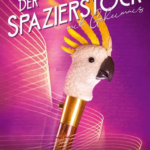
Gadget or System Canes


Photo: Spielzeug Welten Muzeum Basel

Gadget or system canes by inventive spirits are perhaps the most fascinating and most collected canes. These quirky creations feature hidden devices such as a fan, an umbrella, a bottle and drinking glass, a perfume bottle or a sword. Sometimes also scalpels and syringes in canes for doctors. Also, musical instruments, fishing rods, telescopes, sewing kits and corkscrews can be hidden in the head of a cane. More than 1500 patents were applied for during the 18th and 19th centuries. The two essential properties of the gadget cane are something hidden and a combination of several tools or functions.

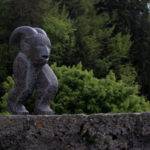
Sculpture garden in Valagin


Gaspard Delachaux (1947). Photo: chateau-de-valangin.ch

The project is based on the creation of a sculpture garden in the park of the Valagin Castle entitled “Jardin Mangelune – Gaspard Delachaux”. The sculptures combine the artist’s works (Stone Animals) in a setting that plays with the walls of the castle and the lush vegetation. This thematic project is a relationship between the imaginary world of monsters and art, architecture and legends.