The Eiserne Hand and the Memorial 1933-1945 in Riehen

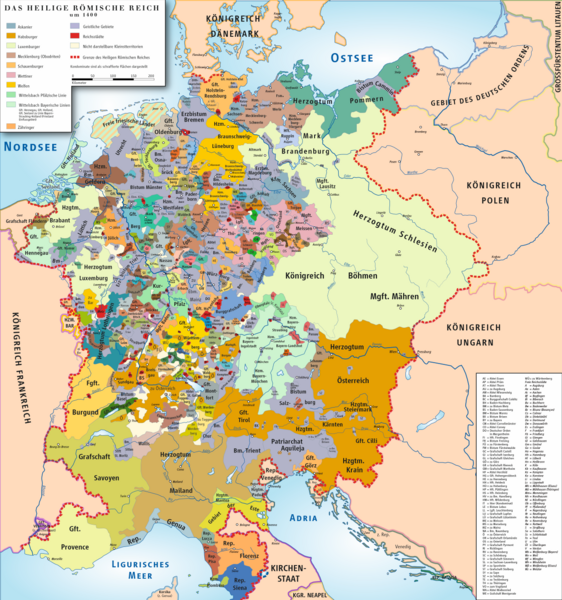
The jagged border of today’s Switzerland, with its numerous twists and turns and even some foreign enclaves, is the result of a complex interplay between nature, politics, and sometimes chance. The borders of the 26 cantons mostly follow the same pattern. Within several cantons, there are even enclaves of other cantons, and sometimes, the border looks more like a patchwork of three cantons.

Since 1803, the High Rhine (and Lake Constance) has been the natural border between the Swiss Confederation on the left bank of the Rhine and the German (Grand Duchy of) Baden and (Kingdom of) Württemberg, Bundesland Baden-Württemberg since 1947.

Collection: Dreiländermuseum Lörrach

However, this border river also has exceptions: the canton of Schaffhausen lies mainly on the right bank of the Rhine, and the canton of Zurich extends for several square kilometres along the right bank.

However, the most striking Swiss appearance on the right bank of the Rhine is in the canton of Basel-Stadt. The Basel-Stadt canton comprises three municipalities: Basel, Riehen, and Bettingen. Riehen and Bettingen lie on the right bank of the Rhine. Still, a part of Basel (Kleinbasel) also lies on the ‘German’ side of the Rhine, with the Badische Badenhof of the Deutsche Bahn (DB) in Kleinbasel being located in German territory within Switzerland.

Today, this is not an obstacle for travellers. However, from 1933 to 1945, and especially from 1938 onwards, it was a border between life and death, freedom and dictatorship, for many.

Border Stone in the Eiserne Hand, Riehen

1933 – 1945

The Nazis’ seizure of power on 30 January 1933 led to terror and persecution of political opponents, dissenters and Jewish citizens from the very beginning. After the pogrom of 9 November 1938 (Kristallnacht) until Germany’s occupation and capitulation in 1945, thousands of Jewish civilians, refugees from occupied territories, Allied soldiers and forced labourers crossed this Swiss border on the right bank of the Rhine.

Collection: Gedenkstätte Riehen

Although the German campaign against the Netherlands, Belgium, Luxembourg, and France in May 1940 did not lead to a German invasion of Switzerland, plans were in place (Operation Tannenbaum). Perhaps France’s rapid capitulation prevented this invasion. The costs for Germany (and Italy) no longer outweighed the benefits of a neutral neighbouring country with essential transport links and (weapons- and financial) industry, which could not be bombed.

However, the permanent fear of a German invasion determined daily life in Canton-Basel-Stadt and Switzerland (see also the German occupation of Italy in 1943 and Hungary in 1944).

In any case, from 10 May 1940, the border on the right bank of the Rhine was and remained hermetically closed with barricades and patrols. This ended centuries of social and economic contacts and relationships for many residents.

Moreover, many Germans (even then) lived or worked in this canton and supported the new regime. However, most Swiss citizens did not support the ‘Hilter-Zeug’, which led to tensions with the large German community.

Collection: Gedenkstätte Riehen

Refugees

The permanent fear of Germany, economic problems, unemployment, poverty for parts of the population and anti-Semitism of the time took their toll on many (Jewish) refugees.

Switzerland remained a democratic and multicultural oasis surrounded by ruthless regimes. Hitler had once called Switzerland an ‘Ungeheuer,’ and Heim ins Reich also applied to German-speaking Switzerland. Mussolini had Italian-speaking areas of Switzerland in mind ( Irredentismo). Concessions, compromises, and cooperation with these dictators were a matter of survival for the small country amid a desert of thousands of kilometres of dictatorship.

Collection: Gedenkstätte Riehen

The details of the formal Swiss attitude towards Jewish and other refugees are well-documented and widely known (see, among others, the Bergier-Kommisson report of 22 April 2022). Federal President Kaspar Villiger already aptly summarised this attitude on behalf of the Swiss government in a statement on 7 May 1995:

Ich will aber nicht verhehlen, dass es einen Bereich gab, der sich aus heutiger Sicht der Rechtfertigung durch irgendwelche ‘äusseren Umstände’ entzieht. Es steht für mich ausser Zweifel, dass wir mit unserer Politik gegenüber den verfolgten Juden Schuld auf uns geladen haben.

Die Angst vor Deutschland, die Furcht vor Überfremdung durch Massenimmigration und die Sorge um politischen Auftrieb für einen auch hierzulande existierenden Antisemitismus wogen manchmal stärker als unsere Asyltradition, als unsere humanitären Ideale.

Schwierige Zielkonflikte wurden auch überängstlich zu Lasten der Humanität gelöst. Wir haben damals im allzu eng verstandenen Landesinteresse eine falsche Wahl getroffen. Der Bundesrat bedauert das zutiefst und er entschuldigt sich dafür, im Wissen darum, dass solches Versagen letztlich unentschuldbar ist’.

Riehen and the Eiserne Hand. Collection: Gedenkstätte Riehen

The Eiserne Hand

The tragedy for Jewish refugees, in particular, occurred at all Swiss border posts, in Tessin, Geneva, St Gallen, Schaffhausen, Graubünden and other border cantons. However, the situation on the right bank of the Rhine in Canton Basel-Stadt was exceptional.

First, there were train connections to the Badische Bahnhof across Swiss territory (the Wiesentalbahn), from Weil am Rhein via Kleinbasel to Grenzach and from St Louis to the French station in Basel. Refugees sometimes used these trains to escape into Swiss territory.

However, the main escape route was the Eiserne Hand (the Iron Hand) in the municipality of Riehen. This strip is about 2 kilometres long and 300 metres wide, stretching like a hand (or finger) into Germany.

The Germans had stopped enclosing this area with barbed wire and other barricades due to a lack of materials, and the Swiss government refused to do so despite German exhortations.

Maienbühl today

Despite numerous patrols, thousands of refugees managed to reach this border. Maienbühl Farm was often the first point of reception where hospitable shelter was offered.

However, there was a legal obligation to inform the authorities, and then the bureaucratic procedure with the border police and authorities began. Jewish people were not political refugees according to the national government, and had to be sent back for this reason. The border of hope and life thus became a border of disappointment and death.

Borderstone 51 was a point of hope, liberty, and life, but it appeared to be a deception and death for too many. Collectie: Gedenkstätte Riehen

Most citizens took the asylum policy for granted. However, a small minority of organisations, churches, and politicians opposed the national government’s policy and helped refugees obtain shelter and documentation.

Even some border guards did not send refugees back. The vast majority, however, fulfilled their bureaucratic duties, though often, archives testify, with great reluctance.

The government of Canton-Basel-Stadt also disagreed with the national government’s policy and used its cantonal freedom to grant residence permits to as many refugees as possible. However, the Eiserne Hand was no barrier to life and liberty for too many.

Gedenkstätte Riehen

The municipality of Riehen gives this history, especially the stories of rescued and rejected refugees, a face and sometimes even a voice. An extensive documentation centre and many personal testimonies from refugees, border guards, residents, refugee helpers, politicians, and journalists put this tragedy in perspective.

Also on the German side of the border were some brave people who risked their lives to help Jews and other refugees. Some train drivers even slowed the speed of the train on Swiss territory, allowing refugees to jump off the train.

Afbeelding: Gedenkstätte Johann George Elser, Königsbronn

One refugee, however, deserves special mention. Johann Georg Elser ( 1903-1945 ), a carpenter from Königsbronn, committed an unsuccessful attack on the Führer in Munich on 8 November 1939. He was arrested by the German police when he tried to cross the Swiss border near Constance.

This place does not judge. It does, however, prominently feature Kaspar Villiger’s testimony alongside some of the citizens, officials, and politicians who did not follow the national government’s policies.

Collection: Gedenkstätte Riehen

Switzerland is not the only country that has been confronted with this past. It is easy to judge and especially condemn with the benefit of hindsight. Who becomes the hero when it matters is impossible to predict in peacetime and a democracy. The same applies today to the many activists.

In any case, Switzerland did not fail as a nation against the German and Italian aggressors. The country had no choice but to resist these dictatorships to the best of its capabilities.

The Eiserne Hand symbolises moral, political, and (in)human attitudes in an (in)human time. The memorial is also a place for (self) reflection.

(Source and further information: Gedenkstätte Riehen)

Impressions of the Eiserne Hand

Borderstone 60 of the Eiserne Hand. Collection: Dreiländermuseum Lörrach

Impressions of the Gedenkstätte Riehen

Impressions of the surroundings

Inzlingen (Germany)

Alsatian German and the Little Prince in Alsace

Languages remain the most important means of communication, both orally and in writing, through the use of words and gestures. Multilingual and multicultural Switzerland has long been aware of this. However, neighbouring regions also have a fascinating linguistic history and development.

It applies to Savoy in France, South Tyrol (Adige), the Aosta Valley, Piedmont and Lombardy in Italy, Tyrol and Vorarlberg in Austria, the Lake Constance region, Baden, Franche-Comté and Alsace.

Alsace

Originally German-speaking, Alsace gradually became bilingual after its annexation to France in the 17th century. From 1945, the region began to develop increasingly as a purely French-speaking area.

Until World War II, residents of Baden, Basel, and Alsace, for example, could communicate well with each other in the Alemannic dialect. After 1945, however, these regions developed their linguistic paths.

Image: Ecomusée d’Alsace

For some years now, Elsässerditsch (German spoken in Alsace) has been experiencing a revival. Place names are (again) bilingual (in Alsatian German and French), and the media and culture pay more attention to the linguistic identity of the region.

The centuries-old Alemannic and Francish languages in Alsace are thus not wholly lost. Due to the centuries-long connection with the north-western German-speaking cantons (Solothurn, Basel-Stadt, Basel-Landschaft, and Aargau) and the French-speaking Swiss Jura, the development of the Alsatian dialect and French is briefly discussed, using Information from the Ecomusée d’Alsace in Ungersheim.

Elsässerditsch, French and Alsatian-Yiddish

The museum tries to raise awareness of the dialects and presents a bilingual model of name-giving for the municipalities in Alsace.

Five Germanic dialects.

Hochalemannisch in southern Alsace (Sundgau), Niederalemannisch in the north, Niederalemannisch in the south, Pfälzer Rheinfränkisch (francique rhénan palatin) in northern Alsace and Lothringisches Rheinfränkisch (francique rhénan lorrainor Lothringer Platt) in the Krummen Elsass (l’Alsace Bossue) near Lorraine.

The two Roman dialects are spoken in northern and southern Alsace. In addition, Yiddish existed.

The Germanic and Roman dialects derive from dialects underlying High German and modern French. Germanic dialects in Alsace are found in neighbouring areas of Switzerland, Germany, and Austria.

Two Roman dialects

Le Roman-Lorraine occurs in four Vosges valleys in Alsace: Bruche, Lièpvrette, Giessen, and Weiss. They are called ‘Welche’ in Alsace (Welsche in Swiss German!). These dialects are derived from Latin.

The Roman dialect in Upper Alsace (le roman du Haut-Rhin), Franche-Comté, and the Swiss Jura developed around the 7th century. Words of Celtic and Alemannic origin were also adopted in this area.

These Roman-Lorraine dialects in Alsace belong to the Oïl languages, which include all Roman languages north of the Loire and from which modern French emerged. In areas close to the Frankish and Alemannic language border, many Germanic expressions were incorporated into these Roman dialects.

Today, modern French is the standard language almost everywhere, both in France and in French-speaking Switzerland. Patois has practically disappeared or no longer plays a role, except in a few regions such as Valais.

Conclusion

Today it is hard to imagine that until 1945, Alsatians could communicate in dialect with inhabitants of Basel and Baden without any problems! The Sprachpanorama in Laufenburg also offers detailed and fascinating insights into this perspective, Alemannic dialects, and the history of the German language.

The Ecomusée d’Alsace places its language model in the perspective of Alsace in past centuries, a Ballenberg Museum in Alsace.

Le Petit Prince (The Little Prince) also watches from a small distance at the Parc du Petit Prince, a theme park set around the world of Le Petit Prince (1944) by Antoine de Saint-Exupéry (1900-1944).

The author would have been proud of the ‘D’r Klein Prinz’ edition of his world-famous story in the Alsatian dialect.

The DreylandDichterweg/ Poetry Trail along the Rhine features 24 Alemannic poets from Alsace, Baden, and Basel. The route runs from Basel to Huningue and Weil am Rhein.

(Source and further information: Ecomusée d’Alsace in Ungersheim)

Impressions of the Ecomusée d’Alsace


50 Years Musée international d’horlogerie in La Chaux-de-Fonds

The half-century anniversary of the Musée International d’horlogerie, located in the heart of the Parc des musées in La Chaux-de-Fonds (canton of Neuchâtel), will be celebrated in grand style on the weekend of 19 and 20 October, 50 years to the day after its opening.

In addition to a programme of guided tours, workshops, and demonstrations, the museum will offer the public several artistic performances in tribute to the emblematic Brutalist building.

Among the other highlights on Saturday, October 19, from 10 am, are La Turlutaine’s puppets in a new creation, Evaprod’s singers, and L’Amuse-Bar’s Blind Tests, who will bring the party to a climax with the blowing out of the candles of a giant birthday cake at 10.30 pm.

On Sunday, October 20, eight dancers from the company MOOST, led by Marc Oosterhoff, and dancers from ADN – Danse Neuchâtel on the roofs of the MIH will be the finale of this anniversary weekend.

On both days, the MIH will also present a unique, recently acquired work to the public at 1:30 pm and 3:30 pm.

Musée international d’horlogerie: Saturday 19 October, 10 am-5 pm and 8 pm-00 pm. Sunday 20 October, 10 am-5 pm, free admission.

(Source and further information: www.mih.ch)

Tessanda Handweaving Mill and der European Textile & Craft Award

]The European Textile Academy, an independent international platform for interdisciplinary knowledge transfer in the textile industry, organises the European Textile & Craft Award.

The aim is to recognise outstanding achievements in contemporary and traditional craftsmanship, art professions, and their connection to the world of design. In 2024, Tessanda won first prize in the Textile Craft category.

Tessanda

The Tessanda handweaving mill in Sta. Maria (Canton Graubünden) was founded in 1928 to offer women a job and the opportunity to receive recognised professional training as handweavers. Tessanda was established under the patronage of the ‘Società ütil public Val Müstair’, a non-profit association that has existed since 1910.

At the same time as the Tessanda was being set up, the ‘Società ütil public Val Müstair’ association also founded the Sta. Maria school, which is still active today and where the two-week block courses for prospective weavers from all over Switzerland still take place three times a year.

The school in Sta. Maria is the smallest in Switzerland and is supervised by the ‘Società ütil public Val Müstair’. Tessanda has been an independent foundation since 1955.

Today, Tessanda is one of three professional handweaving mills in Switzerland and an important cultural asset of Val Müstair. It still weaves by hand on wooden looms, some over a hundred years old. Currently, 17 well-trained and experienced hand weavers and seamstresses work at Tessanda.

Linen

A hundred years ago, flax was still being cultivated in Val Müstair. The women of Müstair spun their yarn and wove shirts, bed linens, kitchen towels, and other items by hand on their traditional looms. Most of the textiles were for their use.

Processing the harvested flax plants into natural linen yarn is a laborious and arduous process. That is why the flax fields gradually disappeared from Val Müstair and the whole of Switzerland. Processing became too expensive.

However, flax fields are not only valuable sources of yarn but also highly beneficial for promoting biodiversity. The Val Müstair Biosphere Nature Park and the Tessanda launched the Reintroduction of Flax in the Val Müstair project in 2021. Since then, two farmers and private individuals have planted and harvested flax.

The first flax harvest took place in October 2023. After harvesting the dried flax plants, people met to process them together. The stems were fluted, broken, and then chewed on old equipment. The last harvest occurred on 12 October at the Tessanda premises in Sta. Maria.

(Source and further information: Handweberei Tessanda, Sta. Maria)

Museum d’engiadina bassa Scuol

Exhibition about Tessanda in the museum and Chalandamarz

The Clavel-Villa, Emperor August and Augusta Raurica

Emperor Augustus (63 BC-14 AD), whose statue stands on the Castelen Estate in Augst (Canton of Basel-Landschaft), rightly turns his gaze to the Clavel-Villa. Basel did not yet exist in his time, and the Rhine still flowed in various tributaries through uninhabited land. There were only a few small Celtic settlements, including on Münster Hill and today’s Novartis Complex site.

View of Basel and the Rhine Knee from the Clavel Villa in 2024

Basel was also ‘romanised’ in a few generations, and the area became later known as Basilea, but Augusta Raurica was the most important city in this region on the Rhine. Augusta Raurica was founded in 44 BC by Lucius Munatius Plancus (87-14 BC), likely at the initiative of Julius Caesar (100-44 BC).

At its peak in the second century AD, the city had a population of around 20,000. It was constructed according to the Roman model. It included a stone theatre, two (!) amphitheatres, a forum, a basilica, various bathhouses, temples, city palaces, residential areas, a harbour, and a bridge over the Rhine.

After the Romans left in the fifth century, the Roman urban structure was lost, and the rise of the city of Basel began. The Augusta Raurica open-air museum offers a fascinating glimpse into the Roman Empire-era Augusta Raurica.

View of the Roman theatre from the Clavel-Villa

On the site of Augusta Raurica, the villages of Augst and Kaiseraugst (Canton Aargau), with several hundred inhabitants, emerged in the Middle Ages. For centuries, the Roman ruins were primarily used as building materials. Interest in the Roman past emerged only at the end of the 16th century.

This eventually led to the opening of the Augusta Raurica open-air museum in 1957. Especially in the 19th and early 20th centuries, the scientific, financial and organisational basis for this museum was laid.

Alexander Zschokke (b. 1955), bust of René Clavel at the Antikenmuseum Basel

One of the great personalities who contributed to the museum’s realisation was René Clavel (1886-1969), the namesake of the Clavel-Villa, which overlooks Basel and Augusta Raurica.

Invitation to a garden party at the Castelen-Villa. René Clavel also participated in the famous Gordon Bennett flying competition.

Clavel, a wealthy Basel industrialist (and brother of Alexander Clavel (1881-1973) of the Wenkenhof in Riehen), was not only an enthusiastic pilot and balloonist but also interested in antiquity and Rome.

In 1955, he donated the Domus Romana, among other things, to the Augusta Raurica Foundation, having previously bought historically relevant land for the museum.

He bought the land and buildings of the current Clavel-Villa in the early 20th century. This site not only overlooked ancient Augusta Raurica but also had a rich Roman history of its own. In Roman times, there were large villas (domus) and residential areas (insulae) for the elite. Nowadays, we would speak of a villa quarter.

This ‘villa district’ also fell into disrepair after the fifth century, and it was not until the 17th century that documents mention vineyards, military buildings, and cannons at this location. The name Castelen probably dates back to this time, ‘auf Cästellein’.

Entrance to the Clavel-Villa

Clavel purchased the Castelen Plateau (land) to integrate the existing buildings into a new manor house, which is now known as the Clavel-Villa. Since 1969, the Römer-Stiftung René Clavel has owned the villa, which has since collaborated closely with Augusta Raurica and the Canton of Basel-Landschaft.

Wall of the Clavel-Villa and Emperor Augustus

The complex, interior, and garden have remained in the same state, apart from some extensions (including the meeting room (Plenarsaal)) and renovations. The client and his architect, Max Alioth (1883-1968), realised their goal: a historicising atmosphere with an eye for craftsmanship, the Roman past, and details in the so-called Heimatstil.

A Roman mosaic in the villa

The five bronze copies in the garden at the front of the house and the bronze statues at the back are made by the firm Chiurazzi in Naples. The decoration of several villa rooms, including the Pompeianum, is, as it were, the precursor of the Domus Romana.

The architectural garden in front of the Clavel-Villa 

and the private garden at the back

Augustus now looks out on the Clavel-Villa and even Romulus and Remus with respect, satisfaction, and approval. Following another legend about Rome’s origins, they stand apart from the wolf in the architectural garden at the front.

The wolf at the front 

and Romulus and Remus at the back of the villa

Today, the villa is a meeting place for various cultural events, including the Jacob Burckhardt-Gespräche, the Colloquia Raurica, university meetings and, of course, staff and researchers of Museum Augusta Raurica.

(Source and further information: H. Reinau, M. Schweizer, Castelen. Geschichte und Gegenwart, Augst 2010)

Impressions of the interior

A painting by Gilbert Clavel (1883-1927), brother of René, artist and resident in Italy

The heraldry of Clavel

A mill symbolises the stability of the canton and the Confederation

1461 Peter Reich von Reichenstein bought Landskron Castle, including a mill on the Mühlbach at Flüh. Today, Landskron Castle is in France, near the village of Leymen (Alsace), just over the border from the canton of Solothurn. At the time, however, Alsace still belonged to the Habsburgs.

Flüh consisted of a few farms. The neighbouring village was Hofstetten. Today, the municipality is called Hofstetten-Flüh (canton of Solothurn). Hofstetten was not just any village; until 1408, it was one of the seven free imperial villages of the Blauen (Reichsdörfer am Blauen). In 1408, the Lords of Rotberg acquired the seven villages.

They subsequently lost their independence (including jurisdiction and ownership of meadows and forests) after other lords (including the Bishop of Basel and the lords of Hofstetten) had already gained more rights.

Hofstetten

Witterswil

In 1515, Solothurn acquired Hofstetten and Flüh from the lords of Rotberg, and from that point forward, Hofstetten and Flüh became part of the canton of Solothurn. The canton of Solothurn experienced European history and the (civil) wars of religion at close quarters but emerged relatively unscathed.

As a result, the Flühmühle mill was never destroyed during the war and remains standing today. Since 2004, it has primarily served a residential function. For over 550 years, it was used as a grain mill and, from the 19th century onwards, as an oil mill (Ölerei) and cider mill (Mosterei).

Solothurn

Solothurn, France and the Habsburgs

The Reformation, which occurred between the 1520s and 1530s, brought significant political and religious changes to the region. Basel and Bern became Protestant, while Solothurn remained Catholic (eventually).

France took over southern Alsace, including the Sundgau and the Landskron, at the time of the Peace of Westphalia (the end of the Thirty Years’ War) in 1648, first with the Margrave of Baden and then as sole owner from 1663. Sébastien le Prestre, Seigneur de Vauban (1633-1707), transformed the castle into a fortress. In 1813, Allied troops destroyed the fortress in the battle against Napoleon.

The Landskron since 1813

Hofstetten-Flüh, the Virgin Chapel and the Flühmühle mill

The first written mention of the Flühmühle dates back to the Landskron sale contract (1461). At that time, a miller rented the mill.

Since 1543, the mill has also been featured in a special place in the Marienkapelle (Chapel of the Virgin) or Siebenschmerzenkapelle (Chapel of the Seven Sorrows, 15th century). Mariastein Abbey (built in 1655) did not yet exist.

The year 1541 was a significant milestone for the mill. On Saint Lucia’s Day (13 December), the knight Hans Thüring, son of the lord Jacob Reich von der Landskron, had an accident near the Chapel of the Virgin when he fell off the cliff. During the raging plague, he and his relatives from Pfirt and Landskron had taken refuge in Mary’s chapel to benefit from the healthier air.

According to legend, he then climbed up there alone. He clung to a branch to look down into the gorge. The branch broke, and he fell into the precipice. He survived; only his jaw was broken.

An anonymous painter immortalised this event in 1543 in a painting known as the ‘Miracle’ (Mirakelbild). This painting depicts the episode with the chapel of the Virgin and the Bruderhaus on the left, the mill in the middle and the Landskron on the right. The story of the miraculous fall is depicted on the reverse of the painting.

Werner Küry (the miller) and his valet Simon brought Hans Thüring to the mill on horseback. He was nursed for eight days at the mill before being taken to Landskron. On the left is the priest Jakob Augsburger from the Virgin Chapel. The castle lord probably commissioned the painting as a thank-you for the favourable outcome.

The Chapel of the Virgin also benefited. He also redecorated the chapel in honour of Mary, particularly with the family coat of arms and the painting of the miracles. Since then, this chapel has also been known as the Reichenstein Chapel (Reichensteinische Kapelle).

In the context of the Reformation and Counter-Reformation of the time, the Catholic canton of Solothurn was thus able to emphasise God’s grace and, therefore, Catholic superiority.

The depiction of the mill in the Chapel of the Virgin and the Landskron is an important historical and cultural source. Although the painting may not fully reflect reality, it provides a good impression of the mill, its function, and its location.

The Flühnühle today

After 1543

After 1543, the Getreidemühle (grain mill) underwent several changes, with parts disappearing or being replaced and the site being extended. Nevertheless, the foundations provide a good record of their development.

The mill changed ownership several times but remained true to its original purpose: as a grain mill. The grain came mainly from the immediate vicinity and, to a lesser extent, from the Sündgau. In the 19th century, the facility was extended to include an oil and cider mill.

Unknown artist, the baths of Flüh and the Mariastein monastery, 18th century, picture: Wikipedia

The Flüh Baths: 1560-1970

In addition to the Flüh mill, Flüh also boasted another attraction between 1560 and 1970: Bad Flüh (the Flüh baths). Since 1560, the village has been known for its water springs and bathhouse. However, the monks and visitors to Mariastein claimed that the main attraction was the meetings between (scantily clad) men and women. In any case, the site was demolished in 1970 after a long decline.

Mariastein

  1900-present day

In 1953, the mill’s sizeable wooden wheel was replaced by a turbine, which was then supplied with electricity. The mill continued to operate for several decades—the last report dates back to May 2004, after which it was converted for residential use. However, the mill structures are still largely intact, and the new residential function does full justice to the mill.

The Flüh mill (even though it no longer grinds), the Talbach, and the Mühlbach bear witness to a past with a future. Fifty metres away, the Talbach and Mühlbach join and continue flowing into the Birs.

Conclusion

This continuity has been possible thanks to renovation, innovation, good management, political stability and diplomacy on the part of the canton and the Confederation, even in times of (civil) war in neighbouring countries and within the Confederation, and indeed also some luck.

This (relative) stability is not self-evident. Still, it is one of the fundamental characteristics of the Confederation: the search for what is feasible, the pragmatic compromise, even in the era of the Reformation, the wars of religion (European and Swiss) of the sixteenth and seventeenth centuries and the Sonderbund war of 1847.

Church in Sta. Maria (Val Mustair, canton Graubünden), an example of a Simultaneum church from the 16th century until well into the 19th century, Catholics on one side, Protestants on the other

Simultaneum (the joint use of churches), the Disputatio, the Ilanz articles in the Free State of the Three Leagues (1524/1526) and even the separation of the cantons (the Appenzell in 1597) at a time of Catholic-Protestant unrest are typical Swiss solutions.

The town of Solothurn rightly honours one of the earliest representatives of this Helvetian characteristic, Nicolas de Flüh (1417-1487).

Solothurn

Weissenstein, Bruder Klaus Kapelle

Switzerland also has a unique way of appreciating the old and the traditional, valuing them alongside new developments and adapting to them.

Innovation, modernisation, and high technology, alongside —and not necessarily always in place of—the old structures, form the foundation of this society and the participation of its citizens, thanks to direct democracy, subsidiarity, federalism, and decentralisation.

In short, the nation has an incompatibilité d’ humeur and is a contradictio in terminis in its relationship with the European Union.

Impressions of Hofstetten-Flüh, Witterswil and surroundings

The Schöpfliweg between Hotstetten and Flüh, a former Celtic road and settlement

Hofstetten

St. Johanneskapelle 


St. Niklauskirche

The moated castle Binningen and the Anabaptist David Joris

The moated castle (Weiherschloss) Binningen was first mentioned in 1299. Its owner is unknown, but the Basler citizen Heinrich von Zeise is likely to have built it.

Johann von Brügge alias David Joris and Joachim van Berchem bought the castle, the St Margarethen estate and the Holeeschlösschen in 1545. In 1574, Nikolaus von Hatstatt took over the castle.

Many other owners resided in the castle, and various renovations and extensions were carried out until 1960. The Imhof-Haus (built in 1591) and the 16th-century Burgerhaus are part of the complex.

The Bürgerhaus (on the left),  das Imhof-Haus (on the right)

The municipality of Binningen acquired the complex in 1960, and today, Schloss Binningen is home to a restaurant and a hotel.

(Source and further information: Schloss Binningen)