
The forest and nature reserve Reinacher Heide at Forum Würth Arlesheim


Forum Würth Arlesheim and the exhibition 'Forest Fascination. Trees and Woods in Paintings and Sculptures'. Photo: TES

Numerous artists have been trying for centuries to surpass nature’s beauty. However, nature is the greatest artist, and humans cannot reproduce the original in all its splendour. Artists can, however, depict or interpret nature differently. This can be based on aesthetic, political, social, or historical motifs.

Italian masters introduced the first (fictitious) landscapes in the 14th century, and Dutch and Flemish masters followed with polders, forests, meadows, rivers, and, later, even fictitious mountain landscapes. German and English artists gave a place to romantic impressions of nature, Jean-Jacques Rousseau introduced nature into literature, French impressionists had their own perspective, and the 20th and 21st centuries inspired modern artists in their own way.

Norbert Tadeusz (1940-2011), Aaper Wald II, 2006. Collection Würth, Inv. 15275

Roots of a tree along the Birs

And yet nature is still unrivalled. Forum Würth in Arlesheim, however, has an original concept for combining the art of nature with the art of people. The exhibition Forest Fascination. Trees and Woods in Paintings and Sculptures (Waldeslust. Bäume und Wald in Bildern und Skulpturen) prominently features nature among works by around 60 artists from the 19th century to the present day. The works range from painting, sculpture, drawing, installation art, photography, film, video, and other artistic applications.

As usual, the works come from the Würth Collection and have already been shown at other Würth locations. However, the special thing about travelling exhibitions from the Würth Collection is that each location has its own perspective, as is the case in Arlesheim.

View of the exhibition

The forest and the tree are often a theme in Switzerland. The motifs range from concern for the forest, the role of the tree in society, the city and nature, respect for the tree as a creation of nature, the forest as a source of inspiration, tranquillity and as an authentic habitat, the forest as a place of stories, legends and fairy tales, to the forest as a place for travelling and hiking.

Robert Longo (* 1953), without title (Fair mount Forest), 2011, Collection Würth, Inv. 15015. © 2024, ProLitteris, Zurich. Photo: Robert Longo Studio

The tree and the forest are addressed in this exhibition through six themes: The tree from the root system to the treetop, the forest as a place of retreat, the forest as a counter-world to civilisation, the forest as a projection space for longings and fears, travelling and hiking through forests and concern for the condition of forests and trees.

View of the exhibition

A separate room on the Walderlebnis (forest experience) shows the forest’s most relevant aspects and characteristics in the four seasons. The film in this room shows the atmosphere and cycles of Swiss forests from the valley to the mountains.

The exhibition gives nature its rightful place. Nature is never far away in Switzerland, not even in the Basel Agglomeration. The Reinacher Heide along the Birs (canton of Basel-Landschaft) is a protected nature reserve located just a hundred metres from Forum Würth Arlesheim and is part of the exhibition.
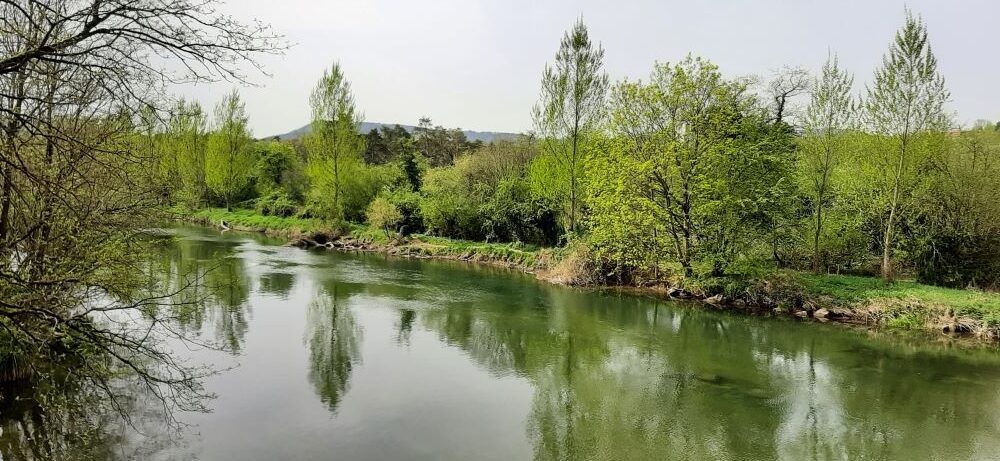
The Birs and nature reserve the Reinacher Heide

Visitors can take an audio walk and a walk guided by a forester (Swiss Ranger). The exhibition also offers an extensive programme of activities for young and old.

(Source and further information: Forum Würth in Arlesheim)

The Erlebniswelt

Albert Anker and his Reading Girls


Albert Anker, die Lesende, 1883, Musée des Beaux-Arts, Le Locle Foto: © Le Locle, Musée des Beaux-Arts, Lucas Olivet

The exposition Reading Girls focuses on the painter Albert Anker (1831-1910). As a politician, the artist advocated children’s right to an education, and as a painter, he often represented girls and young women in reading and writing.

Albert Anker is one of the best-known Swiss artists. He is highly appreciated for his detailed and idealising representations of traditional peasant communities. Aside from his work as an artist, he also held official posts in the municipality of Ins and the canton of Bern. He was active in school policy and dealt with educational matters, such as establishing the local secondary school in 1896.

Albert Anker, self-portrait, 1901, Kunstmuseum Bern, Gift from his widow Anna Rüfli (1835–1917). Photo: © Kunstmuseum Bern

The exhibition in the Kunstmuseum Bern puts the motif of the reading girl within the context of his vision of the world and the emancipation of women in Switzerland. The presentation is based on the museum’s collection and loans from museums and private collections.

Albert Anker, Cécile Anker, 1886. Collection: Centre Albert Anker, Ins. Foto: © Kunstmuseum Bern

The exhibition combines 25 paintings, watercolours, and drawings,. During Anker’s time as an artist and a politician in the 19th century, girls and women’s access to education could not be taken for granted. Only after the total revision of the Swiss constitution in 1874 was compulsory education—for both sexes—imposed across the country.

As an artist, he picked up the education theme and represented it with images of children on the way to school and in class, as well as many depictions of reading girls. The girls and young women – always portrayed as individuals – are naturally immersed in their reading and writing.

This focus on Albert Anker coincides with the forthcoming opening of the Centre Albert Anker in Ins on June 7th.

The exhibition lasts until July 21st, 2024.

An overview of the exhibition. Photo: TES

Ingenious Women in Basel


Lavinia Fontana (1552-1614), Self-Portrait , 1577. Collection:  Accademia Nazionale di San Luca, Roma. Photo Credit: Mauro Coen

The exposition (Ingenious Women: Women Artists and Their Companions) shows works by eighteen women artists, contextualising them for the first time with those of their fathers, brothers, husbands, and teachers.

Women artists portrayed royalty and nobility, owned workshops, and schooled students, but mostly fell into oblivion.

Northern and southern Europe in the sixteenth and eighteenth centuries was home to more women painters, teachers, and graphic artists than we often realise nowadays. At the same time, it was deemed socially undesirable and would be pursued only under exceptional circumstances.

However, if aided by family members, teachers, and other pioneers, the prescriptive roles could be breached. Hence, typically, women artists stemmed from artistic families, where they could acquire the necessary skills outside of official studies.

The exposition brings together around 100 portraits, history paintings, still lifes, drawings, and graphic arts from the Renaissance, Baroque, and Classicist epochs and puts them into the perspective and context of their time.

Augusto Giacometti in Aarau and Chur


Augusto Giacometti (1877 - 1947), Self Portrait 1941 Bündner Kunstmuseum Chur. Foto:TES

The exhibition Freiheit | Auftrag (Freedom, Commission) focuses on a multi-faceted artistic personality whose oeuvre counts among the highest expressions of art in the first half of the 20th century.

The exhibition travels along the “Freedom” and “Commission” issues to explore the relationship between free creation and commissioned art. It reveals the tension within which Augusto Giacometti (1877-1947) spent his productive life as an artist.

Currently, the Bündner Kunstmuseum Chur is showing an exposition dedicated to the artist’s works on paper.

(See also a painting of Augusto Giacometti in the Flowers for Art in the Aargauer Kunsthaus)

Augusto Giacometti and his Works on Paper


Augusto Giacometti (Stampa 1877–1947 Zürich) Blühende Hymenocallis, 1897, Museo Ciäsa Granda

Augusto Giacometti (1877-1947) was one of the most important Swiss artists of the early 20th century. Born in Stampa in Bergell (canton Graubünden), he studied in Zurich and Paris and spent years in Florence before settling in Zurich.

Through his training in Paris, he became involved in Art Nouveau. He turned sketches of plants and animals into ornamental works and regular repetitions of the same elements.

These formed the basis for his pastel drawings, in which light and colour were the central means of expression. He was a pioneer who also translated the experience of transparent glass windows and the brightness of butterfly wings into his art.

From the beginning, drawings and works on paper were among his primary means of artistic expression. Here, he developed his visual language between figuration and abstraction. The exhibition focuses on his works on paper and thus shows the foundations of this oeuvre.

The Aargauer Kunstmuseum simultaneously shows the exhibition Augusto Giacometto. Freiheit und Auftrag.

An Egyptian pioneer and Paul Klee


Hamed Abdalla Asfour, 1955 Mischtechnik auf Seidenpapier und Masonit, Artist estate. Photo: Emmanuel Littot © Artist estate

Hamed Abdalla (1917-1985) is a pioneer of Egyptian modernism. The Zentrum Paul Klee dedicates a presentation to his work in the series FOKUS. FOKUS shows particular aspects of Paul Klee’s work or contributions to the global reception of this artist within the permanent exhibition Kosmos Klee.

Abdalla was born in Egypt. His origins, mainly the villages and landscapes of the Nubian region and Cairo, were motifs at the beginning of his career. From the 1950s, Abdalla lived in Copenhagen and Paris, but he continued to refer in his works to the political situation in his homeland.

As an artist of the Hurufiyya movement, which explored new artistic possibilities of the Arabic alphabet, Abdalla developed his own “creative words”: he translated Arabic words into colours, bringing together abstraction and human figuration, the secular and the sacred, and the poetic and the political. Abdalla also experimented with different techniques and materials.

He also studied European modernism, especially Paul Klee and how Klee incorporated non-European visual languages such as Egyptian hieroglyphics into his art. Abdalla looked at Klee from a new perspective by identifying and highlighting those elements in which the Bauhaus artist had appropriated non-European motifs.

With around 50 works, the exhibition showcases these and several other focal points from Abdalla’s oeuvre.

The Bronze Age in Bern


The 'Bronze Hand of Prêles; © Archäologischer Dienst des Kantons Bern, Philippe Joner

Five thousand years ago, a new material, bronze, revolutionised the world. The exhibition “And then came bronze!” shows the fascinating era in which highly efficient tools and weapons were mass-produced for the first time and in which war became an established means of conflict resolution.

The exhibition also features the Bronze Hand of Prêles, a sensational archaeological find discovered in the Bernese Jura in 2017. The hand is the oldest bronze replica of a human body part in Europe.

The acquisition of raw materials for bronze production led to an unprecedented network of trade relations between the Near East, Egypt and Europe. The global world of the Bronze Age was marked by innovation and progress, but also by social inequality and violence. Powerful elites and hierarchies emerged.

A special highlight is the Bronze Festival on the weekend of 22 and 23 June, when the museum offers a wide range of activities. From 16 October to 27 November, experts will discuss topics relating to bronze and the Bronze Age.

Margrit Linck, a Berner Pioneer of Ceramics in Zurich


Museum für Gestaltung, Toni-Areal. Margrit Linck, Gebrauchskeramik und freie Kunst, 2023 © Photo: Umberto Romito & Ivan Šuta, ZHdK

The exhibition Margrit Linck. Pioneer of Ceramics (Margrit Linck. Pionierin der Keramik) presents the entire oeuvre of the Berner ceramicist Margrit Linck (1897-1983) for the first time.

With her creativity, the artist balanced between applied and free art. Her constant exploration of form, expression and technique gave new impulses to the craft and made her a ceramics pioneer.

Her repertoire includes animal-human metamorphoses between vases and sculptures, figures painted with bold brushstrokes and freely hand-constructed bodies.

Besides many of her objects from more than half a century, drawings and photographs testify to a varied creative life and a great passion for her trade and craft.

In video interviews, other artists discuss their collaborations and experiences with Margrit Linck. In addition, a film installation gives an insight into Linck Keramik current studio in Worblaufen near Bern.

Using an extensive collection of old samples and work plans, around five employees in the studio still produce utility ceramics based on designs by Margrit Linck. The factory also develops new ceramics.

Iwan Baan. Moments in Architecture


(Deutsch) Weil am Rhein, Ausstellung 'Iwan Baan. Momente der Architektur', Vitra Design Museum. Foto: TES

Today, Iwan Baan (1975) is considered one of the most influential photographers of architecture and the environment. He documents the growth of global metropolises and traditional buildings. Over the last 30 years, digital media have fundamentally changed the world of photography and architecture.

Impression of the exhibition. Photo: TES

Hardly any other photographer has characterised this development as strongly as Iwan Baan. His working method is fast and precise, and he creates images that are concise, poetic and human at the same time. Baan knows how to capture buildings perfectly but also catches the moments when architecture comes to life, when construction workers take a break and when people move in or out of their houses.

The exhibition (Iwan Baan. Moments in Architecture) presents a panorama of early 21st-century architecture in its urban and social contexts and the people who live in it with the photographer’s wide-ranging work.

the naturalist painter Jacques Rime


Poster of the exhibition. Foundation La Maison de la Rivière

The Foundation La Maison de la Rivière presents the work of the naturalist painter Jacques Rime in a retrospective exhibition (Quand Jacques Rime avec nature) featuring more than 60 drawings, paintings and engravings by the artist.

With his art, this colleague of Robert Hainard bears witness to the beauty of our habitat. In 2018, the Foundation La Maison de la Rivière organised a major exhibition dedicated to Robert Hainard, one of the prominent artists of nature of our time.

See also: La Fondation Hainard