Suchard, the First Chocolate Multinational

Suchard in the Serrières valley, near the city of Neuchâtel, is an industrial site featuring a 150-year-old chocolate factory with notable industrial architecture.

Philippe Suchard (1797-1884) was one of the pioneers of the chocolate industry in Switzerland. He initially worked in his brother’s coffee shop but left for America in 1824. There, he found inspiration for his career in the chocolate industry.

Philippe Suchard in Serrières.

In 1824, he opened his first chocolate shop, “Chocolat Suchard” in Neuchâtel. Shortly afterwards, he opened his first factory. Through his production and recipes, the company experienced rapid growth. He specialised in confectionery.

His big breakthrough came in 1842 when he received a large order from King Frederick William IV of Prussia (1795-1861). Although the canton of Neuchâtel had joined the Confederation in 1815, the King of Prussia remained Prince of Neuchâtel until 1857.

The Suchard Chocolate factory (Chocolat Suchard) in Serrières and the ancient Roman bathing complex, 1908 

Chocolate was still a luxury product at the time, and Suchard’s fame had reached the Court in Berlin. The King never showed up in his principality, but he was willing to buy his subjects’ chocolate.

As a royal purveyor, he established his international name, and in 1905, his successors opened businesses in France, Germany and Austria. The first Swiss chocolate multinational was born.

No chocolate has been produced at Serrières since 1989, and in 1996, Suchard left the site for good, leaving behind a name, a brand and a rich industrial heritage.

(Source and further information: Claire Piquet, Un parfum de chocolat, sur les traces de Suchard à Neuchâtel, Neuchâtel, 2022; www.neuchatelville.ch).

Boudry. House of Birth of Suchard

Suchard’s beautiful and, for the time, remarkable advertising posters can be admired at the Musée d’Art et d’Histoire in Neuchâtel.

The Consitution of the Cantons

The 26 cantons have a powerful constitutional and political position in the Swiss state system. From a European perspective, they are unique structures dating back centuries. This article discusses the constitutions of the cantons.

The great politician and entrepreneur Alfred Escher (1819-1882) articulated in 1848 what is still the foundation of the federal and democratic system today:

“Der schöne Baum unseres neuen Bundes, der seine schützenden Zweige über das ganze Vaterland ausbreitet, hat zu seinen Wurzeln die Kantone. Würden wir diese Wurzeln verkümmern und absterben lassen, so wäre damit auch dem Baum der sichere Untergang bereitet. Die Kantone sind die Säulen, auf denen das ganze Bundesgebäude ruht” (J. Jung, Alfred Eschers Thronreden, Zürich 2021).

Introduction

The cantons and the citizens (das Schweizervolk, le peuple suisse) are the founders of the Confederation (Schweizerische Eidgenossenschaft/ la Confédération) and the Federal Constitution (FC). This Constitution establishes the federal government (der Bund or la Fédération) and the cantons (and communes) in their respective roles.

The relationship between the federal government and the cantons is dealt with extensively in the FC. Article 3 F states the principles: the cantons are sovereign unless powers have been transferred or delegated to the federal government.

This sovereignty only refers to the relationship with the federal government. There is no sovereignty in the sense of public international law.

The FC contains many articles that deal with this relationship, including the supremacy of federal laws but their implementation by the cantons, cooperation between the federal government and cantons, and the cantons as bodies of the federal government (e.g,. the Council of States), the territorial inviolability of the canton,d the role of the Peopl,e and other issues.

Art. 51 FC. It requires each canton to have a democratic constitution that meets the standards and conditions of the FC (and international treaties).

The cantonal Constitution

All cantons have a constitution. Any amendment requires the approval of the Federal Parliament and the citizens of the cantons concerned who are entitled to vote (obligatorisches Referendum (obligatory referendum). The federal court (Bundesgericht/tribunal fédéral) can sometimes judge the cantonal constitution.

In addition to these conditions, the cantons can draw up their constitutions (Verfassungsautonomie), organise the government, the judiciary, legislative and executive powers, citizenship and voting rights, and create and organise municipalities, districts, and other public-law organisations. It is a central element of the Swiss federal system.

The cantons are sovereign in determining and financing their budgets (Finanzautonomie). The cantons levy direct and indirect taxes (except those transferred to the federal level) to fund their tasks and powers, which are essential aspects of federalism.

This sovereignty does not prevent the federal government from financially supporting the cantons, and some cantons are both net contributors and recipients.

Republic, State, Canton

The cantons’ particular constitutional and political character is also reflected in the first articles of their constitutions.

Most cantons explicitly mention the dual function of (sovereign) state and member, sovereign republic and canton of the Confederation.

The wording varies. However, the broad outlines are: ‘ein freiheitlicher, demokratischer und sozialer Rechtsstaat’, ‘ein Stand der Schweizerischen Eidgenossenschaft’, ‘Une République et l’un des Etats de la Confédération suisse’, ‘ein souveräner Stand’, ‘ein souveränes Bundesmitglied’, ‘eine demokratische Republik’ or, for example, ‘un canton souverain de la Confédération suisse’.

The texts emphasise the multiple functions of the cantons: as autonomous or independent members of the Confederation, on the one hand, and as cooperating bodies (for example, the Ständerat/Conseil d’Etats) of the federal government, on the other hand.

The citizens

The citizens (das Volk, le Peuple) are the essential body of any constitution. Thanks to direct democracy, citizens always have the final say (through mandatory referendums) or the opportunity to initiate change (via various types of optional referendums).

Additionally, the Constitution can be amended at the cantonal level through a People’s Initiative (Volksinitiative). The cantons regulate the right to vote and citizenship by federal law.

Separation of powers

The institutions of a canton must comply with the Trias Politica or the separation of powers. This requirement is explicitly stated in most Constitutions and implicitly in others. The FC also (implicitly) stipulates this requirement.

Parliament

The legislature, the parliament, is directly elected by the citizens. The cantons are usually divided into constituencies.

There are two election systems: proportional representation (number of seats based on votes cast for a party (Proporzsystem)) and absolute majority per candidate (Majorzsystem).

The following article will discuss the electoral systems and the role of the Supreme Federal Court (Bundesgericht/Conseil fédéral).

Militia system

Officially, the parliament has only (unpaid) part-time politicians (Milizsystem). Systems of remuneration and reimbursement do exist. However, the number of full-time and professional politicians has increased in recent decades.

The number of seats differs per canton. The Constitution regulates the functioning and powers.

 Government

The executive, the government, is also directly elected by the citizens. It is unique in Europe. The canton is a single constituency, and the absolute majority system prevails in all cantons except for Ticino (proportional system).

The government consists of between 5 and 7 members. Like the federal government, the cantonal government is based on the principle of collegiality (Kollegialprinzip).

The members speak with one voice to the outside world. The government always reflects the distribution of seats in the parliament.

The system of the absolute majority per candidate creates a direct link between voters and the government. Individuals, not their parties, have a prominent role.

This dichotomy between proportional representation (Proporzsystem) in parliament and the absolute majority (Majorzsystem) in government is sometimes referred to as the ‘Schweizer Wunderwaffe’, and rightly so.

Judiciary

The Constitution also stipulates the organisation of the judiciary, which must be independent (FC).

The cantons organise their criminal-, civil,- and administrative law courts in two instances (first and appeal). Municipalities do not have courts. The FC stipulates the procedures and conditions in detail.

The people elect the judges; sometimes, they are elected by parliament and appeal courts for a fixed term (4, 6 or 10 years).

The Supreme Federal Court (Bundesgericht, Tribunal fédéral), with seats in Lausanne, Bellinzona, Luzern, and St. Gallen, is the highest court of appeal.

Double Yes

In a mandatory referendum or Volksinitiative at the national level, a ‘double yes’ vote is required for a positive result: an absolute majority at the national level and a majority of the cantons (Ständemehr) based on the votes of citizens per canton. Six cantons have one vote, and the other two, for a total of 46, are required.

Historical development and conclusion

The vital role of the cantons’ constitutions is also evident in their historical development, particularly after 1815, in their influence on the federal Constitution in 1848, 1874, and 1891, and in the introduction of direct democracy.

This period encompasses a Restoration (Restauration) from 1815 to 1830, a return to the Ancien Régime, old constitutions, and cantons from before 1798, followed by modernisation (1830-1845), known as Regeneration, as well as the democratic movements for direct democracy in the cantons after 1848.

The cantons were the first to include systems of direct democracy in their constitutions. The FC followed in 1874 and 1891. The FC of 1848 had only introduced the obligatory referendum.

The cantonal Constitution lost significance after 1945 because more and more powers were transferred to the federal level.

The House of the Cantons (Haus der Kantone/Maison des Cantons) in Bern, as well as inter-cantonal consultation, inter-cantonal treaties, inter-cantonal law, and even international treaties of the cantons, demonstrate that the cantons remain alive. Civil society organisations and citizens are also (still)relatively heavily involved in cantonal and national referendums, for example.

Recent referendums, for example, had an absolute majority at the national level but were nonetheless rejected due to the absence of a majority of the cantons (Ständemehr).

(Source: A. Auer, Staatsrecht der Schweizerischen Kantone, Bern, 2016).

Photo: Les 26 Cantons Suisses (jeretiens.net)

Roman Roads and Bridges in Switzerland

Roman road and bridge builders were skilled and versatile. Their construction of roads and bridges was well thought out and optimally adapted to local conditions. Their technical capabilities and surveying skills remain impressive today. Many modern European bridges and roads are in worse condition after only 80 years!

Whenever possible, roads were built in a straight line and ran along slopes and riverbanks through valleys, mountains, and mountain passes. Moreover, lakes, rivers, and flat land made it possible to connect many roads. Solid bridges made crossing (wide) rivers possible. Several bridges are still standing after 2,000 years.

Crossing the Alps was no problem either. Switzerland and South Tyrol were not obstacles but indispensable axes—the most important and widely used traffic routes developed in this Alpine region from southern to northern Europe. The Via Claudia Augusta, which connected Italy to Augsburg (Augusta Vindelicum in the Provincia Raetia (secunda), is still used today.

The Brenner Pass and the Reschen Pass in South Tyrol, the Great St Bernard Pass and Little St Bernard Pass in Valais, and the Julier Pass, Septimer Pass, Maloja Pass and Ofen Pass in Raetia (prima) in present-day Graubünden were the most important mountain passes in this region in Roman times.

The Von Wattenwyl Talks

This year’s first “Von Wattenwyl Talks” between the leaders of the Federal Council parties and the national government will take place on Friday, 3 February 2023, in the Beatrice von Wattenwyl House in Bern.

The “Von Wattenwyl Talks” with the heads of the government parties in the run-up to each session of the Federal Assembly have been well known since 1970. The talks will focus this time on foreign and security issues, the economic situation, energy policy, European policy, migration and federal finances.

The “Von Wattenwyl Talks” take place four times a year to discuss current issues. These talks were launched to facilitate the search for consensus solutions in the concordance system (Konkordanzsystem/ système de concordance).

The aim is to devise viable consensus solutions with the four parties of the federal government. Since 1959 the “magic formula” (Zauberformel/ formule magique) has been established in the composition of the national government. Due to the direct democracy, a compromise is always a prerequisite for the formation and promulgation of decisions at the federal level.

Situated in the historic centre of Bern, the Beatrice von Wattenwyl House has its origins dating back to 1446. Emanuel von Wattenwyl (1863-1934) bequeathed this patrician’s residence to the Swiss Confederation in 1934 on behalf of his wife, Beatrice, who had passed away five years prior.

(Source and further information: www.admin.ch)

Bourbaki in Verrières and Lucerne

On 1 February 1871, the French general Justin Clinchard (1820-1881) and the Swiss general Hans Herzog (1819-1894) agreed in Les Verrières (canton of Neuchâtel) to allow the exhausted and defeated French army of 87,000 men and their horses and equipment to cross the border.

The Bourbaki Panorama in Luzern, a European cultural monument, portrays this event. Visiting the Bourbaki Panorama is like immersing yourself in the Val-de-Travers valley (canton of Neuchâtel) at the end of the 19th century, when Switzerland laid the foundations of its humanitarian and neutral tradition.

The crossing was depicted on the 10 x 112 m (originally 14 x 112 m) circular panorama painting by Edouard Castres in 1881. Panorama paintings, as a form of mass media, are considered the precursor of cinema and a source of inspiration for contemporary media trends and digital narratives.

Neutral Switzerland accommodated the army on the condition of disarmament and repatriation to France. The French military capitulated on 28 January 1871. The French Emperor Napoleon III (1808-1873) was captured at Sedan on 2 September 1870 after he declared war on Prussia on 19 June 1870.

Bourbaki Panorama Lucerne

However, the army of General Charles-Denis Bourbaki (1816-1897) was not part of the capitulation agreement; instead, it fled to Switzerland through the Jura Passes in the cold and snow.

The Swiss banker Henry Dunant (1827-1910) founded the Red Cross in Geneva in 1863. The reception of the French army was his first significant action. The Red Cross is depicted for the first time in the Bourbaki Panorama by Edouard Castres (1838-1902) in Lucerne. Henri Dunant was also there, in Lucerne and Les Verrières.

There was enormous solidarity in Switzerland. Almost all cantons accommodated the tens of thousands of soldiers and officers. The logistical venture (food, medical care, shelter) was a smooth and efficient operation, and within a few months, repatriation began.

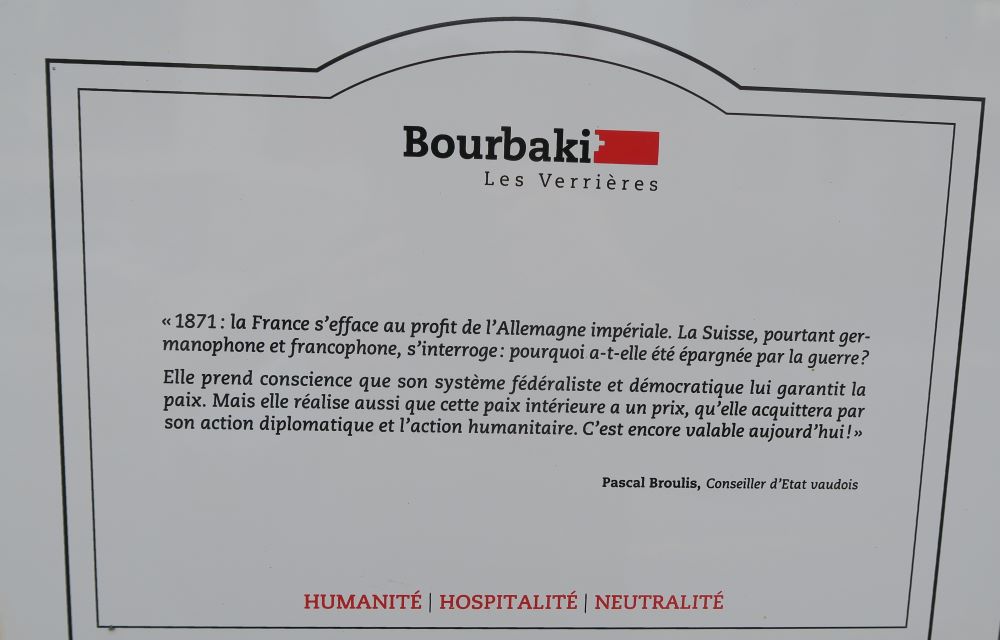
Information about the parcours in Les Verrières.

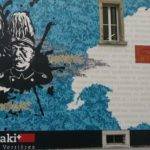
For a small border village and the young Swiss Confederation (1848), it was the first humanitarian action on behalf of their French neighbour. The three generals, Bourbaki, Clinchard, and Herzog, are depicted on a wall in Les Verrières.

The symbols of the Red Cross, the articles of the Geneva Convention and the Swiss ‘virtues’ — neutralité, humanité and hospitalité — are depicted as well.

The Bourbaki trail in Les Verrières shows the route of the French army and the aftermath of this event.

(Further information: www.bourbaki-verrieres.ch; www.bourbakipanorama.ch).

The Last Habsburger in Basel

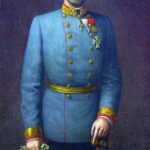
Eugen Ferdinand Pius Bernhard Felix Maria, the Erzherzog Von Habsburg (1863-1954), lived in a suite at Hotel Les Trois Rois in Basel from 1919 to 23 May 1934. He was a nephew of Karl von Habsburg (1887-1922), the last emperor of the Habsburg Empire. Both left the new Austrian Republic in 1919, following World War I (1914-1918), and went to neutral Switzerland.

Emperor Wilhelm II (1859-1941) of the German Empire, which was dissolved in November 1918, found refuge in the Netherlands, a neutral country during World War I.

The German Emperor stayed at Huis Doorn until his death, leading a reclusive life. However, the last Habsburg emperor made two unsuccessful attempts to regain the throne of Hungary. The Dual Monarchy of Austria-Hungary was dissolved in 1918. However, the deposed emperor was still formally king of Hungary. The victorious Allies sent him and his wife to Madeira after the second coup attempt, where he died in 1922.

Eugen, called “Der Erzi” in Basler-German, chose a different path. He was not politically active, but he was a popular figure in Basel. He was a prominent member of the conservative Catholic German Order (Deutschritter- Order) and, therefore, a bachelor.

Hotel Les Trois Rois

The choice of Basel stemmed from personal contacts, the neutral status and the German language. Moreover, Basel was centrally located in Europe and was an ideal place for family gatherings among the Habsburg exiles.

Les Trois Rois was the site of many family gatherings, which included Otto von Habsburg (1912-2011), the son of the last emperor and his wife, and Maria Christina von Österreich (1858-1929), Eugen’s sister and Queen of Spain. The centuries-old hotel ( its original name was Drei Könige) regained a touch of royalty.

Archduke or not, he also had to report to the police:

“Dass er sich speziell in Basel aufhält, erklärt sich daraus, dass er ein grosser Freund der Wissenschaften, namentlich der Geschichte und auch der Musik ist, also von zwei Gebieten, auf welchen Basel viel zu bieten vermag. Er verbringt dann auch einen guten Teil seiner Zeit im Basler Staatsarchiv”.

(Erzherzog Eugen von Habsburg-Lothringen, Begleiterin Zoe Schildenfeld, Kammerdienaar Richard Schönwalder, Aufenthaltsort: Hotel Drei Könige. Grund der Aufenthaltsbewilligung: wissenschaftliche und historische Studien (Fremdenpolizei des Kantons Basel-Stadt, 1920, Staatsarchiv Basel-Stadt, Sig. PD-REG 3a 27649).

He travelled by tram, was approachable to market vendors, workers and other citizens, ate outside his hotel and was a loyal visitor to the Fasnacht and the Morgestraich at 04.00 Monday morning. In Calvinist Basel, the devout Catholic made and had many friends and a rich cultural and social life.

During this period, the celibate also had a faithful companion, the writer Zoe von Schildenfeld (1890-1981). Her book “Erzherzog Eugen, 1863-1963: ein Gedenkbuch“, published in 1963 in Innsbruck, provides information and details about his time in Basel.

The National Socialists came to power in Germany in 1933. The situation in Austria became increasingly unstable. In 1934, Engelbert Dollfuss (1892-1934) seized power and established an authoritarian-Catholic regime. Eugen got permission to return to Austria. On 23 May 1934, his train (he travelled second class!) left for Vienna, escorted by a famous Fasnacht clique with piccolos and tambourines. The highest honour for a foreigner.

Part of the reason for his departure was his concern about the rise of Nazism. He was an outspoken opponent of the regime in Germany and feared for Austria’s future. As a prominent Austrian citizen, he used his influence, unsuccessfully, to turn the tide.
The Gestapo arrested him after the Anschluss (March 1938) and placed him under house arrest. His status protected him from the worst. After the war, he settled in Merano (Italy), until 1919, former Austrian South Tyrol.

He had commanded imperial troops as a field marshal in this region during World War I. He regularly visited Basel after 1945. Hotel Les Trois Rois, the “Daig”, and other citizens of Basel always warmly welcomed their ‘Erzi’.

The circle was, therefore, almost complete. In the 13th century, the Habsburgs sought to establish Basel as the principal residence of their emerging empire. However, the Basler bourgeoisie was not looking forward to an imperial and royal residence’s (financial) burden and military presence.

In retrospect, the city was already on its way to becoming a republican canton. There was also resistance to Habsburg rulers in other parts of the (later) Eidgenossenschaft. The Habsburg defeats in 1315, 1386, 1415, 1460 and 1499 are well known.

Basel became a member of the Eidgenossenschaft in 1501. The Reformation drove out the prince-bishop, the chapter and the last aristocrats in 1527. Afterwards, the Habsburgs and their rulers played no significant political role in Basel. Der Erzi stayed in the city as a warmly welcomed guest.

Source: Zoe von Schildenfeld (1890-1981), Erzherzog Eugen, 1863-1954: ein Gedenkbuch, Innsbruck, 1963

The Federal Council

This article highlights the composition of the Federal Council. Subsequent contributions will address its functioning, legislative and decision-making processes, and working methods.

The Council

The Council (Bundesrat, Conseil fédéral, Consiglio federale, Cussegl federal) consists of seven members.

The Federal Chancellery and  Chancellor (Bundeskanzlei, Chancellerie fédérale, Cancelleria federale, Chanzlia federala) supports the Council.

The Council and the chancellor are elected by the United Assembly of both chambers of parliament for a term of four years following the general elections. So far, the Council does not differ fundamentally from other democracies.

The status 

However, appearances are deceptive. The Council differs from other traditional parliamentary or presidential systems in many respects.

Firstly, the Constitution sets the number of seven ministers (Bundesräte/Bundesrätinnen) and ministries (Departements). This number has remained unchanged since 1848.

The seven ministers each head a Department: the Department of Foreign Affairs, the Department of the Interior, the Department of Justice and Police, the Department of Defence, Civil Protection and Sport, the Department of Finance, the Department of Economy, Education and Research and the Department of the Environment, Transport, Energy and Communications.

The cantons and municipalities have far-reaching powers or even autonomy in many fields, a.o. Social security, education, health care and taxes.

The federal government has only those powers that have not been transferred to the cantons (Art. 3, 43-50). The federal administration has only around 40,000 civil servants out of a population of more than eight million.

Federal powers have increased considerably since 1945, each time approved by an obligatory referendum when entailing a change to the Constitution.

The government or individual ministers cannot be dismissed by parliament. That is another peculiarity. On the other hand, the government cannot call early elections or dissolve parliament.

The classic distinction between government and opposition no longer exists. Furthermore, direct democracy allows governing party members to join the opposition.

Any federal legislation or decision must have the consent of both chambers of parliament and, in some cases, of the people.

Collegiality

Another feature is collegiality. The government, in theory, speaks out with one voice. Differences do exist, but do not appear in public (Kollegialprinzip).

Consultations take as long as necessary until an agreement is reached. Compromise is another essential characteristic of the system.

Equality

The absence of a permanent Prime Minister or First Minister also reflects the equality of all government members.

The head of state (Bundespräsident(in), Président(e), President(e), President(a) is elected by both chambers of parliament from among the seven ministers for a maximum period of one year, becoming the primus/prima inter pares.

The only inequality is the (unwritten) protocol. In the government hall or at official meetings/photos, the president sits/stands in the middle, flanked on the right by the vice-president and the others, including the chancellor, in order of seniority.

The magic formula

The Council’s composition is also remarkable, even setting a world record. Since 1848, the Liberal Democratic Party (FDP) has been a continuous member of the Council, and until 1891, it was the only party.

Due to the absolute majority system (Majorzsystem) in each constituency, the FDP held the majority in parliament for a long time, which was elected based on universal suffrage for men.

Moreover, until 1880, modern political parties did not exist. The Catholic-Conservative Party (CVP), the Socialist Party (now the SP), and the Farmers’, Entrepreneurs’ and Citizens’ Party (BGB, now the SVP) developed after 1880-1890.

The introduction of the referendum in 1874 and the People’s Initiative (Volksinitiative) in 1891, as well as direct democracy, forced the FDP to delegate power to the CVP and appoint a CVP minister (now Die Mitte).

In 1919, the People’s Initiative led to the introduction of a proportional electoral system (Proporzsystem) based on general elections for men.

Afterwards, a second CVP- minister (1919), a BGB- minister (1929) and two SP ministers (1943 and 1951) were elected as members of the Council.

Next, the Konkordanzsystem and the “Zauberformel” (magic formula) were introduced. The government consisted of a fixed division of seven members from the four largest parties, divided 2:2:2:1, representing these parties.

After 2003, this changed into two seats for the SVP (Schweizerische Volkspartei) and one for the CVP (Christendemokratische Volkspartei)—a landslide by Swiss standards. The two other parties of the government are the FDP (Freisinnig-Demokratische Partei) and the SP  (Sozialdemokratische Partei der Schweiz).

Great election victories and SVP referendums were at the root of this change. Newcomers with (great) success, such as the Green Parties, do not immediately enter government. It requires several successive electoral successes.

Other criteria

Other criteria in multilingual and multicultural Switzerland are language, canton and, nowadays, gender: three German-speaking, three French-speaking and one Italian-speaking member of the Council.

Conclusion

The system has disadvantages and shortcomings, as discussed in other contributions.

It guarantees stability and prevents the delusion of the day, the rise of a strong leader or leader, and the emergence of extremist parties. Above all, it provides the foundation for the permanent search for compromise, consensus, and contact with society and its citizens.

(Source and Further information: A. Vattel, der Bundesrat, Zürich. 2021; G. Malinverni, M. Hottelier, M. Hertig Randall, A. Flückiger, Droit constitutionnel suisse, Volume I, L’État, Bern 2021; www.admin.ch.

Celerina, Rhätische Bahn and Cresta Palace Hotel

The village Celerina or Schlarina (Canton Grau in Romansh appears as “Ad Slatannum” in a document from 1139. The name refers to its location: “near the Schlattain stream”, Schlattain.

In 1139, Konrad I of Bibberig, Bishop of Chur from 1123 to 1144, acquired the area from Zuoz to Silvaplana. The bishop built a cellar (cellarium in Latin, schler in Romansh), which led to today’s Romansh Schlarigna and German Celerina). The church of San Gian was built around 1300.

In 1538, the municipalities of Samedan, Bever, Celerina, Pontresina and others were founded. From this time onwards, there was the “municipality of Celerina”.

In 1631, numerous houses fell victim to the flames. The inscription with the years “built in 1631” or after this year can be seen on the many sgraffito-decorated facades because of the village’s rebuilding.

Around 1900, work began on the railway from Thusis to Celerina. Thirty-nine tunnels had to be bored, and 55 bridges and viaducts were built over wild gorges and raging rivers.

The Albula line first ran in 1903, not to St. Moritz, but to quiet Celerina. It was not until 1904 that St. Moritz was accessible by rail. In 1906, another construction began. This time not through but across the Alps: the Bernina line runs from St. Moritz via Celerina up to the Bernina Pass and down to Tirano in Italy.

Celerina shares with St. Moritz the ski area, the famous Olympic Bob Run St. Moritz-Celerina and the Cresta Run (skeleton track). The destination of both ice runs, which start in St. Moritz, has been Celerina for over 100 years.

The Olympic Bob Run St. Moritz-Celerina and the Cresta Run (Skeleton-Bahn)

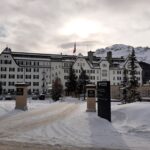
The Cresta Palace Hotel was opened in 1906. Because many English people spent their holidays in the Engadine, facilities for horse races, tennis and golf were necessary. English championships took place, and winter races were held on the bobsleigh and Cresta Run. Winter sports such as skiing, ice skating and curling became increasingly popular.

In 1912, a new wing with another 100 beds was inaugurated. The outbreak of the First World War (1914-1918) was a game-changer. The stock market crash in 1929, the subsequent economic crisis and the Second World War (1939-1941) halted the upswing in tourism until 1960.

In 1966, a new hall with a swimming pool was inaugurated. The splendid Art Nouveau hall was renovated in 1998. The new wellness centre opened its doors in 2006.

The Cresta Palace sets a new milestone in 2022. Around 40 rooms have been renovated and redecorated in the spirit of Art Nouveau aesthetics and elegance. In redesigning the rooms and suites, special attention has been paid to details and characteristic elements of Art Nouveau while respecting the conditions of a modern hotel room and suite.

Not everything has changed. The authentic sphere of the Belle Epoque and quality are still the norms, and nature is just as fascinating as it was 100 years ago.

Source: www.engadin.ch; das Cresta Palace Hotel

Gallery Turo Pedretti


Samedan, Tourism and Politics

The village of Samedan (canton of Graubünden, Upper Engadine/Oberengadin) was first mentioned in 1139 following the sale of land by the counts of Gammertingen to the bishop of Chur. The counts of Gammertingen, whose homeland was north of the Danube in Swabia, ruled over a seigniory in this region.

Samedan became an independent municipality in 1538. From then on, it also gained increasing political importance but always fiercely competed with Zuoz.

In the 19th century, Samedan was recognised as the capital of the Upper Engadine. Socially and politically, the von Salis and von Planta family branches played an important role. They left their mark on the history of the village, the canton and Switzerland.

St.Peter Church and cemetery with the graves of the Von Planta family

Their wealth and power are still visible today in beautiful patrician houses.
The village church. A Romanesque church from the 13th century was rebuilt and extended into a Baroque church around 1700.

Grand Hotel Bernina

The Herz-Jesu-Church

The village church. Originally a Romanesque church from the 13th century. Rebuilt and extended into a baroque church around 1700

The tower. 12th century

History was also made by the Samedan Badrutt family of hoteliers. They built the legendary Badrutt’s Palace Hotel in St Moritz. Samedan gained tourist significance, and in 1893, Switzerland’s oldest golf course was opened in Samedan. In 1903, the first train of the famous Räthische Bahn arrived in Samedan.

Source and further information: www.engadin.ch

Paracelsus (1493-1541), wall painting in Samedan.

Charlemagne and Samedan

Charlemagne was the most powerful ruler of the Carolingian dynasty. He was born in 747 or 748, became emperor on Christmas Eve in 800 and died in Aachen on 28 January 814.

In and around the church of St Peter in Samedan, so the story goes, more than 30 descendants of Charlemagne are buried, more than anywhere else. In any case, the fact is that Charlemagne was present in today’s Graubünden in the 774s because he campaigned against the Lombards.

More than half of the tombstones in and around the church of San Peter are dedicated to relatives of Von Plantas. The Von Planta dynasty provided the most important political, military and religious leaders in Graubünden in the late Middle Ages and beyond. Their family tree might also go back to Charlemagne. Fact or fiction, it says something about this emperor’s prestige in this region.

Source: Kirche San Peter Samedan