Europe’s dance capital in Riom

Riom (canton of Graubünden) turns into Europe’s dance capital in summer. Nowhere else on the continent will there be so many ballet performances in a single month.

Riom’s two iconic stages (the castle and the Clavadeira) will host dancers who will stage eight full-length contemporary world premieres.

The initial impetus for Riom’s expanded dance programme was Fundaziun Origen’s constant search for the origins of performing arts. Ritual dance leads back to the early days. A second motivation was landscape theatre: dance lends itself to outdoor performances like no other stage genre.

Finally, there was a third reason for dance: the old routes to Europe’s metropolises, used by the pastry chefs, are coming back to life. The Pass landscape is not a place of hermits, but a melting pot of cultures for many centuries.

The Surses has always been multicultural and the region still is. For example, three languages and several dialects are spoken in the valley and it was and it has always been an important traffic and trade route in central Europe.

The programme between mid-July and mid-August offers two performances a day from Thursday to Sunday, one in the late afternoon at the Riom castle, the other in the evening at the Clavadeira.

The dance programme is framed by lectures by choreographers. These events take place at the Clavadeira.

(Source and further information: Fundaziun Origen)

Art Basel is in the City, Bruderholz and Nature

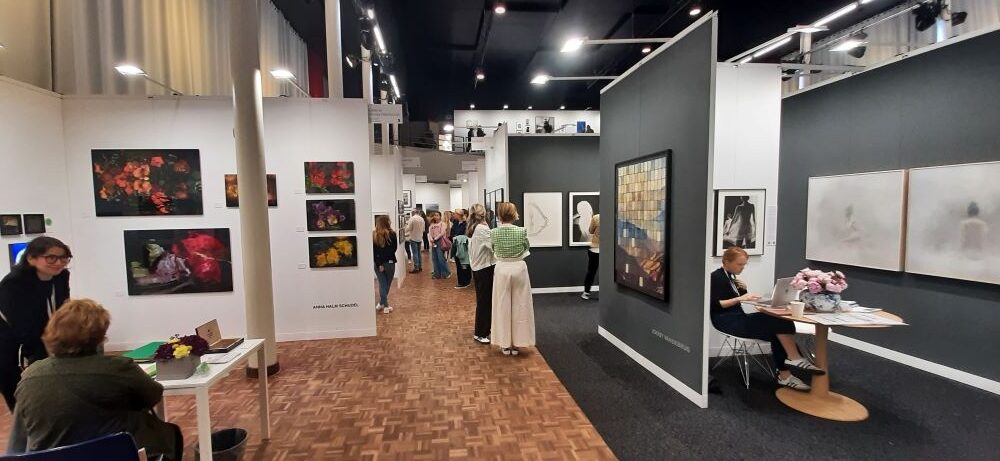
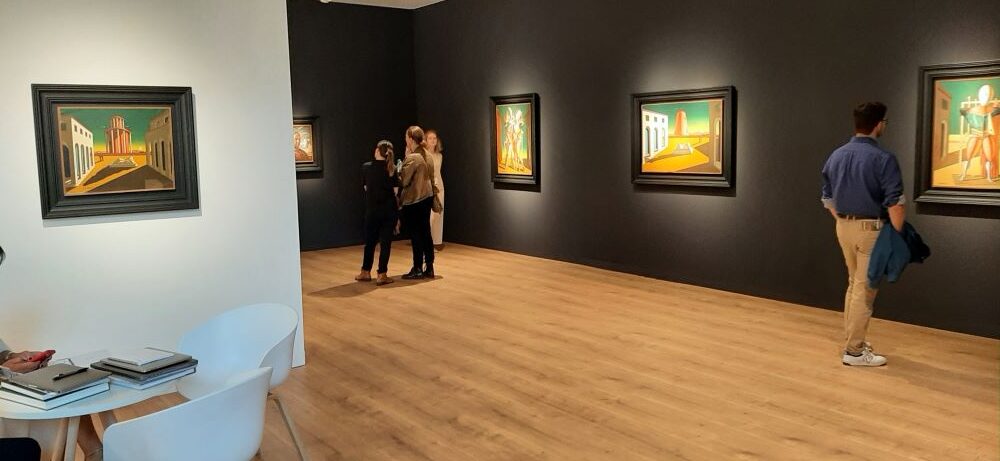
Art Basel (10 – 16 June) presents art from the 20th and 21st centuries and is the leading world fair for the international art market. More than 250 galleries and 4,000 artists from all over the globe make Basel a museum of modern and contemporary art. The city and surrounding area already have several museums in this field.

Impressions of Art Basel

Art Basel is also in Paris in October and on two other continents: in Hong Kong in March and in Florida (now present with a show in Basel).

Impressions of DesignMiami. Basel

Several side exhibitions will be held this week in Basel and the surrounding region. The Art Parcours in the city centre is a special presentation of installations, sculptures, interventions, and performances in public spaces and historical sites in the city.

Art Basel is a transformative experience, transcending its role as a mere meeting place for artists, gallery owners, and art dealers. It’s not just about bringing art to a wider audience; it is art in itself-creative, engaging. Art Basel brings nature into the city, and the Basel Social Club connects at the same time visitors with nature!

Impressions of Art Basel in Bruderholz


Bruderholz

Photo Basel

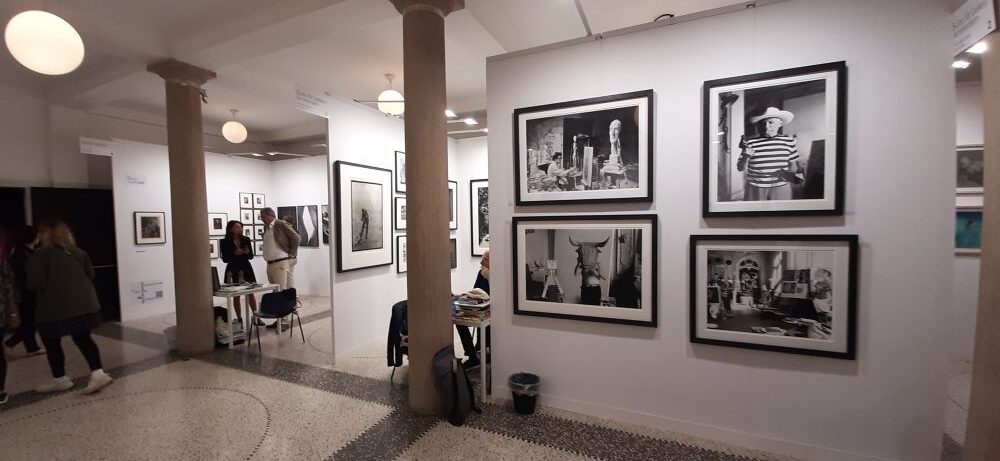
Photo Basel brings together galleries of photography from around the world. It is an active platform that promotes dialogue between actors in the international photography community and the public. Photo Basel is organized parallel to Art Basel.

Impressions of Photo Basel

Nestlé, the Fork and the Alimentarium in Vevey

The Fork in Vevey has held the Guinness World Record for the world’s tallest fork since 2014. The visual artist Jean-Pierre Zaugg (1928-2012) designed La Fourchette (The Fork), a work commissioned to celebrate the Alimentarium’s 10th anniversary in 1995. A steelwork contractor made the statue in 450 kg of stainless steel.

The Alimentarium and Charlie Chaplin

It depicts a monumental 8-metre high table fork, 1.3 metres wide at the tines at its base. The Museum Alimentarium was granted permission to embed it in Lake Geneva, 5 metres off Quay Perdonnet.

(Source: www.alimentarium.org)

The headquarters of Nestlé in Vevey

Chaplin’s World on the shores of Lake Leman

6 June 1944 (D-Day) was not only a day of deliverance for citizens of occupied countries in Western Europe. It was also a moment of hope for actor and film director Charlie Chaplin (1889-1977). Although he was only four days older than the German dictator, he outlived him by over 32 years.

They never met but knew each other rather well. The dictator was fond of (American) films from the interwar period (the period between 1918 and 1939), and Chaplin was the most famous artist of the time.

The closing speech in the Great Dictator

It is unknown whether the dictator also saw the film The Great Dictator (1940). This film was not shown in territories occupied or controlled by The German Reich, but it premiered in the United Kingdom, Canada, and the United States in 1940.

Even after 1940, Chaplin was committed to liberating Europe from this dictatorship. He lived and worked in America from 1912 and, after 22 June 1941 (the German attack on the Soviet Union, the Nazis’ former ally), committed himself to supporting the Soviet-war effort.

In his films, he mostly engaged with and associated with ‘outcasts’ and was critical of consumer society and unbridled capitalism. However, his support for the Soviet Union was not support for communism but was directed against Germany. Winston Churchill also made that choice (‘If Hitler invaded hell (Soviet Union), I would make at least a favourable reference to the devil in the House of Commons’).

For Chaplin, however, the Cold War after 1945 meant accountability for his political views. McCarthyism, caused by global communist aggression, left no room for nuance in America after 1948, and Chaplin left the country in 1952.

He settled with his wife Oona O’Neill (1925-1991) and his (growing) brood of children at the Mansion de Ban (Manoir de Ban) in Corsier-sur-Vevey (canton of Waadt) on Lake Geneva.

Imperial, royal, and aristocratic families, artists, performers, scientists, political exiles, and other celebrities have settled in Switzerland for centuries. Switzerland’s attractiveness lies not only in its democracy, (intellectual) tolerance, culture, nature, landscape, political, monetary, and fiscal system.

Chaplin and many others before and after him particularly appreciated and valued discretion, respect for and with each other, behaviour, and the functioning of society, or, more precisely, the quality of life.

Chaplin enjoyed his park and Lake Geneva and the hospitality he experienced. For example, he regularly lunched in nearby Saint-Saphorin and other villages. Although he hardly spoke French, his meetings with the locals were always cordial.

Chaplin has always been fascinated by the circus and devoted several films to it. Since 1952, he has been present as a guest of honour at Circus Knie performances.

Today, the Mansion is open to the public. It mainly shows Chaplin’s private life from 1952 to 1977.

The nearby museum gives a multifaceted and varied picture of his life and development as an individual, artist, and humanist, from his early years in England to his heyday in America to his last projects and years in Switzerland.

(Source and further information: Chaplin’s World)

Impressions of the Manoir de Ban and the Parc


Impressions of the museum

The introductory movie makes place for the house and street of Chaplin’s youth in  London and the artistic life of Chaplin

Replica from ‘City Lights’ (1931)

Studio and ‘Modern Times’ (1936) in the background

Opening of the Centre Albert Anker in Ins

The Centre Albert Anker in Ins (Canton Bern) reopened to the public on 7 June after 12 years of renovation. The complex explores the artistic, political, and social life of Swiss artist Albert Anker (1831-1910) in the authentic setting of his home, studio, and extension, which includes an art pavilion.

The reception hall of the new pavilion. Photo: ©Alexander Jaquemet

The Centre Albert Anker includes the authentic atelier, his residence and the newly built art pavilion in the garden. The family has not touched the atelier for seven generations, and its preserved condition makes it unique in Switzerland. The residence gives an insight into the daily life of the Anker family.

The permanent exhibition shows the artist’s living and working environment in 15 themes. The man, politician and artist is shown both in his native village of Ins and in the national and international context of the 19th and early 20th centuries.

The first temporary exhibition in the pavilion is dedicated to Anker’s travels to southern Europe between 1861 and 1891. Entitled ‘Light of the South’, it will feature more than 20 little-known, small-format travel paintings in an impressionist style, as well as small oil paintings.

The Kunstmuseum Bern is currently hosting the exhibition ‘Albert Anker—Reading Girls’ (until 21.7.2024).

(Source and further information: Centre Albert Anker)

Echallens, daily bread and religious tolerance

Grain and bread are familiar staples, and most people consume them daily. However, who knows the Grain and Bread Museum (Musée du blé et du pain) in Echallens (canton Vaud)?  Echallens is located in one of Switzerland’s grain-rich regions (le Grenier de la Suisse) and on the trade routes to Yverdon-les-Bains, Lausanne, Romont, Moudon and Fribourg).

The museum opened its doors in May 1988. It is located in the old farmhouse Panchaud (pain chaud, hot bread) or perhaps panchaud, big window) in ancient French, near the town hall.

Delegations from the 26 cantons delivered their grain to the museum on 16 April 1989, and the annual festival of grain (Fête du blé) further highlights its (centuries-old) importance. Consequently, a large part of the workforce is still (in)directly employed in the grain sector.

Musée du blé et du pain

Trade and grain have a centuries-old tradition in Echallens, dating back to the markets and a regional function in the Middle Ages in what is now the district of Gros-de-Vaud. Located on the River Talent, the town was also the territory of the Bishop of Lausanne and the Dukes of Savoy for a long time. Its castle (1273) dates back to this period.

The defeat of the Duke of Burgundy and his allies Savoy and the Bishop of Lausanne in 1476 signalled the end of an era for Echallens. From 1484 to 1798, the district of Orbe-Echallens was administered alternately by Bern and Fribourg through bailiffs.

It went well until 1536 and the Reformation of Bern. Fribourg, however, remained Catholic. As in other cantons (such as Appenzell, Glarus, and Graubünden), the consultation model and willingness to compromise prevented escalation.

Town hall (1781)

Bern and Fribourg provided the same number of Protestant and Catholic city councillors  (24 in total, 12 per canton), a Catholic and a Protestant bailiff, and equality of religion was established by law.

The two religions, Protestant and Catholic, shared the same church (l’église Saint-Jean l’Evangeliste/John the Baptist), a unique concept known as Simultaneum.

The city even built a new simultaneum church (Simultankirche) in 1727, a testament to the spirit of religious harmony. Since 1798 (Helvetic Republic) and 1803 (Confederation by the Act of Mediation), Echallens has been a municipality in canton Waadt and a symbol of respect for religious diversity.

However, in the nineteenth century, Protestants (1865) and, following their lead, Catholics (1883) built their churches.

(Source and further information: Commune de Echallens)

Impressions from Echallens


The Church of Curtilles and the cultural diversity of Switzerland

Switzerland’s linguistic diversity spans many centuries. Today’s French—and German-speaking — borders have been largely defined since the 8th century.

The Italian-speaking areas are partly the result of conquests in 1512/13 (Ticino), partly of alliances with the League of the House of God (Poschiavo (1486) and Bergell (1367) or the Grey/Upper League (Misox (1496) and Calanca (1496)).

The Gotteshausbund, the Grauer/ Oberer Bund and the Zehngerichtenbund formed the Free State of the Three Leagues in 1524 and the Canton of Graubünden in 1803.

Until the 19th century, the Romansh-speaking area was much larger than it is today. Nevertheless, the Romansh-speaking population of around 50,000 is as large as the population of Graubünden around 1800!

Another aspect of this (well-functioning) European Union at the micro level is its remarkable cultural diversity. One indication of this is, for example, the architecture of the Romanesque churches (around 1000-1300).

The book Romanische Schweiz/Suisse romane (Romanesque Switzerland) offers a detailed overview of this well-preserved cultural heritage, which spans all 26 cantons and four language regions.

The frescoes in the church of Curtilles

One of the many examples is the church in the small village of Curtilles on the La Broye (canton of Vaud). The small village with its long history (Curtilia in 860, Curtilis (1160) or Curtiliis (1453) already had a Romanesque church in 1055, which was rebuilt in the Romanesque style in 1231 by the Bishop of Lausanne.

Further (Gothic) renovations took place in the 14th and 15th centuries, including in the choir.

In addition to this heritage, the small village is also home to a castle dating back to 1542, following the destruction of its predecessor from 1190 by Duke Berthold V of Zähringen (1160-1218).

(Source and further information: Hans-Rudolf Meier, Romanische Schweiz/Suisse romane, Würzburg 1996; Commune de Curcilles)

Model in the church of Curtilles

Lucens, Meiringen and Sherlock Holmes

Sir Arthur Conan Doyle (1859-1930), the spiritual father of Sherlock Holmes, inhabited Lucens Castle (Canton Waadt) in 1965. Some years later, the writer’s son opened a museum. Today, the Sherlock Holmes Museum (Musée Sherlock Holmes) is housed in the “Maison Rouge”.

The castle, or rather two castles, had other illustrious predecessors. The bishop of Lausanne built and inhabited the first castle in the 13th century, after which modifications in the 14th and 15th centuries gave it a Gothic appearance.

Image: Commune de Lucens

The bishop, an ally of the dukes of Savoy, often resided in Lucens. After the Battle of Morat, Confederate troops occupied the town and castle for the first time in 1476. The Eidgenossen defeated (at Grandson that year and at Nancy in 1477) the Duke of Burgundy Charles the Bold (1433-1477), his allies Savoy, and the bishop of Lausanne.

Lucens Castle, the new Berner building on the left

The Peace of Fribourg restored the old situation, but in 1536, it was over for the bishop. Bern conquered the Pays de Vaud and Lucens that year. The bishop of Lausanne Sébastien de Montfaucon (1489-1560) had organised another glorious reception for Duke of Savoy Charles III (1486-1553) just in 1532. 1536 also marked the end of Catholicism in Lucens, and the Reformation made its appearance.

From 1536 to 1798, Bern’s bailiff resided in the castle, or rather, the building on the left, the second castle. From 1801, the complex was owned by several new owners and occupants, including Sir Arthur.

However, there is another Sherlock Holmes museum in Switzerland, in Meiringen (canton of Bern). In this place, as he intended, Sir Arthur wrote his last Sherlock Holmes through the fatal fight between Sherlock and his archenemy Professor Moriarty at the Reichenbach Falls. However, several more adventures of this detective and Watson followed, and at least two museums in Switzerland.

(Source and further information: Commune de Lucens)

Lucens

The fortunes of Romont and Moudon

The old town centre of Romont (canton of Fribourg) with its town walls, towers, castle and church (Collégiale) Notre-Dame de l’Assomption (13th century) is situated on the famous round mountain Mont Rond (rotundus mons).


Collégiale Notre-Dame de l’Assomption after its (Gothic) renovation in the 15th century.

At the foot of the mountain is the Cistercian monastery de la Fille-Dieu (founded in 1268), as the name suggests, a convent for women (still in existence today).

Monastery de la Fille-Dieu

The town lies on the trade routes to Lausanne and Vevey (Canton of Vaud), as well as Bulle and Fribourg (Canton of Fribourg). The fact that Romont is located in the canton of Fribourg and not in the canton of Vaud is the fate of history in 1536.

From the old centre of this town along the Glâne River, there are views over the valley (Valloné) of the Pays de Glâne, the (Pre) Alps, including the Moléson and the Jura.

That year, Bern conquered Vaud (Pays du Vaud) from Savoy. At that time, Romont had already belonged to Savoy for centuries, and the Counts of Savoy called themselves ‘Lords of Moudon and Romont’ (Seigneurs de Moudon et Romont).

The castle (Grand Donjon), 1240, and renovations afterwards

The town wall, which is 1.5 kilometres long and features several towers, remains largely intact.

The Counts of Savoy, from 1416 onwards, became the Dukes of Savoy and were allies of the Dukes of Burgundy.

This alliance did not end well in 1476. Savoy and Romont sided with Duke Charles the Bold (1433-1477) in his war against the Confederation. After his defeats at Grandson and Morat (1476), the Confederates conquered and plundered Romont.

However, Savoy regained control of Romont in the Peace of Fribourg (1476). Other towns (Orbe, Grandson, Morat and Echallens) in Vaud were jointly administered by Fribourg (a member of the Confederation since 1481) and Bern and were lost to Savoy.

However, the joy over Savoy was (relatively) short-lived. In 1536, Protestant Bern conquered the entire Vaud region from Savoy. However, Romont sought the protection of Catholic Fribourg and was thereafter part of the canton of Fribourg.

Moudon

Moudon (in Roman times, the small vicus Minnodunum or Minnidunum) lies between the rivers de La Broye and La Mérine. Savoy acquired the town and its castle in 1219, before which it had been ruled by Celtic (Helvetic) tribes, Romans, Franks, two Burgundian kingdoms, the Counts of Geneva and the Dukes of Zähringen.

La Broye

Like Romont, the town was centrally located on the trade and transport routes. It flourished under the rule of Savoy and even became its administrative centre in Vaud in the 14th century.

The defeat of the Duke of Burgundy in 1476 and the Confederates’ capture of Moudon did not end Savoy’s rule. The Peace of Fribourg also restored Savoy’s rule in Moudon.

Maison des États de Vaud (14th centrury)

However, Bern’s conquest in 1536 signalled the end of Savoy’s presence and the introduction of the Reformation. Bern exercised power until 1798, when Moudon became part of the canton of Vaud.

Conclusion

From 1536, the Dukes of Savoy no longer referred to themselves as ‘Lords of Moudon and Romont.’ Romont remained Catholic in the canton of Fribourg, while Moudon became Protestant and, from 1798, a town in the canton of Vaud.

(Source and further information: F. Walter, Histoire de Fribourg, Une ville-État pour l’éternité (XVIe-XVIIIe siècles) Tome 2, Neuchâtel, 2002; Ville de Romont; Commune de Moudon; L. Hubler, Histoire du Pays de Vaud, Lausanne 1991).

Impressions of Romont

Maison St.-Charles

The Grand Donjon and the Vitromusée Romont (Musée suisse du vitrail et des arts du verre, Glass Museum)

Impressions of Moudon

Maison neuve du Pont (1688)


Hôtel de Ville

Saint-Étienne de Moudon (13th-16th century)

Fontaine de la justice

La Grenette (Grain Market)

Maison de Cerjat puis Tacheron or Maison bernoise (14th century)

Château de Rochefort (Musée du Vieux-Moudon) and Maison de Denezy

Château de Carouge

The Church and (Roman) History of Saint-Saphorin

Saint-Saphorin’s (canton of Vaud) history begins in the mid-1st century AD with the construction of a Gallo-Roman villa not far from Vibiscum (present-day Vevey).

By the 5th century, the villa was abandoned. One of the rooms, located on the site of the current 16th-century church, was then converted into a mausoleum modelled on Roman catacombs.

Museum of Saint-Saphorin in the catacombs under the church

In the 6th century, a new mausoleum was used as a burial chapel. In the 7th century, it was converted into a church dedicated to Saint-Saphorin (St Symphorien).

The bishop and chapter of Lausanne exercised spiritual authority and political sovereignty until 1536. In the 13th century, the bishops built the fortress of Glérolles.

Saint Saphorin in 1694. Anonymous artist. Archives de la commune. Photo: Claude Bornand. Museum of Saint Saphorin

The current church was built in Gothic style between 1517 and 1530 on the initiative of the last bishop of Lausanne, Sébastien de Montfaucon (1489-1560). The central stained-glass window in the choir is the most important in the canton (after the rose window in Lausanne Cathedral). It depicts Sebastian of Montfaucon, the Virgin Mary with Child, and Saint Symphorien.

The exterior is particularly notable for the bell tower’s flat roof, as it was intended (but not realised) to build a tall stone spire on the tower.

In 1536, Bishop Sébastien de Montfaucon organised resistance in Lavaux to the threat of iconoclasm from Protestant Bern. The resistance was so strong that this window was spared, although the church became a (Protestant) temple.

Saint-Saphorin has retained its medieval character and lies amid Lavaux’s vineyards overlooking the Alps and Lake Geneva.

(Source and further information: La commune de Saint-Saphorin)


The museum of Saint-Saphorin

Three Capitals from the Carolingian era (9th century)

Head of a young adult. Roman era

Roman inscriptions of a soldier (above) and on an altar (below), 1st century AD

Impressions of Saint-Saphorin 

Pierre Keller (1945), Wine press