A Small Great Animal


Poster and Photo: Maison de la Nature Neuchâteloise, Brot-Dessous.

The exhibition shows the importance of the quality of the water in the gorges of the Areuse. They have been supplying water to two-thirds of the population of the canton of Neuchâtel for more than a century. The exhibition highlights the tiny shellfish Gelyella monardi, less than 1/3 of a millimetre in size. This unique animal has been inhabiting the vast (under) water reservoirs for 20 million years. It is a bio-indicator of water quality and is internationally recognised as a unique animal.

Mother and Child


Mother and Child. Museum der Kulturen, Basel. Photo: TES.

The origins of the Museum of Cultures (Museum der Kulturen) in Basel date back to 1849, when Basel had one of the first ethnographic collections accessible to the public in Europe and the world. This year, the cathedral (das Münster) celebrates its millennial history. The cathedral and the museum are neighbours and the new exhibition Mother and Child (Mutter und Kind) in the museum is the result of a common theme: Mary and her Child Jesus. The museum shows the relationship between mother and child in every culture on the five continents. Are motherhood and the relationship universal? The exhibition does not answer this question, but shows how mother and child are portrayed in many ways in art, myths and stories. The relationship in the first part of the exhibition is divinely marked, the images of Mary (Maria lactans) and her ancient predecessors (Isis and Horus for example) or, for example, Mother Earth as a (pregnant) woman in Peru. In the second part, the exhibition shows the relationship embedded in social systems. A third part deals with the themes of pregnancy, birth, childbirth and breastfeeding. They have a different meaning in each culture. In the fourth part, ideal and reality are juxtaposed and contrasted: the extended family, the foster father, the one-child policy, the single mother, divorce, the foster child, same-sex parenthood and other (modern) themes. From this perspective, the exhibition presents numerous exceptional works of art from five continents and leaves the conclusions to the visitor.

Henri Matisse


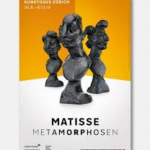
The French artist Henri Matisse (1869-1954) was also a great sculptor. The exhibition examines his sculptural work through the prism of the creative process and transformation and focuses on the artistic method Matisse brought to bear in almost all his principal sculptures: starting out from a seemingly naturalistic approach, his figures progressed through increasing degrees of abstraction that culminated in radical stylization. As if by metamorphosis, his bronzes are transformed from a natural to an abstract form. There are parallels with this process in his paintings and drawings, and the exhibition explores the relationship between them for the first time. More than 70 works from all over the world, accompanied by reproductions of historical photographs, films and music, offer a vivid presentation of Matisseʼs artistic method. Various sources of his inspiration – nude photographs, originals from African art and Antiquity –complete the presentation.

The Carthusian World


Photo: Musée de Charmey

The exhibition presents the life of Carthusians through paintings by Augustin Pasquier (1967) and tells the story of an unknown world with surprising encounters. This mysterious universe of the Order of Carthusians invites us to reflect on our way of life, beliefs and relationship with the world around us. In the modern world, this voyage of discovery offers a moment of reflection, research and a new perspective, and the paintings depict this world.

Wilhelm Leibl


Wilhelm Leibl (1844-1890), Dr. Reidl, 1890. Städtische Galerie im Lenbach Haus, München. Photo: Kunsthaus Zurich.

Wilhelm Leibl (1844-1900) is one of the most important representatives of realism in Europe, admired by his contemporaries Gustave Courbet (1819-1877), influenced by Edward Manet (1832-1883) and respected by Vincent van Gogh (1853-1890). He mainly painted portraits and interiors with rural figures. Through regular participation in international exhibitions in Vienna, Berlin, Hamburg, Munich, Budapest, Basel, Winterthur, Zurich, New York and Washington, he was regarded as as one of the leading European realists.

Design Since 1989


Impression of After the Wall: Design since 1989, Vitra Design Museum, Weil am Rhein. Photo: TES.

Thirty years after the fall of the Berlin Wall (1989), the exhibition After the Wall: Design since 1989 presents design from the past three decades. The starting point is the influence of significant technological, cultural and socio-political developments, such as pollution, climate change, computers and mobile phones, consumer awareness, recycling and exploitation of raw materials. The exhibition juxtaposes iconic product design and graphic design with works by leading furniture designers and retailers, including Jasper Morrison, Philippe Starck, Hella Jongerius, Muji, and IKEA, as well as up-and-coming contemporary designers.

Max Sulzbachner


Mondnächte. Kunstmuseum Basel. Photo: TES.

The exhibition shows the works by and artistic development of the Basel artist Max Sulzbachner (1904–1985). Sulzbachner was an ardent admirer of (German) Expressionism and Ernst Ludwig Kirchner (1880-1938) in particular, although he never belonged to the inner circle of Kircher and his Davos friends. He got in touch with Expressionism during his stay in Berlin in 1921. He was a member of the artists’ group Rot-Blau in Basel, later Group 1933 (Gruppe 1933). Sulzbachner was multi-talented, he was not just a painter, but also a stage decorator, designer, he made many woodcuts, ceramics, caricatures and book illustrations. Moonlit Nights (Mondnächte) is the title of a series of famous woodcuts he created in 1925, including stylistic references to Edvard Munch (1863-1944) and Kirchner. The museum was fortunate enough to find the original sketchbooks, letters and other writings. This made it possible to reconstruct the origins of these famous woodcuts. he Moonlit Nights highlighted a common expressionist theme based on Fjodor Dostojevsksi’s book Rodion Raskolnikoff, also known as Crime and Punishment (1866). The museum was lucky enough to find the original sketching books, letters and other writings. That enabled the reconstruction of the coming into being of these famous woodcuts.

After 1924 and his stay in Paris he embraced French modernism and surrealism, influenced by, amongst others, Salvador Dalí (1904-1989) and Robert Delaunay (1885-1941). After 1945, until his death, he would remain active in many fields of art, in education, as an advisor and as the creator of many works. He was also A fervent Fasnacht celebrant and painted lanterns, wrote and illustrated “Schnitzelbank” ballads and designed carnival costumes. “Schnitzelbank” ballads are satirical-comical performances during the Fasnacht. The exhibition presents these various artistic periods in a well-documented overview.

Leopold Rabus


Photo: Musée d'art et d'histoire, Neuchâtel

Romanticism, melancholy, nature and oil paintings are the concepts that characterise the work of the Swiss artist Leopold Rabus (1977). Through the mix of contemporary and old art, his work forms a dialogue with art history. Rabus’ work looks realistic but often takes on a surrealistic and parodic character. In this exhibition, his work is placed in the perspective of several works selected by him from the museum.

Handbags


Photo: Spielzeug Welten Museum Basel

Bags have not always been cult objects for women only. In earlier times, both men and women carried pouches and bags. During the course of fashion history, the unisex bag gradually transformed into the handbag exclusively for female use. It was not until 1875 that a handbag with a handle was introduced. Women quickly got used to always carrying a bag with a handle. It was in the 20th century that handbags experienced their great boom. Bags such as the so-called Kelly bag became absolute cult objects and icons. Some of the greatest and most influential bag designers, including Louis Vuitton, Hermès, Gucci and Prada, started in the saddler business and originally produced luxury travel luggage. The fact that the handbag became known as a symbol of femininity and an object of female desire had a lot to do with fashion staging. Throughout history, one thing has remained the same: the handbag is a very personal object. The exhibition with around 400 items provides insight into the history of handbags beginning from 1550.

Bauhaus and Johannes Itten


Photo: Kunstmuseum Bern

When the Bauhaus was founded, Johannes Itten (1888-1967) had already adopted a radical position as an artist in his pursuit of the uttermost dematerialisation of individual objects, and he formulated this idea programmatically in the famous Bauhaus almanack Utopia: Dokumente der Wirklichkeit. Key exhibition pieces are his newly researched diaries and sketchbooks. They were integral to his artistic practice from 1913 onward and have never been shown on such a broad scope before. They not only help us understand his art-theoretical reflections on colour but also his thoughts on the principles of art and his hitherto unknown study of the old masters.

The exhibition retraces his development from his beginnings in Switzerland through the periods he spent in Stuttgart, Vienna, Weimar and Herrliberg, also covering his pursuits in Berlin, Krefeld and Amsterdam. This comprehensive presentation presents a new angle on his hitherto concealed understanding of the world and on his artistic working processes that were based thereon.