
Eine monumentale Retrospektive


Ausstellung Balthasar Burkhard, Fotomuseum Winterthur.

In einer grossen Retrospektive würdigen das Fotomuseum und die Fotostiftung Schweiz gemeinsam den Schweizer Künstler Balthasar Burkhard (1944–2010). Burkhards Schaffenszeit umspannt ein halbes Jahrhundert: Von seinen fotografischen Anfängen in der Ausbildung bis zu seinem internationalen Durchbruch als Fotokünstler, der die Fotografie als monumentales „Tableau“ in die zeitgenössische Kunst überführte. An über 150 Werken und Werkgruppen spürt die Ausstellung der künstlerischen Selbsterfindung eines Fotografen nach.

Balthasar Burkhard


The museum for Photography (Fotomuseum) will showcase in cooperation with the Fotostiftung the oeuvre of the Swiss artist Balthasar Burkhard (1944–2010) in a major retrospective. Burkhard’s work spans half a century: from his early days as a trainee photographer to his role in chronicling the art of his time, eventually becoming a photographic artist in his own right who brought photography into the realms of contemporary art in the form of the monumental tableau. More than 150 works and groups of works chart the progress of his own photographic career and the emergence of photography as an art form. An exhibition in collaboration with Museum Folkwang (Essen) and Museo d’arte della Svizzera italiana (Lugano).

The Word and the Reformation


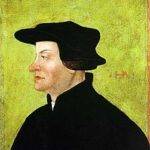
Hans Asper (1499-1571). Photo: Wikpedia. Kunstmuseum Winterthur.

For Huldrych Zwingli (1484-1531), the Word was both inspiration and instrument in his treatment of God and humankind. The exhibition is dedicate to the Reformation and the power of the word. Huldrych Zwingli was not just a Reformer. He was also a preacher, warrior, writer, translator and publicist. The spoken and written words of the Reformation are the focus of the exhibition, in perspective of the historial events in Zurich and Switzerland between 1519 and 1531.

150 years of Swiss Paintings


Fritz Baumann (1886-1942), the sack carrier, 1914. Collection Peter Suter Basel. Photo: Kunsthaus Aarau.

The focus of the exhibition is on Swiss painting from the first half of the 20th century. The works are from the holdings of the Aargauer Kunsthaus and the private collection of Peter Suter. Swiss cubism by Fritz Baumann (1886-1942) is presented as one of the main works of art.

Etruscans in Schaffhausen


Etruscan mask of a satyre, fifth century BC. Photo: Allerheiligenmuseum Schaffhausen.

The Museum illuminates the culture of the Etruscans with an extensive special exhibition. Some 250 objects will present a panorama of Etruscan culture and life, from the pleasures of banquets to trade, religion, fortune telling, and burial rites. The exhibits from the museum’s own collection will be supplemented with outstanding loans from Danish, German, and Swiss collections. Roman culture owes Etruscan art and this exhibition focuses on this accomplishment, for a long time forgotten after the Roman conquest. Etruscan cities Tarquinia, Cerveteri, Vulci, Orvieto, Chiusi or Veji and many other cities once ruled over central Italy and Triumph, Gladiators and many Gods have Etruscan roots. Etruscan culture and people may have reached the south of Switzerland as well.

God and the Pictures


Portrait Ulrich Zwingli, unknown artist, 18th century. Photo and ©: Swiss National museum Zurich

Early in 1519, Ulrich Zwingli (1484-1531) came to Zurich as a parish priest and sparked the Reformation in Switzerland. 500 years later, the Reformation is still considered one of the most formative events in Swiss history. The exhibition at the National Museum Zurich focuses attention on the argument over which is the true faith and highlights the origin of a new denomination. Animated films produced specifically for the exhibition bring the stories and conflicts of that time to life.

When Art became Art


Ferdinand Hodler (1853-1918), Unanimity, city hall Hanover,1913 (detail). Photo Kunsthaus Zurich.

The exhibition focuses on Reformation as starting point of objects becoming art. The show unites some 60 works from the 16th to the 20th centuries. At its centre is Ferdinand Hodler’s ‘Unanimity’ in the stairwell of the Moser building. Selected works by Old Masters retrace the crisis of the religious image in the Reformation, while Italian Baroque paintings offer an insight into the religious art of the Counter-Reformation. At the beginning of the 19th century Zurich offers up some of the Nazarenes – a group of artists working in Rome who looked back to
the pre-Reformation church and art. Finally, the innovators of Concrete Art sought universal truths through their pure, almost Reformation-style painting and Piet Mondriaan (1872-1944) is being examined as a reformer pur sang.


Money and Church


Exhibition Geld und Kirche. Photo: Coin Cabinet Wintherthur.

The medieval Church had a solid financial- and tax administration. The incomes originated from agriculture, estates and other properties, and also from indulgencies and other questionable moneymakers.  The exhibition focuses on the moral, financial and religious aspects of the ambivalent attitude of the Church.

1 000 years Pilgrimage


View on the exhibition. Photo: Swiss National Museum Zurich

Einsiedeln Abbey is one of the most significant European places of pilgrimage, drawing people from all over the world. Popes, emperors, kings and ordinary citizens have lavished privileges, gifts and donations on this abbey with its vast European network. More than 250 000 pilgrims visited the abbey in 1720 for example. Thanks to the aura of this pilgrimage destination, the abbey survived the Reformation and the consequences of the French Revolution. The exhibition tells the eventful history of the abbey and of its pilgrimage. Many of the main exhibits are on show outside the abbey walls for the very first time. Examples include a manuscript said to have belonged to Saint Meinrad, a chalice from King Carol of Romania and the splendid clothes and jewellery of the Black Madonna.Madonna.


Nineteenth Century French Artists


James Tissot (1836-1902), Miss L.L., 1864. Photo: Kunsthaus Zurich. Collection Orsay Museum Paris.

19th-century French painting offers artists who enjoyed great recognition and the plaudits of art critics and audiences, but are little known in German-speaking countries. Although indebted to traditional painting techniques and themes, they were in some cases highly innovative. French painting at this time is mainly famous for Romanticism, Realism, Naturalism, ‘plein air’ painting, Impressionism and their famous artists, such as Géricault, Delacroix, Corot, Daumier, Millet, Courbet, Manet, Sisley, Monet and Renoir (and many others). They were highly controversial in their day however, but famous nowadays. The more traditional painters, such as Delaroche, Couture, Meissonier, Cabanel, Gérôme und Bouguereau, were highly celebrated artists in the nineteenth century, sidelined today. The exhibition brings together these various and hotly debated approaches in nineteenth century French painting to create a rich and diverse panorama of the era’s genres.