Basel Carnival


Since 2004 this exhibition provides an overview of Basel Fasnacht (carnival) in historic and atmospheric rooms: Costumes, masks, musical instruments, historical documents and a reproduction of a typical “carnival”. Basel Fasnacht (carnival) is a large festival of sounds and dreams, of colour and fantasy, but also of criticism and mockery. It has been evolving over the last 100 years. Since then, and now, this carnival has inspired the population and artists of this city into active participation, not only during carnival time but also all year round.

Manuel and the Renaissance


Inspired by Niklaus Manuel’s (1484-1530) work, the Bernese artists Jared Muralt (1982) and Balts Nill (1953) have created a re-interpretation of the Bernese Dance of Death and published it in an intricate concertina-folded Dance of Death. The exhibition Bernese Dance of Death displays the story of the creation of the  Dance of Death now and then and how discussions about death are as relevant today as they were 500 years ago.

Manuel was born in Germany (he called himself Niklaus Manuel Deutsch), but lived in Bern, where he married into a powerful family in 1509. Manuel had a typical renaissance career: painter, diplomat, soldier, politician, writer, poet and became a devoted protestant. Printing, the discovery of America and the Indies, the Renaissance and the Reformation shaped this time of upheaval at the end of the 15th and beginning of the 16th centuries. The exhibition Mercenary, Iconoclast and Dancer of Death (Söldner, Bilderstürmer und Tötentänzer) in the same museum follows the life of Niklaus Manuel from mercenary to statesman, from artist to iconoclast.


A Princely Collection in Bern


In a grand-scale presentation, the Kunstmuseum Bern is investigating the collection policy of the Princes of Liechtenstein over many centuries. The exhibition opens up insights into an exceptional and illustrious world that has no equal in Switzerland, because the country has no   equivalent of a “royal collection”. Rather the nation’s cultural assets are distributed among various cantons and institutions, each pursuing its individual strategies of collecting. The Princely Collections comprise masterpieces of European art of exceptional quality spanning five centuries, and still today these holdings are being constantly augmented with new acquisitions.

The Renaissance on show in Zurich


Albrecht Dürer (1471–1528), Erasmus von Rotterdam, Nurnberg, 1526. Graphische Sammlung ETH Zurich.

The Renaissance was a cultural era that gave birth to some of the most important advances in human history. All the discoveries and creations would have been unimaginable without a broad and dynamic exchange at many levels. The Renaissance was an era of dialogue that extended over great distances and time. The exhibition focuses on the question of cultural exchange processes and shows the Renaissance as a dynamic, pan-European phenomenon. Artworks, writings and instruments and objects of everyday life are impressively displayed in the museum’s new exhibition rooms. Important exhibits on international loan from Europe and the USA enrich the presentation.

Integration and Immigration in the Roman Empire


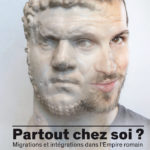
Affiche van de tentoonstelling. Romeins museum van Avenches en Vallon.

The whole population of the northern part of today’s Switzerland was on the move in 58 BC. The Rauraci, Helvetii and some other Celtic tribes moved to France, the territory inhabited by other Celtic tribes. They were beaten by the army of Julius Caesar in 58 in the battle of Bibracte, close to Autun, and forced back to their Swiss territories. The Swiss Roman museums in Vallon and Avenches organize an exhibition dedicated to immigration and integration in the Roman Empire. The exposition deals with all relevant aspects, such as religion, work, language and culture. Why and to what extent  is the present situation different is not the main question of this show, but the Roman Empire had unifying factors, which are lacking today.

Sculpture on the Move


David Smith, Australia, 1951. Museum of Modern Art, New York.

Sculpture on the Move focuses on sculptural art between the end of World War II and the present. The exhibition on occasion of the inauguration of the enlarged Kunstmuseum Basel will map the classical idea and form of sculpture that grows more flexible and abstract as some artists integrate the trivial stuff of everyday life into their art or blur its spatial and conceptual boundaries, even as others return to the figurative tradition in an effort to set the genre on a new solid foundation. The exhibition opens with late works by Constantin Brancusi and Alberto Giacometti. It continues with a loosely chronological arrangement highlighting various thematic emphases in sculpture between the 1940s and the 1970s.

The sequence then moves to the ground floor of the new building, where sculptural works from the 1980s will be displayed, and concludes in the Museum für Gegenwartskunst with a survey of significant positions between the 1990s and the present.

Fashion and Music in the Twenties


Exhibition fashion and Musiv in the Twenties. Photo: www.hmb.ch

The Roaring Twenties (around 1920-1930) were in many respects a fascinating decade. This was a time of radically new styles in both fashion and music, and with the privations of the First World War still fresh in their minds, people were eager to travel, play sports and generally have fun. Dances with new rhythms like the Tango, Charleston and Foxtrot quickly became all the rage, while the saxophone, banjo and trumpet heralded the age of the dance band and jazz. Lyrics, moreover, could now be witty, cheeky or just plain silly. Nor did music have to be live. After all, this was also the age of the gramophone, shellac records and new radio stations, thanks to which music could be heard at almost any time of day.

Meanwhile, fashion designers were busy lending women a new look with dresses that were shorter than ever before and loose-fitting enough to show off the wearer’s suppleness and spontaneity. The show presents clothes for a wide range of occasions from travel, leisure and everyday wear to festive dos such as afternoon tea, cocktail parties and an evening at the dance hall. Add to these the many accessories, fashion plates, gramophones, sheet music, and musical instruments from the museum’s own collection and it is impossible not to be captivated by the upbeat mood of a period of extremes with its own distinctive buzz.

With its array of dresses, accessories, gramophones, sheet music and musical instruments from the museum’s own collection, the show provides an enthralling insight into a period of extremes.

Erasmus and the Power of the Word


Presentation of the exhibition. Photo: Historisches Museum Basel

Basel played a key role in the life of Erasmus of Rotterdam. The great Humanist spent more than ten years of his life there, and when he died there in 1536 he was laid to rest in Basel Cathedral. The HMB has an unparalleled collection of Erasmus’s personal effects, which this exhibition places in a larger context. The exhibition takes visitors to all the most important places where he lived and worked, acquainting them with his friends, fellow scholars and ideas along the way. Targeted interventions in the permanent exhibition flanked by additional exhibits give rise to what is essentially a tour of the life and works of Erasmus of Rotterdam.

Celts as European Power


Catalogue Kunst der Kelten. Photograph: Historisches Museum Bern

The exhibition in the new extension of the Historisches Museum in Bern is showing an exquisite selection of some 450 Celtic art treasures from all over Europe in an area covering 1200 sq. m. Magnificent jewellery and richly decorated utilitarian objects made from bronze, iron, silver and gold, precious grave goods and cult objects with complex patterns or representations of fantastic beings testify to the masterly artistic creation achieved by the Celts. The exhibition offers the chance to see for the first time some recently discovered and spectacular new finds from France that have not yet been displayed to the public. As a particular highlight it is also showing for the first time outside Germany the treasure from the burial chamber of the famous Celtic chieftain at Hochdorf. The most up-to-date exhibition techniques help to elucidate the structure of the complex and often puzzling ornamental schemes of the artefacts. The development of motifs and style is explained in dialogue with the testimonies of classical antiquity.

Charlemagne in Switzerland


Albrecht Dürer (1471-1528), Charlemagne, 1512. Photograph: Germanisches Nationalmuseum Nuremberg

Who was Charlemagne and what imprint did the great Carolingian king leave on the 8th and 9th centuries? 2014 marks the 1200th anniversary of Charlemagne’s death (*748 – †814), the first European emperor of the Middle Ages. For this occasion the Swiss National Museum is putting on an exhibition that focuses on the era of Charlemagne and his cultural- historical achievements. Numerous splendid exhibits on loan from Switzerland and abroad introduce the viewers to the innovations in art, architecture, education and religion stimulated by Charlemagne. The emphasis of the show is on the Carolingian legacy in Switzerland. Separate theme galleries dealing with Charlemagne as a person, his court, the empire he founded and the monasteries, churches and palace complexes he built, offer a panorama view of the age from around 740 to 900. An epilogue sheds light on the cult and legends around Charlemagne that developed after his death.