The Mundaneum and Geneva

What do Google, the Mundaneum and a new World City near Geneva have in common? The Mundaneum The story begins at the end of the nineteenth century in Belgium. Paul Otlet (1868-1944) and Henri La Fontaine (1854-1943) sought to establish a World Library encompassing all books, iconography, newspapers, magazines, and other written materials. This library, Mundaneum, was … Read more » “The Mundaneum and Geneva”

Two Centuries Swiss Chocolate

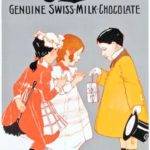
Switzerland is a country of mountains, cheese, watches and chocolate. Chocolate beans do not grow in this country, however. Chocolate is derived from the word Xocolati. It was used by the Aztecs as early as 1,500 B.C. Chocolate made its appearance in Switzerland in the eighteenth century. François-Louis Cailler (1796-1852). Photo: Wikipedia François-Louis Cailler (1796-1852) … Read more » “Two Centuries Swiss Chocolate”

Patek Philippe Museum

The Patek Philippe Museum in Geneva houses one of the world’s most important and prestigious horological collections. Some 2,500 watches, automata, precious objects, and enamel portrait miniatures invite the visitor on a fascinating journey through five centuries of Genevan, Swiss, and European horological art, offering a panoramic view of Patek Philippe’s production since 1839. The … Read more » “Patek Philippe Museum”

Natural History Museum 200 Years

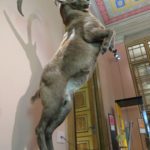
In 1821, Basel opened its first state museum, the Natural History Museum Basel (Naturhistorisches Museum Basel), in the Falkensteinerhof building on the Münsterplatz. Specialist libraries, collections, and research equipment were no longer scattered throughout the city but were under one roof. Some collections date back to the Middle Ages and the Basler bourgeoisie’s passion for collecting … Read more » “Natural History Museum 200 Years”

Napoleon, Switzerland and the Dutch Republic

Napoleon Bonaparte (1769-1821) died on 5 May 1821 on the English island of St Helena in the South Pacific. The Swiss Confederation, comprising twenty-two cantons, existed at that time, and the country had been recognised by the Congress of Vienna (1814-1815) as a sovereign and neutral republic. Few did foresee this development in 1798, the year … Read more » “Napoleon, Switzerland and the Dutch Republic”

The Cardinal and Absinthe in Neuchâtel

The renowned Brasserie du Cardinal de Fribourg is situated at the foot of Neuchâtel Castle, between the city’s historic mills and the banks of the Seyon. The interior of the current restaurant has retained most of its Art Nouveau decor from 1905. It is typical of the Belle Époque: a unique imaginary pattern of coloured … Read more » “The Cardinal and Absinthe in Neuchâtel”

Kleinbasel and Grossbasel

The city of Basel lies on both banks of the Rhine. Until 1392, there were even two Basels: Kleinbasel on the right bank and Grossbasel on the left bank. Grossbasel was even a free imperial city (Reichsunmittelbarkeit). This status gave the city a high degree of autonomy, as only the Emperor was above it. The … Read more » “Kleinbasel and Grossbasel”

Dutch glory and the shipping route between the Rhine and the Rhone

Élie Gouret (1586-1656) was a Huguenot who lived in the Dutch Republic, also known as the Republic of the Seven United Provinces. In 1636, he submitted a project to the government (Der Grosse Rat) of the canton Bern to connect the Rhine, the River Aare, Lake Biel, and Lake Neuchâtel to Lake Geneva. He wanted … Read more » “Dutch glory and the shipping route between the Rhine and the Rhone”

A Swiss Revolution

Available in German, French and Dutch.

Nobel Prize Hermann Hesse and Basel

The Hermann Hesse Festival (Corona Volente) will take place in Basel from 9 to 11 December to mark the 75th anniversary of his 1946 Nobel Prize for Literature award. The festival’s highlight is Hermann Hesse Square, which will be inaugurated on 10 December. The programme also includes lectures, readings, meetings, concerts, and other events. Hermann … Read more » “Nobel Prize Hermann Hesse and Basel”