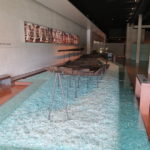
Augusta Raurica Museum

Before the conquest by Roman armies, the Celtic tribe of the Rauraci (also known as the Rauraken) inhabited the area. On the Münsterhügel of present-day Basel, a small settlement, the oppidum Basilia, existed around 30 BC. The Colonia Augusta Raurica was founded in 44 BC but remained small until the Roman conquest in 13-15 BC. … Read more » “Augusta Raurica Museum”

The Roman Army Camp Vindonissa

Available in German, French and Dutch

Almost all roads led to Aventicum in Roman Switzerland

Aventicum (Avenches) was the capital of the Helvetian territory (Civitas Helvetiorum), which was annexed to the Roman Empire around 15 BC. At the time, it was one of Switzerland’s most important cities. Avenches, today a small medieval town, was the political and administrative centre of Roman Helvetia and had approximately 20,000 inhabitants at its peak. … Read more » “Almost all roads led to Aventicum in Roman Switzerland”

Switzerland and the Roman Empire

Celtic tribes inhabited the territory of present-day Switzerland before the conquest in the last decade of the 1st century BC. The Romans occupied Genava (Geneva), the town of the Allobroges, in 120 BC. Geneva became part of the Roman province of Gallia Transalpina, which included the present-day provinces of Languedoc-Roussillon, Alpes-Côte d’Azur, and Rhône-Alpes, except … Read more » “Switzerland and the Roman Empire”

The Celts in Switzerland

Greek and Roman authors used the Celts (Galatoi, Keltoi, Galli, Celtae) to refer to the tribes that inhabited much of Europe, including Ireland and the British Isles. However, the Celts never had political unity. Their economic activities included agriculture, handicrafts, trade, and cattle breeding. The period of the pre-Roman Iron Age, the La Tène period … Read more » “The Celts in Switzerland”

Lake Dwellings Museum

The Society for Lake Dwelling Archaeology and Regional Ethnology was founded in 1922 and manages the  Lake Dwelling Museum in Unteruhldingen (Germany). The Society studies the prehistory in the Lake Constance area and the archaeology of lake dwellings. Lake dwellings are a phenomenon that continues to surprise scholars and the public. Most lake dwellings exist … Read more » “Lake Dwellings Museum”

Pile Dwellings in Switzerland

Around one thousand pile dwellings are known in six countries (Switzerland, Austria, France, Germany, Italy, and Slovenia). A UNESCO project comprises a selection of 111 archaeological pile dwelling sites. The project reveals the remains of prehistoric pile-dwelling settlements dating from 5,000 to 500 BC, which are situated underwater, on lake shores, along rivers, or in … Read more » “Pile Dwellings in Switzerland”

The Celtic Oppidum on Mont Vully

Available in French, German and Dutch.

The Celtic Sanctuary of the Mormont

The Swiss cement manufacturer Holcim has been doing what it has been doing for decades: making cement from lime by extracting it from mountains and hills. In 2006, excavations were in full swing on the Mormont hill, between the villages of Éclépens and La Sarraz (canton of Vaud). On this occasion, one of the most … Read more » “The Celtic Sanctuary of the Mormont”

Bibracte and Swiss History

One of the crucial events in Switzerland’s history occurred in 58 BC, at the Celtic or Gallic oppidum of Bibracte on the Beuvray mountain in Burgundy, near Autun. Cesar stopped the migration or advance of the Helvetians (Helvetii) and some other Celtic tribes from northern Switzerland. This battle between the Roman and Celtic tribes is mentioned … Read more » “Bibracte and Swiss History”