
The Icon Museum in Lenzburg, Coptic Icons and Actuality
3 November 2026
The Icon Museum in Lenzburg has a magnificent collection of icons. This collection includes depictions of Christ, scenes from his life and Passion, various representations of the Mother of God, icons of saints, and a wide range of themes.
Four galleries explain and make the meaning and content of this art form accessible. Traditional painting and gilding techniques, along with natural pigments, give the works an unrivalled richness of colour and clarity.
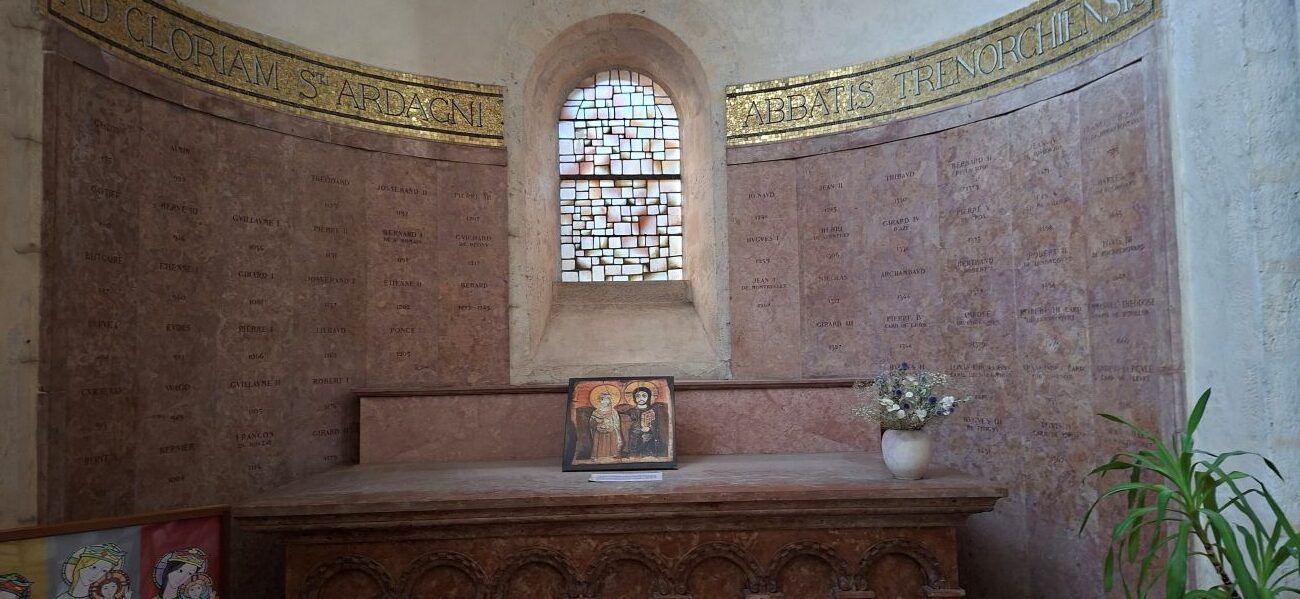
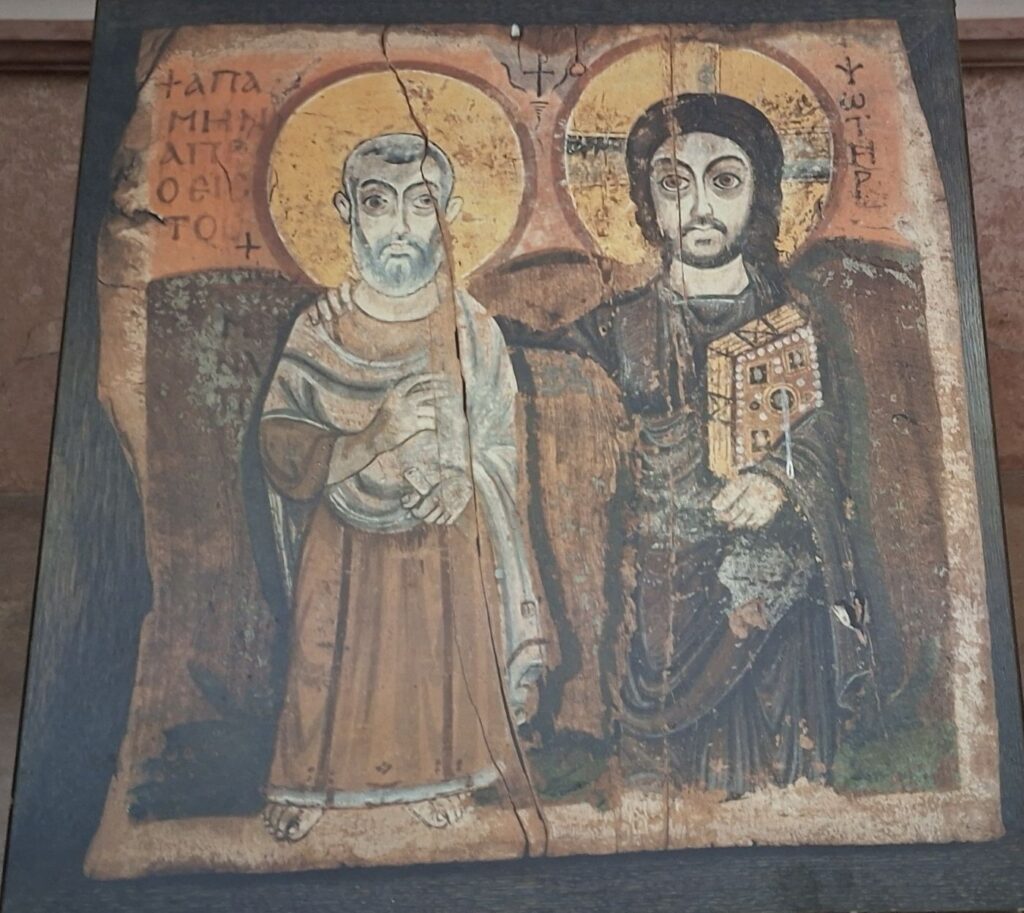
The icon of Abbot Ména (left) and Christ (right) in the former abbey church of Saint-Philibert in Tournus (France)
Icons
The word ‘icon’ means ‘image’ or ‘representation’. Icons originated in the Byzantine Empire in the 6th and 7th centuries. This art form is rooted in the Byzantine visual language and has developed its own styles across various movements over the centuries.
One of the oldest Coptic icons
One of the oldest Coptic icons is housed in the Louvre in Paris, with a copy in the former abbey church of Saint-Philibert in Tournus (France). It dates to the late sixth or early seventh century. It shows Christ with Abbot Ména of the monastery of Baouit in Egypt. It is an illustration of a passage from the Gospel of John:
“I no longer call you servants, for a servant does not know what his master is doing. I call you friends, because I have made known to you everything I have heard from my Father” (John 15:15).
This explains a remarkable and unique detail: Christ has his arm around the abbot’s shoulder. He regards the abbot as his friend! The Benedictine monastery of Saint-Philibert was founded in 875 at the behest of Charles the Bald (823–888), grandson of Charlemagne (748–814).
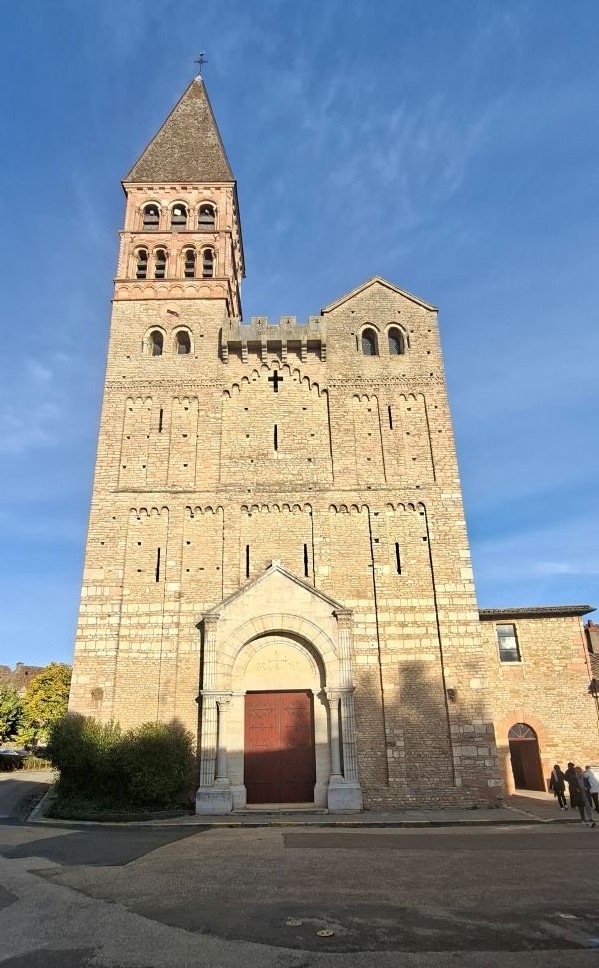
The former abbey church of Saint-Philibert in Tournus today
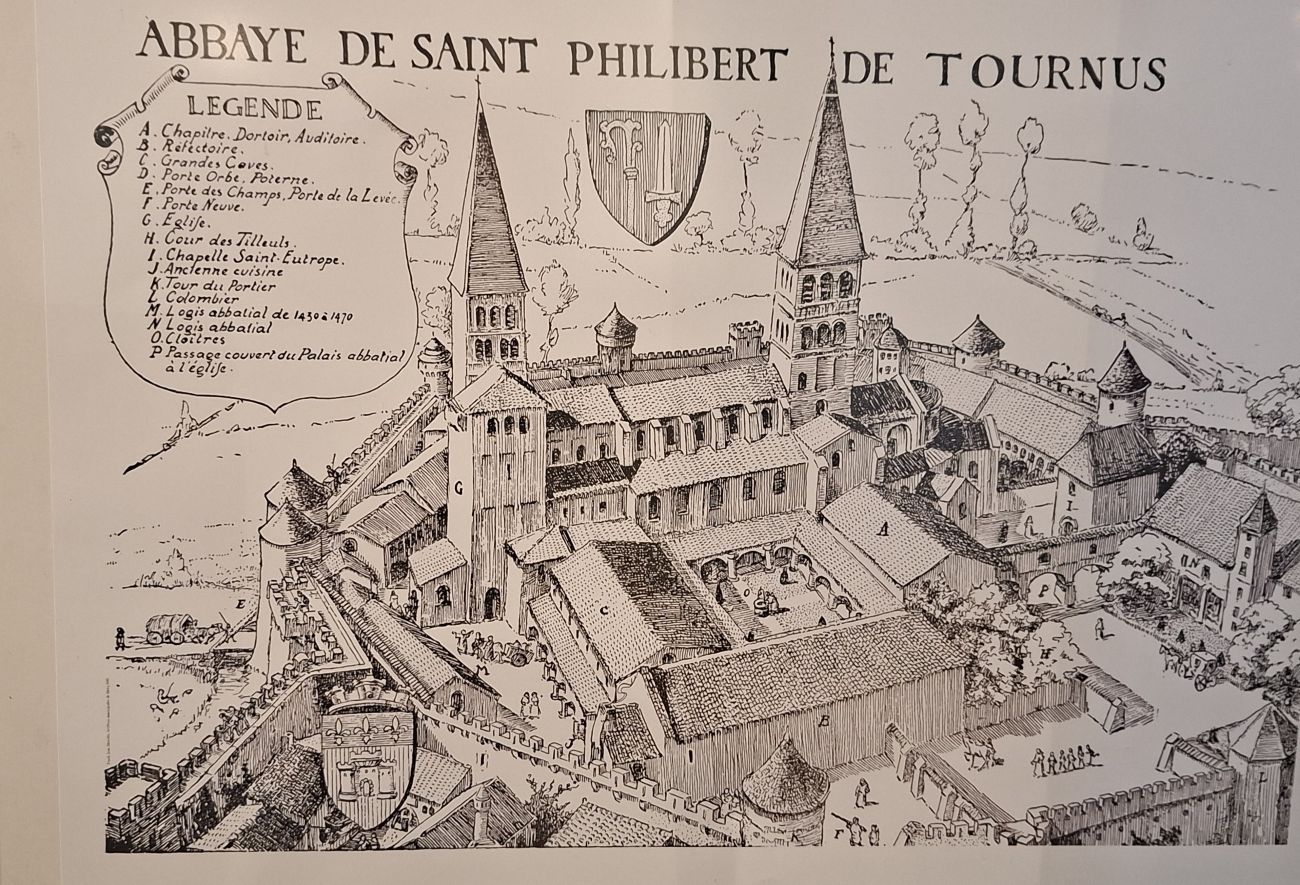
And around 1700
The last monks left the monastery in 1785. Perhaps this saved it in 1789 (the French Revolution). The mighty Cluny Abbey in the same region was dissolved in 1789 and largely demolished in the years that followed. Perhaps France has remained in a revolutionary mood ever since 1789.
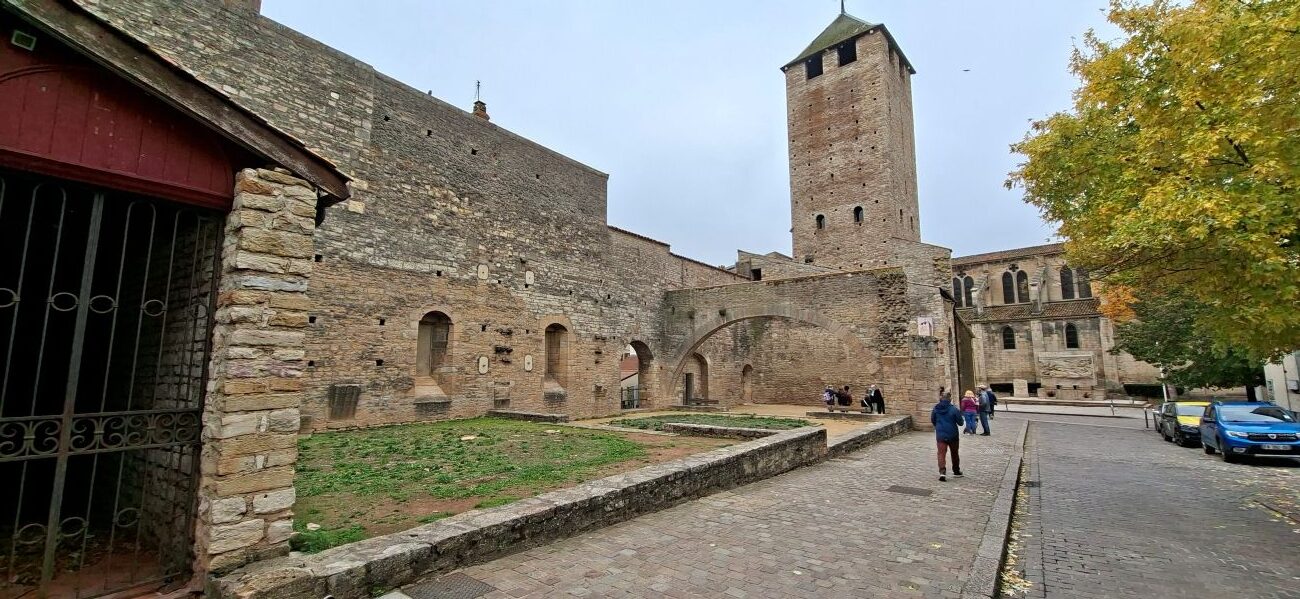
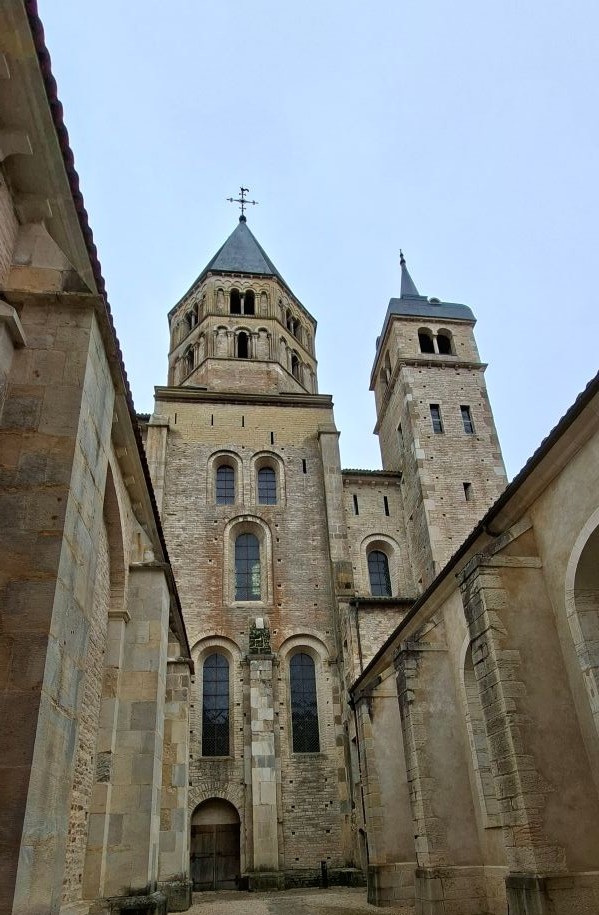
The former abbey church of Cluny today
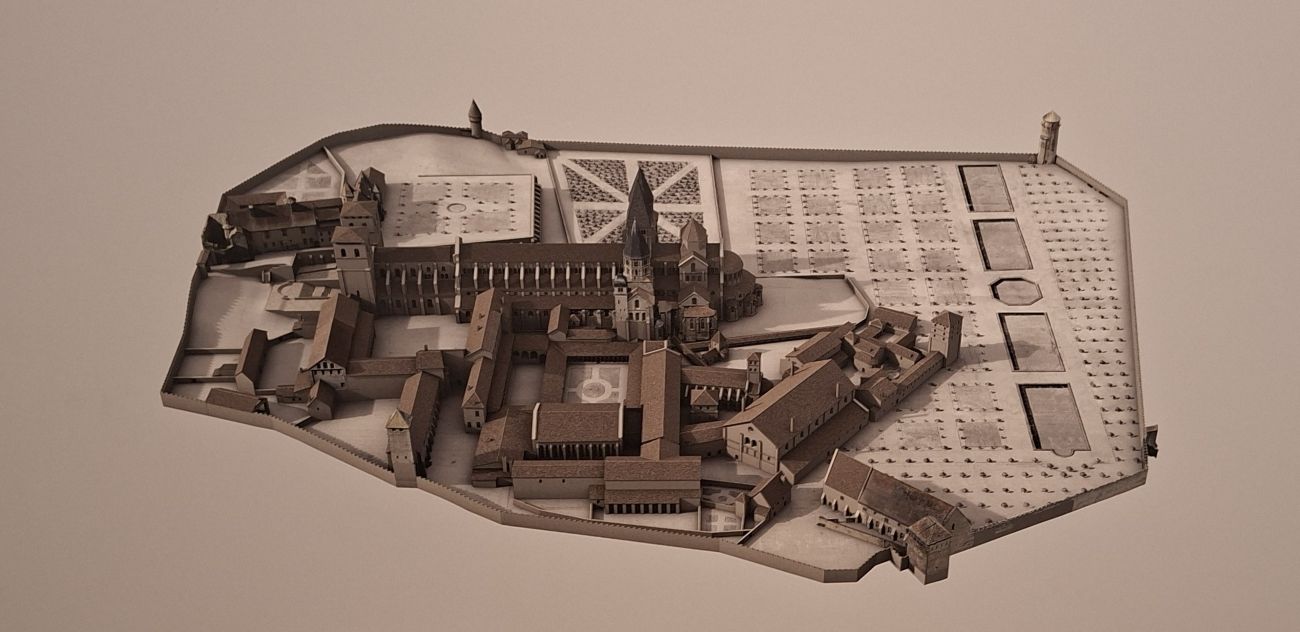
and around 1730
Lenzburg and Napoleon
The French general André Masséna (1758-1817) stayed in Lenzburg in 1799, and Napoleon’s Act of Mediation in 1803 led to the creation of the canton of Aargau. Furthermore, in 1871, Lenzburg was home to around 600 soldiers from the French Bourbaki Army. The Burghalde Museum, of which the Icon Museum is a part, explores this history of Lenzburg and Aargau in detail.
The icons in the Icon Museum relate to a different history, one which is nevertheless still relevant today. The Coptic Church still exists in predominantly Muslim Egypt. And that is worth mentioning, even though this religious minority does not have it easy. So it is indeed possible!
(Source and further information: Ikonenmuseum Lenzburg)