
Switzerland during the Second World War: As Neutral as It Was Involved
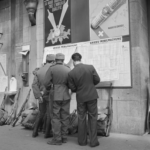
Switzerland remained militarily neutral throughout the Second World War. Economically, however, the situation was far more complex. From 1943 onward, events along its southern border in particular revealed how difficult it was to maintain this balance. Introduction When the Second World War broke out on 1 September 1939, Switzerland ordered a general mobilisation. It called … Read more » “Switzerland during the Second World War: As Neutral as It Was Involved”
Suddenly, Italy is very close by – Southern Switzerland during the Second World War

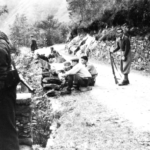
From 1943 onwards, the Second World War came right up to Switzerland’s southern border. In the neighbouring Ossola region, Italian partisans fought against German occupying forces and fascists from the Republic of Salò. For the cantons of Ticino and Valais, Swiss neutrality became a daily balancing act (continuation from part one). The Ossola region and … Read more » “Suddenly, Italy is very close by – Southern Switzerland during the Second World War”

Concilium totius Galliae, Lugdunum, Augusta Raurica, Aventicum and Helvetia

Augustus (63 BC – 14 AD) became the new ruler of the Roman Empire in 31 BC, following a civil war (44–31 BC). However, due to Rome’s centuries-old republican past and the aversion to a monarchy, from 27 BC onwards he styled himself Princeps, first among equals or first citizen. He was no ordinary man, … Read more » “Concilium totius Galliae, Lugdunum, Augusta Raurica, Aventicum and Helvetia”

Bettingen, Riehen and Viticulture in Canton Basel-Stadt

The canton of Basel-Stadt consists of three municipalities: Basel, Riehen, and Bettingen. Riehen and Bettingen are located on the right bank of the Rhine, surrounded by Germany. Riehen was already inhabited before the Roman occupation by the Celts. The Alemanni settled in the region after the Romans’ departure in the 5th century. Reconstruction of a … Read more » “Bettingen, Riehen and Viticulture in Canton Basel-Stadt”

Village Square, Water Springs and Bellevue in Scuol

Switzerland is (for the time being) not only the ‘water castle’ of Europe, but is also renowned for its mineral springs, spas and the Grand Hotels associated with them. These springs can be found throughout the country, even though these places are no longer used as spas today. The epicentre, however, is the Engadin in … Read more » “Village Square, Water Springs and Bellevue in Scuol”

Federal musicality at a local level

More than 40 mountain peaks over 4,000 metres, some 1,500 lakes, large and small, thousands of rivers and streams, and perhaps the highest number of herb gardens per square kilometre in Europe. The per-capita musicality is also substantial, in both quality and quantity. It is estimated that in the city of Basel (around 185,000 inhabitants) alone, there are 10,000 piccolo players … Read more » “Federal musicality at a local level”

From the stars to atoms and the history of timekeeping and precision watchmaking

The Observatory of Neuchâtel (l’Observatoire cantonal de Neuchâtel) has long been at the heart of watchmaking certification and chronometry competitions. Today, the Cantonal Observatory of Neuchâtel is a cultural and scientific heritage, dedicated to its role in the history of timekeeping and precision watchmaking. Pavillon Hirsch The Observatory of Neuchâtel For a long time, only … Read more » “From the stars to atoms and the history of timekeeping and precision watchmaking”

Pyramides, Ossona, Evolène, Triton Alpestre and Marie Métrailler in Val d’Hérens

The name Valais (French) or Wallis (German) is derived from the Latin word valles (valley). During the conquest of what is now Switzerland between 15 and 13 BC (Geneva, inhabited by the Celtic Allobroges under the name Genava, had already been conquered in 120 BC), four Celtic tribes lived in Wallis: the Nantuates, Veragri, Seduni, … Read more » “Pyramides, Ossona, Evolène, Triton Alpestre and Marie Métrailler in Val d’Hérens”

The Burgundian Wars, the Bishop of Basel and the Swiss Confederation

The Burgundian Wars (1474–1477) were already described and illustrated at the time in numerous chronicles, songs, poems, pamphlets, and local archives. Various museums (including those in Grandson, Murten, and Bern) and publications are devoting considerable attention to this period this year. Moreover, the museum in Saint-Imier is presenting an exhibition on an underexposed subject related … Read more » “The Burgundian Wars, the Bishop of Basel and the Swiss Confederation”

Kairos and Chronos and the Patek Philippe Museum in Geneva

Kairos is the Greek god of the right moment, experience, beauty, and perception. Chronos is the economy, the orderly functioning of the private and public spheres, and above all, of the temporal, the mortal. For these reasons, the symbols of Chronos are the hourglass and the scythe. Kairos, by contrast, is the patron of feelings, … Read more » “Kairos and Chronos and the Patek Philippe Museum in Geneva”