
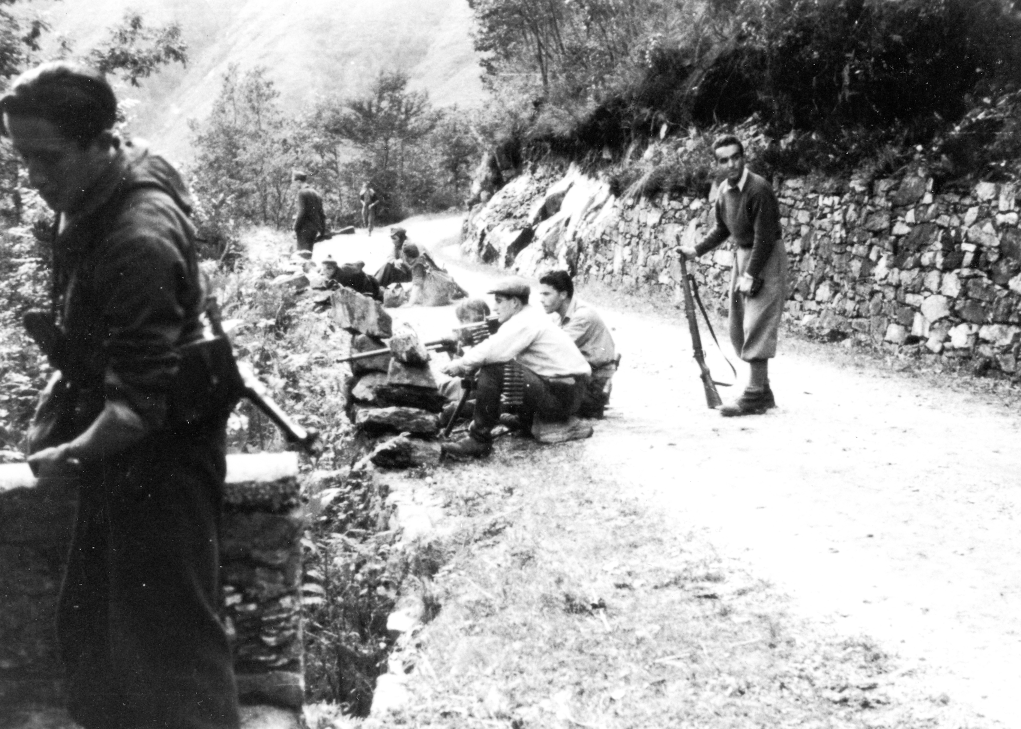
Suddenly, Italy is very close by – Southern Switzerland during the Second World War
24 October 2026
From 1943 onwards, the Second World War came right up to Switzerland’s southern border. In the neighbouring Ossola region, Italian partisans fought against German occupying forces and fascists from the Republic of Salò. For the cantons of Ticino and Valais, Swiss neutrality became a daily balancing act (continuation from part one).
The Ossola region and the town of Domodossola
The Ossola region, situated between the Simplon Pass and Lake Maggiore, offered favourable conditions for the Italian resistance movement, which began to take shape in the autumn of 1943 (see Article 1). In addition to the advantages of the alpine terrain, Switzerland, a neutral country, lay nearby, providing the partisans with an ideal place of refuge.
Units under pressure could escape across the border, regroup there and then re-enter the fray. This made it practically impossible for the German and Fascist occupying forces to control the Resistenza in this region in the long term. This was another reason the area around the small town of Domodossola became an important centre of the Italian Resistance.
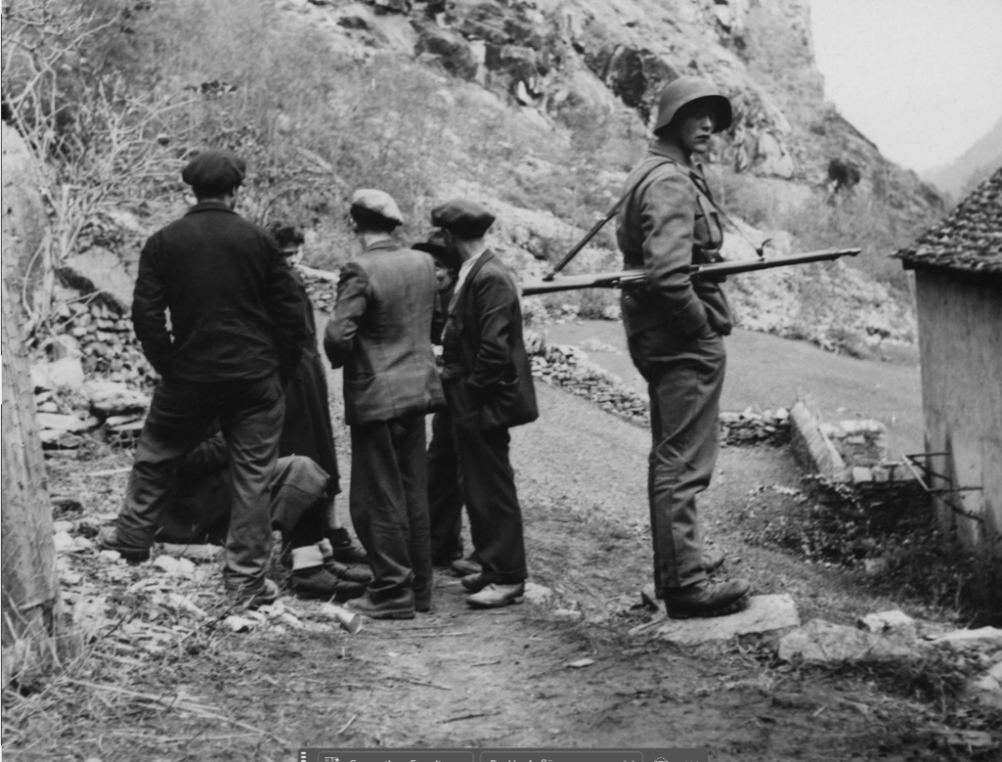
For the partisans in the Ossola region, the Swiss border was very porous. Those in charge often deliberately looked the other way. Image: Aargau State Archives / Ringier Picture Archive
This resistance movement, however, was anything but cohesive. It consisted of various factions, some with very different political views. In the Ossola region, Christian Democratic, monarchist, socialist, communist, and politically independent groups all fought. Whilst they shared a common enemy in the occupying forces – comprising SS police, small Wehrmacht units and Italian fascists – there was neither unity nor any great willingness to cooperate amongst themselves.
A fortuitous victory
Nevertheless, the Ossola Resistenza liberated large parts of the region around Domodossola in September 1944. The partisans benefited from the broader military situation: German-Fascist troops in Italy came under increasing pressure, so forces previously deployed for occupation and security duties were increasingly needed on the front lines.
At the same time, the Resistance grew significantly. By late August, various partisan groups began capturing areas largely independently of one another and, by early September, completely encircled Domodossola.
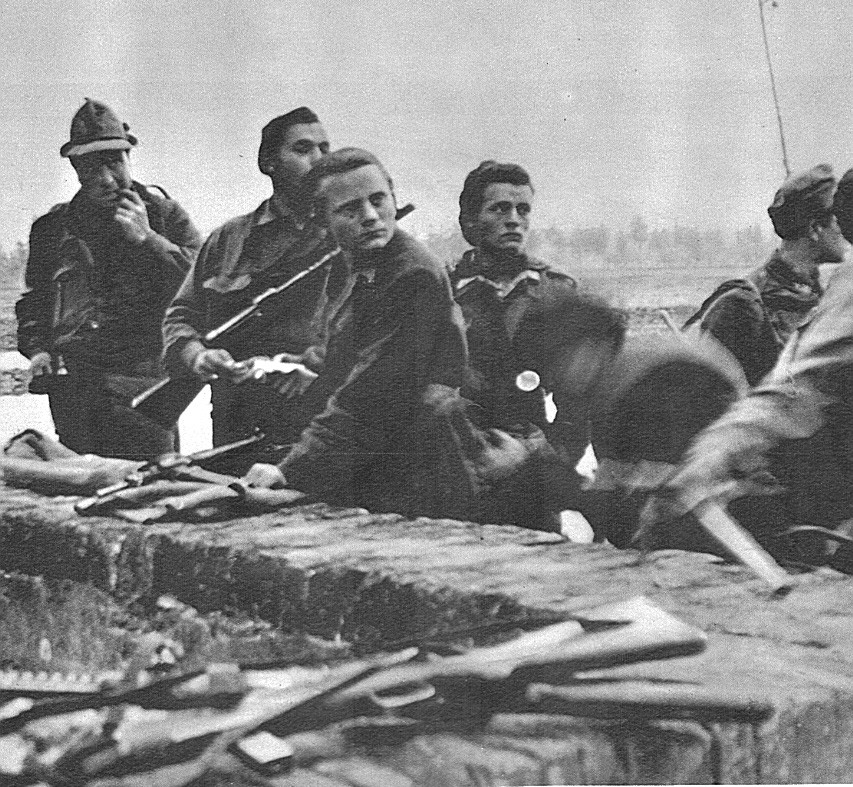
Partisans from the Ossola Valley, photographed in October 1944. The variety of weapons is clearly visible, making it particularly difficult to supply the resistance fighters. Source: Istituto Storico Piero Fornara, Novara
The resistance groups did not act in a coordinated manner. However, their attacks, carried out almost simultaneously, gave the approximately 400 German and Italian Fascist soldiers in Domodossola the impression of a jointly planned offensive.
The occupying forces also vastly overestimated their opponents’ strength. Furthermore, because most of the occupying forces were war-weary, they negotiated with the partisans to withdraw from the region. On 10 September 1944, the occupying forces, together with their families, left Domodossola and withdrew southwards. The Ossola region was liberated.
The Ossola Partisan Republic
After the war in Italy, it was repeatedly held up as a model for a democratic state. Despite rivalries and differing political views, the resistance fighters immediately established a civilian government. In a short time, this government achieved a great deal: it reorganised schools and the postal service, resumed public transport, and secured funds for pension payments. It was a remarkable democratic experiment following more than two decades of fascism.
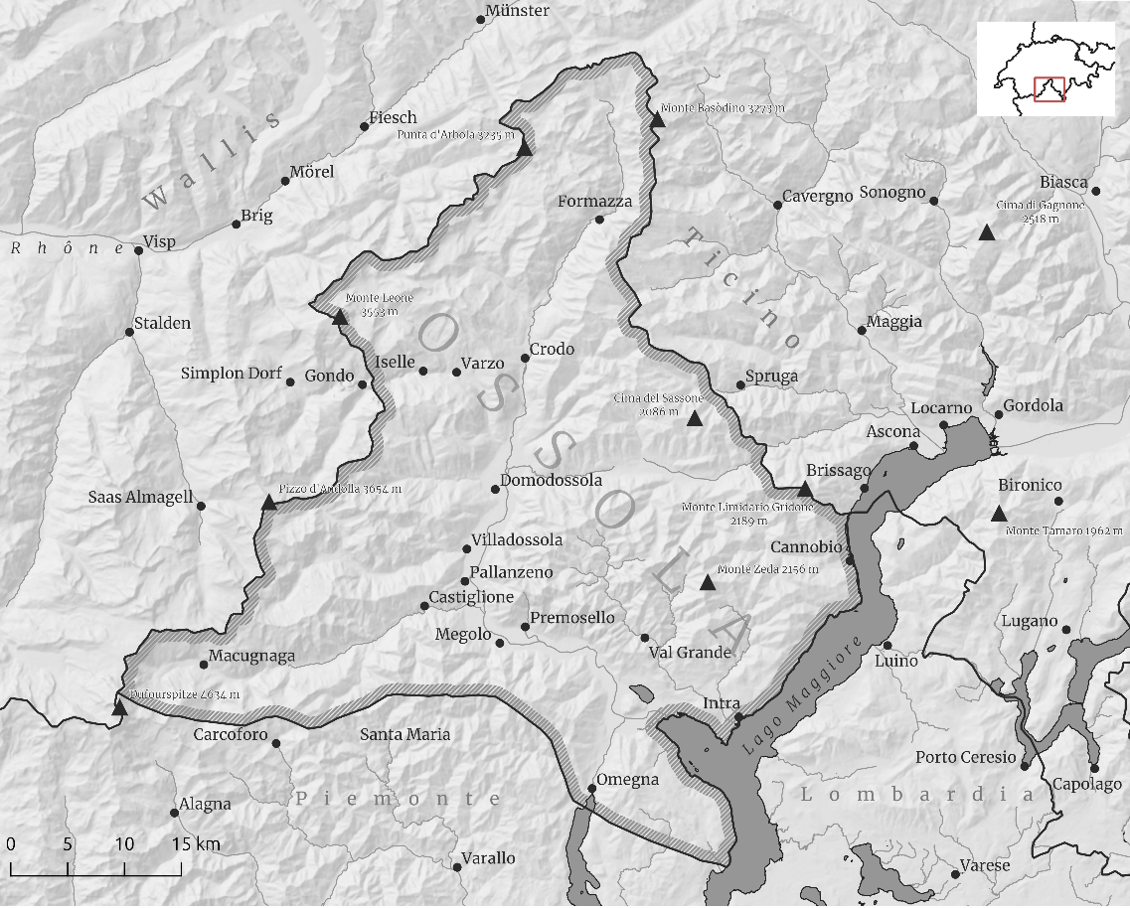
The Ossola Partisan Republic stretched from the Swiss border to Lake Maggiore and had a population of around 80,000. Image: Insubrica Historica, Minusio
The small state also made its mark politically. In early October, Gisella Floreanini (1906–1993) was appointed Commissioner for Social Welfare, a role equivalent to a minister. And this was years before Italian women were even allowed to vote. Among other things, Floreanini coordinated with the Swiss Red Cross, organised food and medical supplies, and stayed in close contact with the population.
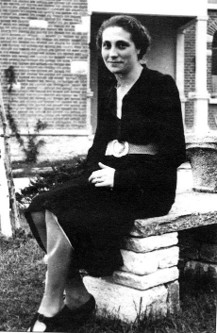
Gisella Floreanini (1906–1993). Gisella Floreanini was Italy’s first female minister and a member of the civilian government of the Ossola Partisan Republic. Image: Insubrica Historica, Minusio
She used her Swiss connections to organise aid for the people of the Republic of Ossola. Yet the small state’s ties with Switzerland – and, above all, with the cantons of Valais and Ticino – extended far beyond humanitarian aid.
Substantial support from Ticino
In Ticino, the partisans and the ‘Little Republic’ enjoyed widespread sympathy. Large sections of the population supported them with money, clothing and food. The Ticino press and church circles also viewed the resistance favourably. Some Ticino residents went even further and took an active part in the fight against the German-Fascist occupiers.
Silvio Baccalà (1911–1990) from Brissago worked as a hotel gardener by day and, by night, guided partisans along the mountain paths of the Ghiridone into the Cannobina Valley. Vincenzo Martinetti (1908–1992), also from Brissago, organised all the logistics for a partisan unit known as the Divisione Piave.
Gabriella Antognini (1910–1988), who lived in Locarno, hid Italian resistance fighters or helped men who had escaped from Swiss internment camps to cross the border back into Italy to fight the occupying forces once more. This tangible support was also possible because the Ticino authorities turned a blind eye to much of it and, in some cases, supported it themselves.
Official Swiss neutrality
As a result, official Swiss neutrality came under increasing pressure. A marked contrast emerged between the situation on the ground in Ticino and the official line taken by the Swiss Confederation. Cantonal and local authorities often turned a blind eye to partisan support or interpreted the applicable regulations generously.
Among the federal authorities and the army leadership, however, adherence to neutrality remained the top priority. Consequently, this local assistance was not entirely unpunished, even in Ticino: Gabriella Antognini served a short prison sentence in 1945 for illegally crossing the border, while Vincenzo Martinetti was sentenced to four months’ imprisonment after the war for breaching neutrality.
The End of Freedom
After 40 days, freedom in the Ossola region ended. The partisan republic was not militarily strong enough to hold its ground in the long term. Once the Allied advance stalled further south, the German occupying forces were able to reorganise. On 9 October 1944, the recapture began. By 23 October, the small republic had finally collapsed.
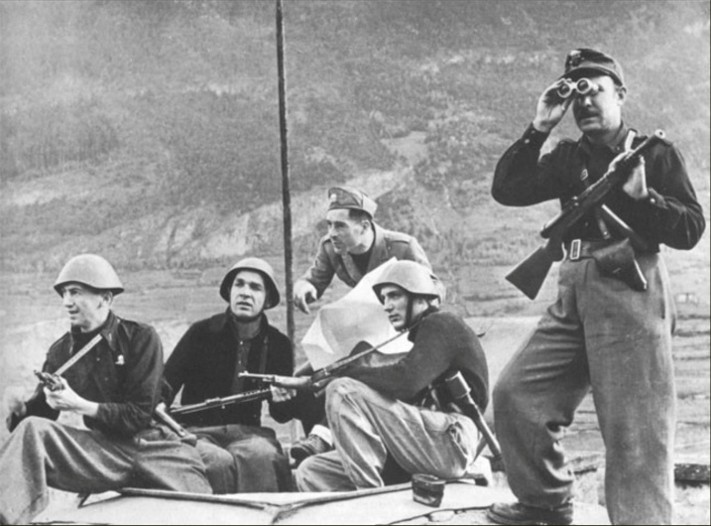
Italian fascists, such as these men from the Black Brigades, were also involved in the recapture of the Ossola region in the autumn of 1944. Source: Insubrica Historica, Minusio
A large exodus then began towards Ticino and Valais. According to current research, up to 10,000 people fled across the border, including around 3,500 partisans. Many were exhausted, injured or malnourished. The situation became particularly dramatic near the border at Bagni di Craveggia.
There, in mid-October, several hundred partisans had retreated to a position close to the border. On 18 October, German and Italian Fascist troops advanced. During the ensuing skirmishes, those fleeing were mercilessly pursued. The occupying forces even fired on people who were already on Swiss territory.
These events demonstrate how quickly a war in a neighbouring country could become a problem for Switzerland. The army had already reinforced the southern border. Now Swiss soldiers had to prevent the fighting from spilling over onto their own territory, whilst at the same time taking in the arriving refugees and disarming the military personnel.
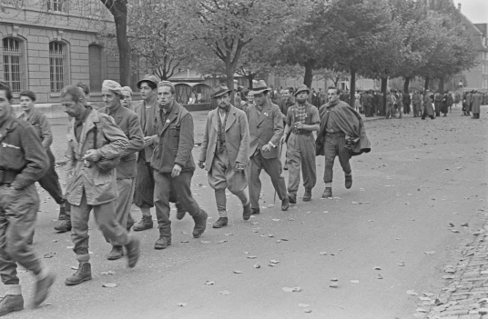
Partisans who had fled the Ossola region arrived in Bern in the autumn of 1944. From there, authorities distributed them among various internment camps. Image: State Archives of the Canton of Bern
Refuge and Internment
For the partisans, Switzerland meant safety, but not the freedom to continue their struggle. As military personnel, they were disarmed and interned as far away from the border as possible. They were generally sent to camps in German-speaking Switzerland. The aim was to prevent them from re-engaging in hostilities and to preserve Swiss neutrality.
This was only moderately successful, as numerous helpers assisted the partisans in escaping from the internment camps and returning to Italy. Gabriella Antognini was one of several people who deliberately flouted the state’s regulations.
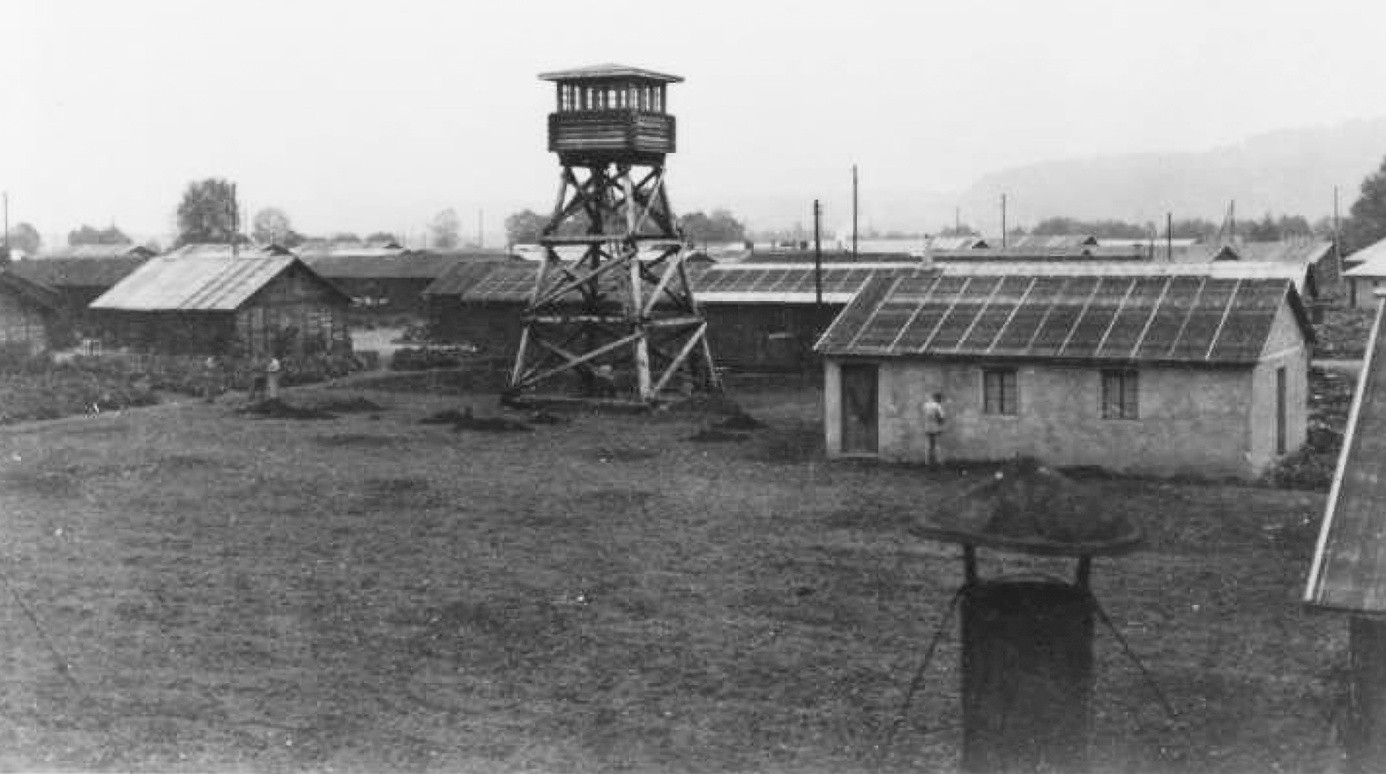
The internment camp in Büren an der Aare, in the canton of Bern, photographed around 1940. Partisans from Ossola were later interned here as well. Image: State Archives of the Canton of Bern
Conclusion
This highlights the unique nature of Switzerland’s southern border during the Second World War. On paper, the border separated Ticino and Valais from the Italian theatre of war. In everyday life, however, it proved to be surprisingly permeable.
Switzerland remained neutral as a state. Yet in the two border cantons, refugees were taken in, partisans were hidden, messages were passed on, and resistance fighters were guided along mountain paths. For some Ticino residents, the conflict beyond the border was not a foreign war, but above all a struggle against a form of fascism they knew all too well from close quarters.
Ossola’s history therefore illustrates how difficult it is to reduce neutrality to a political formula. On the southern border, it had to be reconciled on a daily basis with a reality in which war, persecution and resistance were often only a few kilometres – sometimes just a few steps – away.
The author, Andrej Abplanalp, born in 1970, studied history at the University of Bern and researched the partisans in the Ossola region. Today, he is Head of Communications at the Swiss National Museum. In spring 2026, Andrej, together with Ticino historian Raphael Rues, published “Kampfzone Ossola. Der Widerstand an der Schweizer Südgrenze 1943–1945” (Zurich 2026). The book (Battleground Ossola. Resistance at the southern border of Switzerland) has also been published in Italian: Andrej Abplanalp, Raphael Rues, *L’Ossola in Guerra*, Edizione Insubrica Historica (Minusio, 2026). A French version is due to be published in early 2027 by the Geneva-based publisher Slatkine.