
Zuoz, the Chesa Poult and the Planta family
18 July 2021
Engadine was ruled by the Ostrogoths in the 500s. In 539, the Franks took over and held on for centuries to come.
The first mention of Zuoz dates back to 843. The name Zuoz is probably related to the Romansh word “suot” (under). The Bishop of Chur possessed numerous rights and estates in the Upper Engadin from the eleventh century onwards. Zuoz was the centre of his dominion in his region.

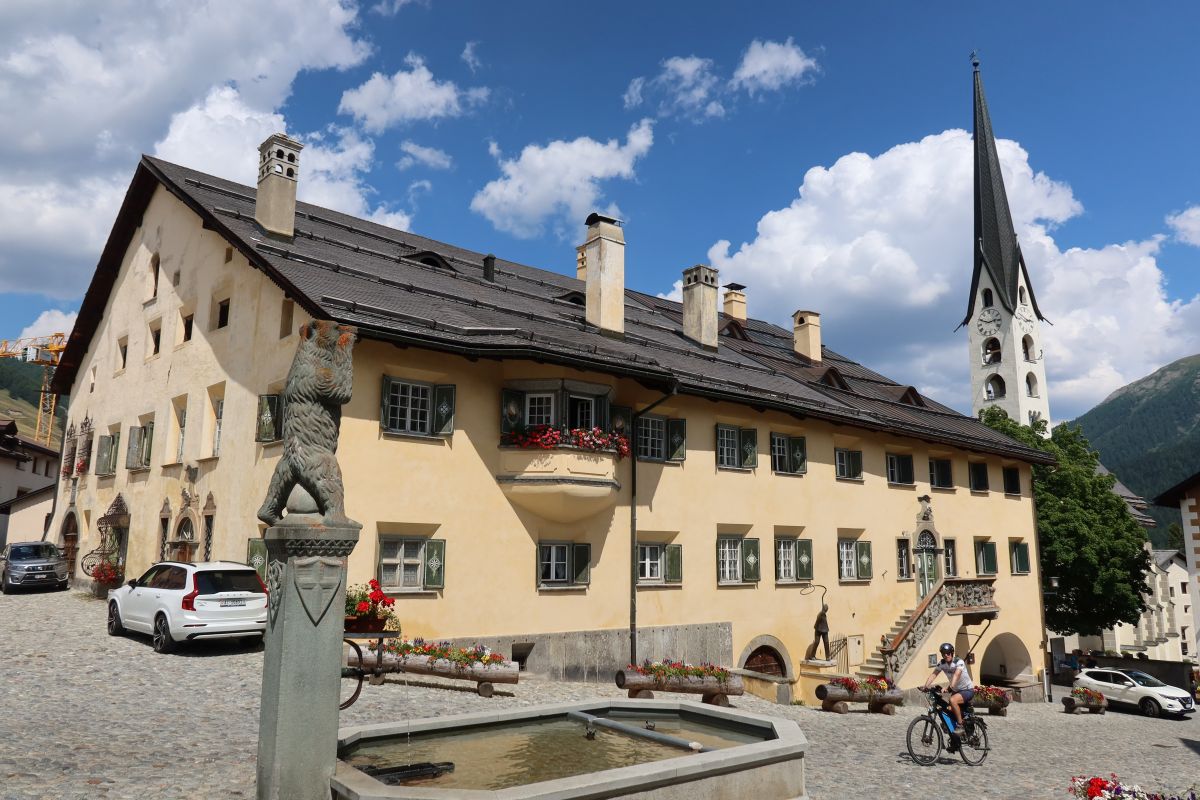
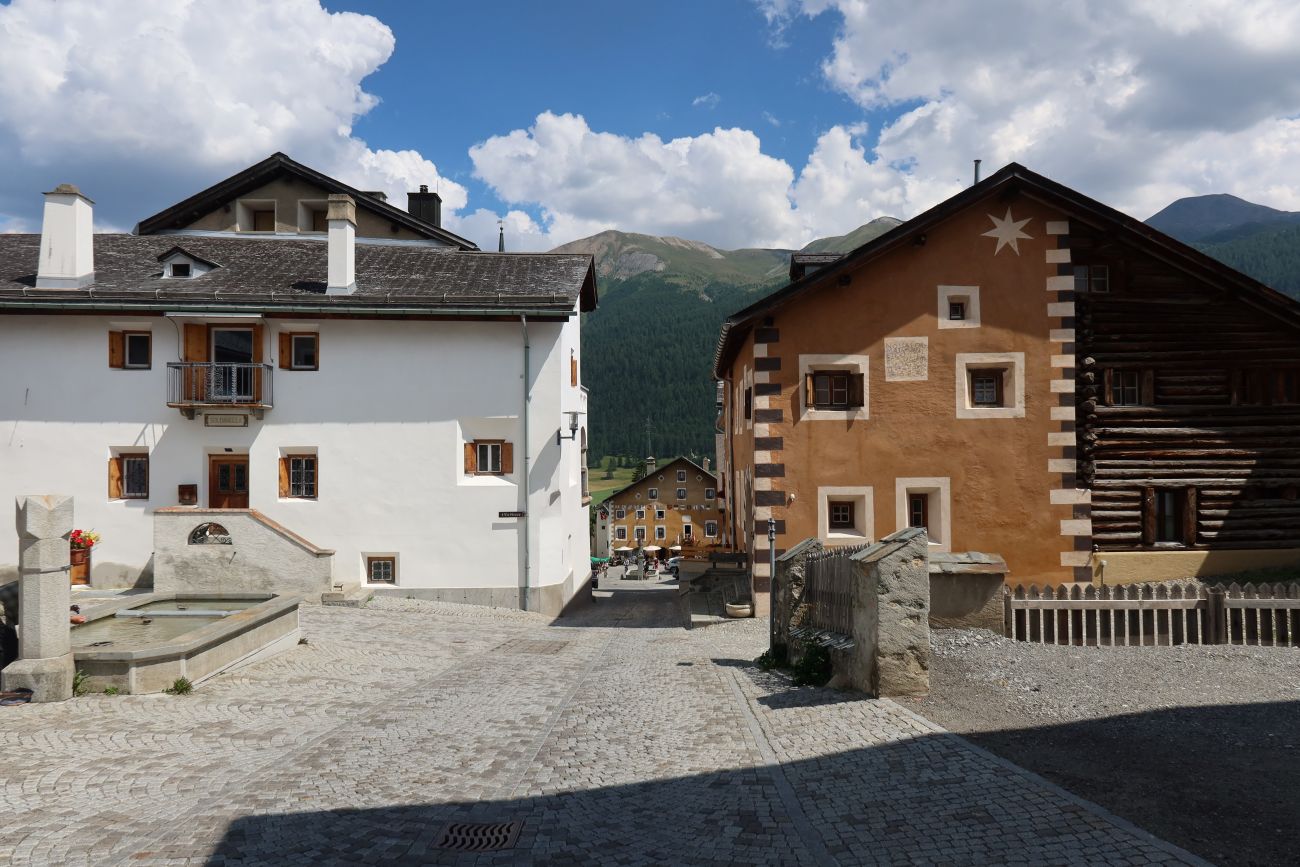
The Chesa (house in Romansh) Poult in Zuoz
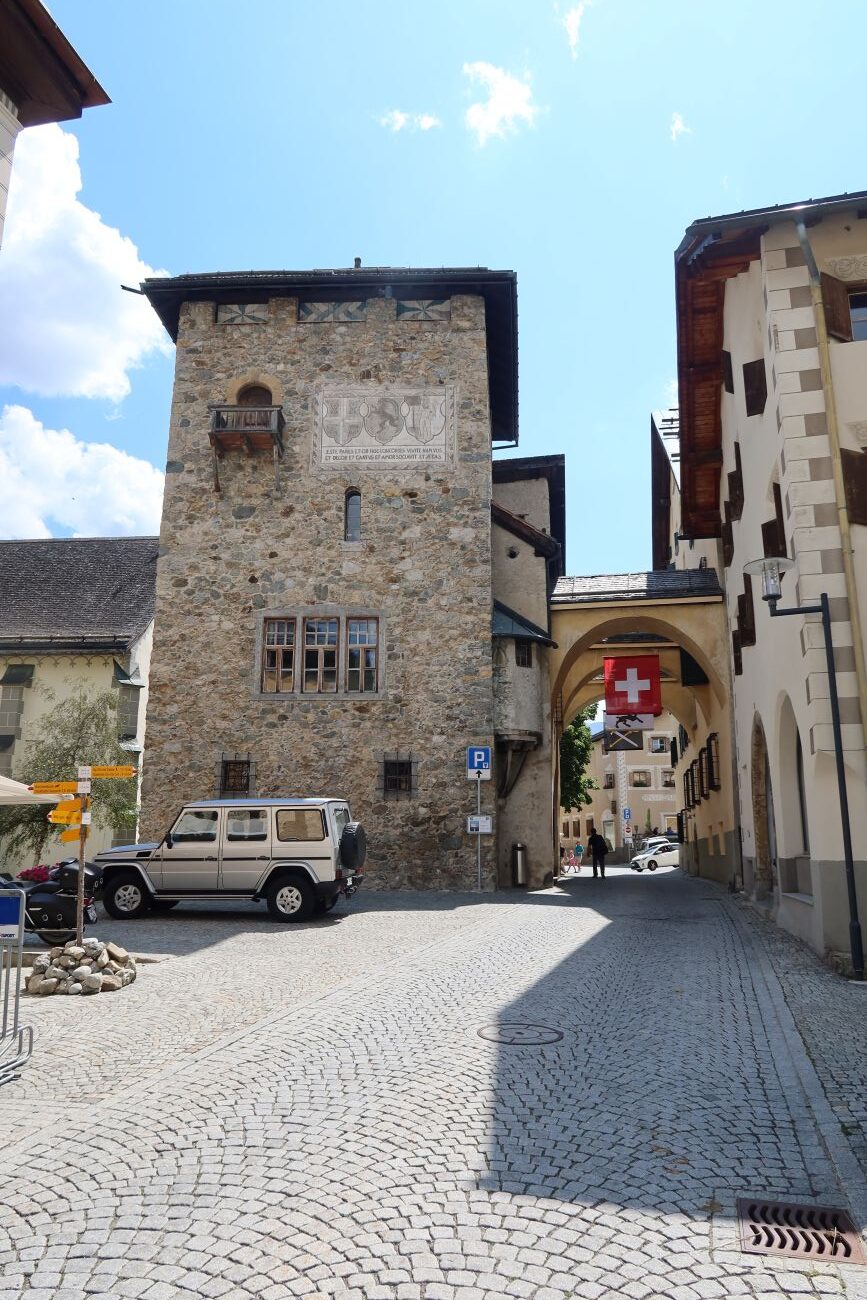
The Plantas were the most powerful and leading family. The Bishop of Chur had granted Andreas Planta the chancellorship in 1244. The San Luzi is mentioned in documents in 1139 as one of the leading churches in the Upper Engadine. The colossal tower in the village was the residence of the Plantas.
(Source: Gesellschaft für Schweizerische Kunstgeschichte, Kunstführer durch die Schweiz, Band 2, Bern 2005).

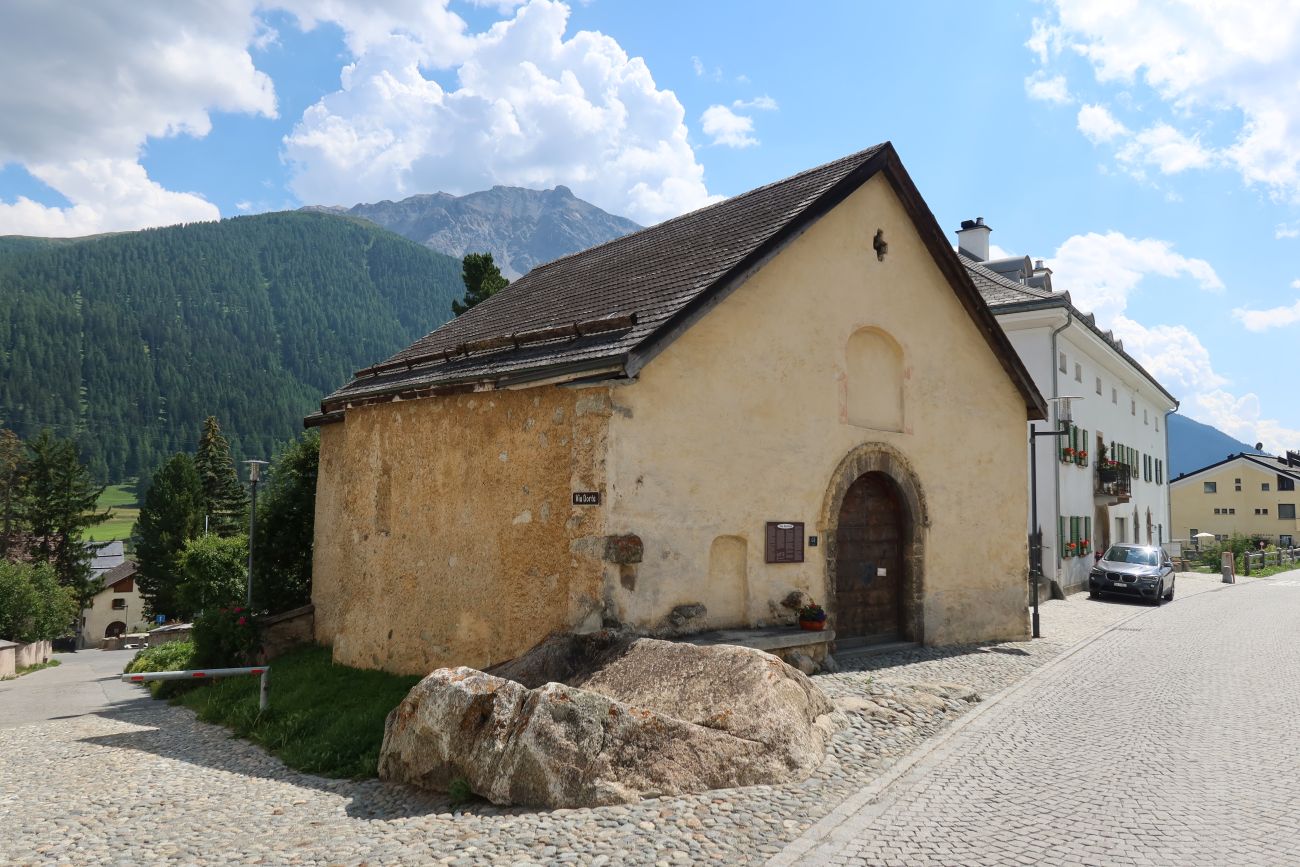
San Bastiaun Chapel. The Romanesque chapel was built in the 13th century and ceased to be used as a place of worship after the Reformation (1554).


The Church of San Luzi is one of the three oldest valley and baptismal churches in the Engadin, alongside St Mauritius in St Moritz and San Peter in Samedan. The church was built in 1200 in the Romanesque style. In 1507, it was extended in the late Gothic style. After Zuoz converted to the Reformed faith in 1554, San Luzi became a Protestant church. Particularly worth seeing are the stained-glass windows by Augusto Giacometti and Giuseppe Scartazzini, as well as the works by Constant Konz and Gian Casty.