Bruder Klaus, the Confederation and a Father of the Fatherland

The existence of Wilhelm Tell can be questioned, although this story fits into the historical, political and religious context of resistance to a sovereign and the formation of local alliances. However, the other Swiss hero, Niklaus von Flüe (1417-1487), is a historical figure whose person, way of life and (political) deeds were already recognised and recorded … Read more » “Bruder Klaus, the Confederation and a Father of the Fatherland”

Industrialisation, Catholics, Protestants and Monasteries in St. Gallen

The city, canton, and abbey of St. Gallen have been a symbol of division and conflict of interests in the Swiss Confederation for centuries, both before and after the Reformation in 1526. The relationship between the governments of the cities of Chur, Constance, Basel and Geneva and their bishops is similar. Until the Reformation, these … Read more » “Industrialisation, Catholics, Protestants and Monasteries in St. Gallen”

Chaplin’s World on the shores of Lake Leman

6 June 1944 (D-Day) was not only a day of deliverance for citizens of occupied countries in Western Europe. It was also a moment of hope for actor and film director Charlie Chaplin (1889-1977). Although he was only four days older than the German dictator, he outlived him by over 32 years. They never met … Read more » “Chaplin’s World on the shores of Lake Leman”

Vullierens Castle, its Gardens and its Art

Every town, village, and even hamlet in Switzerland has one or more historical, cultural, or natural peculiarities. What they all have in common is the floral scenery and image. The town of Morges (canton of Vaud), located on Lake Geneva, is known, among other things, for its annual tulip festival, Audrey Hepburn’s 1969 wedding, and the Dutch … Read more » “Vullierens Castle, its Gardens and its Art”

Laupen and its (Swiss) History

Switzerland has a fascinating and carefully cultivated history. Almost every trip leads to one or more interesting cultural and historical encounters. Small towns or villages often have a rich past, whether it be a centuries-old sovereign republic, the smallest episcopal or abbey town, or an important but small medieval fortress city. The town of Laupen (canton of Bern) is a miniature … Read more » “Laupen and its (Swiss) History”

Geneva, France and the Swiss Confederation 1798-1815

Available in French, Dutch and German

Time keeps on ticking in the Musée international d’horlogerie de La Chaux-de-Fonds

Everyone in modern society is familiar with the terms second, minute, hour, day, week, month, (leap) year, decade, century, millennium, day, night and seasons. However, who knows that a year does not have exactly 365 or 366 days (a leap year) but ‘only’ 365.2425 days ( the exact duration of one orbit of the Earth … Read more » “Time keeps on ticking in the Musée international d’horlogerie de La Chaux-de-Fonds”

Erasmus and Basel

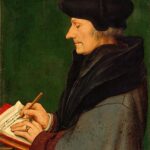
Desiderius Erasmus (1466-1536) spent ten years in Basel in four periods (1514-1516, 1521-1529, 1535-1536), like many of his contemporaries, the humanist and scholar travelled throughout Europe. The elite of artists, scholars, students, traders, monks, and spiritual and secular (aristocratic) rulers was much more European in the Middle Ages than it is nowadays. Holbein was responsible … Read more » “Erasmus and Basel”

La Chaux-de-Fonds, The Sapin-Style and Charles L’Eplattenier

Between 1905 and 1914, students at the École d’Art (Art School) de La Chaux-de-Fonds (canton of Neuchâtel), under the guidance of their teacher Charles L’Eplattenier (1874-1946), devised an original artistic language (le Style sapin) inspired by the Jura’s local nature. Sapin means pine, and there are plenty of them in this region. In the early … Read more » “La Chaux-de-Fonds, The Sapin-Style and Charles L’Eplattenier”

The Trient Valley from Martigny to Châtelard-Frontière and the Espace Mont Blanc

The distance from Zermatt to Chamonix is 60 kilometres as the crow flies. The route by rail or road is about 140 kilometres. The distance of the hiking trail depends on the route and difficulty and is between 170 and 200 kilometres, but then you get something. Mountain passes, glaciers, numerous streams and waterfalls, valleys, … Read more » “The Trient Valley from Martigny to Châtelard-Frontière and the Espace Mont Blanc”