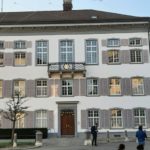
Canton of Nidwalden

Unterwalden (comprising Obwalden and Nidwalden) first appeared in documents in the 13th century.  Unterwalden means “in the forest” or “inter silvas”. King Henry (Heinrich) VII (1273-1313) granted the status of a free imperial city (Reichsunmittelbarket) to villages in this region in 1309. It was highly unusual to give this right to a village of peasants. … Read more » “Canton of Nidwalden”

Canton of Valais

The canton of Valais (Wallis in German) became a member of the Swiss Confederation of twenty-two cantons in 1815. Until the French invasion in January 1798, the Republic of the Seven Tithings (Republik der Sieben Zenden or Zehnden, Républik des sept Dizains) in the Upper Valais (Haut-Valais, Oberwallis) ruled the territory. From 1476 onwards, this Republic … Read more » “Canton of Valais”

Nidwalden in the twentieth Century

The canton of Nidwalden repeatedly chose its way to remain independent. In 1798, Nidwalden rejected the Helvetic Republic (1798-1803) imposed by the French occupiers. The canton even waged war against Napoleon. The battle of 9 September 1798 claimed more than 400 Nidwaldner lives and caused long-term trauma. In 1815, troops of the Swiss Confederation entered … Read more » “Nidwalden in the twentieth Century”

Canton Obwalden

In the Middle Ages, the cantons of Obwalden (capital: Sarnen) and Nidwalden were collectively referred to as Unterwalden. Although small, the canton lies on the spur of Lake Lucerne and is one of the founders of today’s Swiss Confederation. Celts, Romans, Burgundian kingdom, Holy Roman Empire The Alemanni came to the area after the Celts, Romans, … Read more » “Canton Obwalden”

Canton of Uri

The canton of Uri has undergone historical, economic, and political development similar to that of Schwyz in Celtic and Roman times. Altdorf is the main town of the canton and is famous, among other things, for William Tell. Significant events include Emperor Friedrich II’s (1196-1250) decision on the status of a free imperial city (Reichsunmittelbarkeit), … Read more » “Canton of Uri”

Canton Schwyz

The village of Schwyz is the namesake of Switzerland and of the canton. As one of the Waldstätten Uri, Obwalden, Nidwalden (Unterwalden) or Orte, Talschaften or Landsgemeinde on Lake Lucerne (the Vierwaldstättersee), the place and its surrounding areas and municipalities achieved autonomy and sovereignty as early as the 14th century. The canton reached its current … Read more » “Canton Schwyz”

Canton Jura

The first statue in the canton, Roman period Délemont, Musée jurassien d’art et d’histoire 999-1792/97 From 999, the area of the French-speaking canton of Jura fell under the bishopric of Basel. In the following centuries, especially in the 14th and 15th centuries, Bern gained increasing influence in the southern part of Jura, including in la … Read more » “Canton Jura”

Canton Vaud

The present-day Canton de Vaud (Waadt in German)  area has been inhabited since the end of the last Ice Age (10,000). The Helvetians The region gained notoriety through Julius Caesar’s mention of the Celtic tribe, the Helvetians, in De Bello Gallico. This tribe also inhabited Vaud from 450 to 58 BC. Tombs have been found … Read more » “Canton Vaud”

Canton Geneva

The area of the present canton and city of Geneva was already inhabited around 10,000 B.C. In the ninth century B.C., the water level of Lake Geneva rose 5 metres, and the inhabitants left the area. In the second century B.C., the Celtic tribe of the Allobroges inhabited the banks of the lake and the … Read more » “Canton Geneva”

Canton of Neuchâtel

The last Burgundian King founded the castle novum castellum in 1011, hence the name Neuenburg/Neuchâtel. The newly formed borough soon expanded into the Jura upper valleys. 1100-1798 The county of Neuchâtel was founded in the 12th century. Its size reached around 1500, which is the size of the present-day canton of Neuchâtel. Colombier, Valangins, Corcelles, … Read more » “Canton of Neuchâtel”