
From the Mühleberg hydroelectric power station to the Aarberg hydroelectric power station: at the heart of nature and for the climate
24 November 2026
The Mühleberg nuclear power station was shut down in 2019 and, according to current plans, will also have been physically dismantled by 2034. On 28 February 2027, a referendum will be held to decide whether the current ban on nuclear power should be lifted. The Basel Historical Museum is dedicating an exhibition to this topic.
The relationship between nature and mankind in Switzerland
The pros and cons of this energy source have been the subject of public debate and political disagreement for decades. This calmness is all the more striking when it comes to a Swiss quality: preserving tradition while embracing innovation, admired worldwide in many fields. The decentralised, federal system of direct democracy, based on the principle of subsidiarity, can sometimes slow decision-making, but the result is often the product of careful consideration.
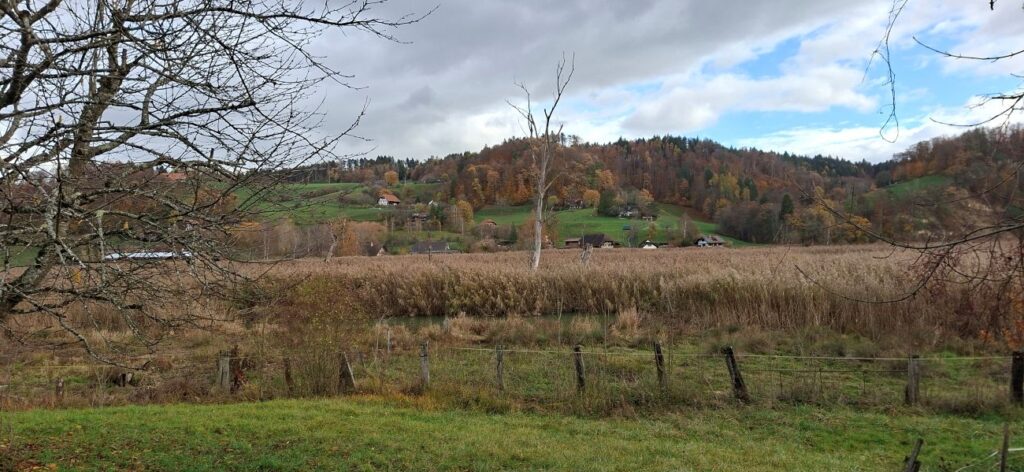
This also applies to the relationship between nature and humankind. Switzerland is a densely populated country, with, in some places, a very high concentration of tourism, traffic, housing and workplaces. Yet nature still has its place here. Even a nuclear power station and three hydroelectric power stations spread over 16 kilometres, from Mühleberg to Aarberg, are integrated into natural areas along the River Aare.
Three hydroelectric power stations over 16 kilometres
The Mühleberg hydroelectric power station was commissioned in 1920. The Art Deco façade and the modern fish lift complement each other perfectly. The 12-kilometre-long Lake Wohlen serves as a reservoir for this run-of-river power station, which operates even with a low head. The electricity generated by this power station supplies 45,000 households and businesses in the region!
The Niederried-Oltigenmatt nature reserve near Niederried, the Niederried power station and the Niederried reservoir, the Mülau-Radelfingenau nature reserve, as well as the marsh and peat bog areas along the Aare, are in places reminiscent of the Florida Everglades (so to speak).
The Aarberg hydroelectric power station and the Alte Aare reservoir form part of the Barraud-Seeli and Buunbachli nature reserves.
The Jura Water Regulation Project 1862–1891
Human intervention had, in fact, already transformed the Aare in the 19th century. The Jura Water Regulation project of 1862–1891 was the ‘Delta Plan’ of the Alps, a century earlier. At that time, there were even projects worthy of Jules Verne aimed at enabling the transport of goods by boat over the mountains! The feat of making the Gotthard Pass accessible was achieved as early as the 13th century, with the railway in the 19th century and with cars in the 20th century.
Conclusion
Switzerland and its high population density (a third of its land area is uninhabitable) naturally influence the natural environment. Housing, work, transport and tourism come at the expense of the habitats of flora, fauna and the natural world. What matters is how citizens, businesses and (local) authorities manage this reality. This has less to do with global wishful thinking and unrealistic climate targets.
These climate targets are good in themselves, but they are also politically expedient. They (too) often overlook (slow) technological progress, the financial and human context, and society’s resilience. Alternative energy sources are a welcome complement to fossil fuels, but the world simply cannot yet do without them. Furthermore, solar power, wind turbines and heat pumps also harm and pollute flora, fauna and the natural environment.
Homo sapiens
Homo sapiens has been destroying flora and fauna ever since its emergence. The hunting of animals for food, the slaughter of wild animals for fun in Roman amphitheatres, pollution from paper, textile and dye mills in the late Middle Ages, deforestation for agriculture as well as for shipbuilding and urban development in the 16th and 17th centuries, industrialisation since the 18th century, unprecedented population growth since the 19th century, the consumption of fossil fuels in the 20th century, wars and the toxic materials used in modern equipment (including wind turbines, solar panels and heat pumps) in the 21st century are just a few facets of human presence on this planet.
However, human beings are not only capable of destruction, but also of creation and finding creative solutions. The fish lift at Mühleberg, the renaturation of the Rhine, and other regional projects offer hope, and Switzerland is also a reliable European partner in this respect.
‘White energy’ from Switzerland and, for example, Norway is a relatively environmentally friendly energy source. If, even in this area, legal and political obstacles are being put in place by activists and dogmatic politicians, it is apparently because other motives are at play.